Showing posts with label Billy Higgins. Show all posts

:::The Rumproller:::

Posted: Sunday, 16 October 2011 by jazzlover in Etykiety: , , , ,
1

To follow up on his unexpected boogaloo hit "The Sidewinder," Lee Morgan recorded Andrew Hill's somewhat similar "The Rumproller" but this time the commercial magic was not there. However the trumpeter, tenor-saxophonist Joe Henderson, pianist Ronnie Mathews, bassist Victor Sproles and drummer Billy Higgins all play quite well on the title cut, two of Morgan's songs (the bossa nova "Eclipso" is somewhat memorable), a ballad tribute to Billie Holiday and Wayne Shorter's "Edda." This album is worth picking up but it is not essential.
:::Review by Scott Yanow:::

Lee Morgan - The Rumproller (1965)

1. The Rumproller 10:26
Written-By – Andrew Hill
2. Desert Moonlight 9:22
Written-By – Lee Morgan
3. Eclipso 6:53
Written-By – Lee Morgan
4. Edda 7:19
Written-By – Wayne Shorter
5. The Lady 7:30
Written-By – Rudy Stevenson
6. Venus Di Mildrew 6:26
Written-By – Wayne Shorter

Credits
Bass – Victor Sproles
Drums – Billy Higgins
Piano – Ronnie Mathews
Tenor Saxophone – Joe Henderson
Trumpet – Lee Morgan

:::Free Jazz:::

Posted: Monday, 12 October 2009 by jazzlover in Etykiety: , , , , , ,
1


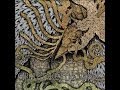
As jazz's first extended, continuous free improvisation LP, Free Jazz practically defies superlatives in its historical importance. Ornette Coleman's music had already been tagged "free," but this album took the term to a whole new level. Aside from a predetermined order of featured soloists and several brief transition signals cued by Coleman, the entire piece was created spontaneously, right on the spot. The lineup was expanded to a double-quartet format, split into one quartet for each stereo channel: Ornette, trumpeter Don Cherry, bassist Scott LaFaro, and drummer Billy Higgins on the left; trumpeter Freddie Hubbard, bass clarinetist Eric Dolphy, bassist Charlie Haden, and drummer Ed Blackwell on the right. The rhythm sections all play at once, anchoring the whole improvisation with a steady, driving pulse. The six spotlight sections feature each horn in turn, plus a bass duet and drum duet; the "soloists" are really leading dialogues, where the other instruments are free to support, push, or punctuate the featured player's lines. Since there was no road map for this kind of recording, each player simply brought his already established style to the table. That means there are still elements of convention and melody in the individual voices, which makes Free Jazz far more accessible than the efforts that followed once more of the jazz world caught up. Still, the album was enormously controversial in its bare-bones structure and lack of repeated themes. Despite resembling the abstract painting on the cover, it wasn't quite as radical as it seemed; the concept of collective improvisation actually had deep roots in jazz history, going all the way back to the freewheeling early Dixieland ensembles of New Orleans. Jazz had long prided itself on reflecting American freedom and democracy and, with Free Jazz, Coleman simply took those ideals to the next level. A staggering achievement.
:::Review by Steve Huey:::

Ornette Coleman - Free Jazz (1961)

1. Free Jazz 37:03
2. First Take 17:00

Credits
Bass - Charlie Haden , Scott LaFaro
Clarinet [Bass] - Eric Dolphy
Drums - Billy Higgins , Ed Blackwell
Engineer - Tom Dowd
Producer - Nesuhi Ertegun
Saxophone [Alto] - Ornette Coleman
Trumpet - Freddie Hubbard
Trumpet [Pocket] - Don Cherry

:::The Sidewinder:::

Posted: Wednesday, 3 June 2009 by jazzlover in Etykiety: , , , ,
0


Carried by its almost impossibly infectious eponymous opening track, The Sidewinder helped foreshadow the sounds of boogaloo and soul-jazz with its healthy R&B influence and Latin tinge. While the rest of the album retreats to a more conventional hard bop sound, Morgan's compositions are forward-thinking and universally solid. Only 25 at the time of its release, Morgan was accomplished (and perhaps cocky) enough to speak of mentoring the great Joe Henderson, who at 26 was just beginning to play dates with Blue Note after getting out of the military. Henderson makes a major contribution to the album, especially on "Totem Pole," where his solos showed off his singular style, threatening to upstage Morgan, who is also fairly impressive here. Barry Harris, Bob Cranshaw, and Billy Higgins are all in good form throughout the album as well, and the group works together seamlessly to create an album that crackles with energy while maintaining a stylish flow.
:::Review by Stacia Proefrock:::

Lee Morgan - The Sidewinder (1963)

1. The Sidewinder (10:21)
2. Totem Pole (10:11)
3. Gary's Notebook (6:03)
4. Boy, What A Night (7:30)
5. Hocus-Pocus (6:21)
6. Totem Pole (Alternate Take) (9:57)

Credits
Artwork By [Cover Design] - Reid Miles
Bass - Bob Cranshaw
Drums - Billy Higgins
Photography [Cover Photograph, Liner Photographs] - Francis Wolff
Piano - Barry Harris
Producer - Alfred Lion
Recorded By, Remastered By - Rudy Van Gelder
Reissue Producer - Michael Cuscuna
Saxophone [Tenor] - Joe Henderson
Trumpet, Written-By - Lee Morgan