:::Sister Phantom Owl Fish:::

Posted: Monday, 31 May 2010 by jazzlover in Etykiety: , , ,
3

Trevor Dunn's Trio-Convulsant is back for their second album, although with a completely different lineup (besides Dunn, of course). Adam Levy and Kenny Wollesen are gone, replaced by Mary Halvorson on guitar and Ches Smith on drums. The music they play is not so much a fusion of styles as it is a collision of styles. Almost straight-ahead jazz noodling gives way to hardcore blasts and crunching power chords, then completely devolves into Derek Bailey territory, but the band is always together. You can tell that some of it is quite composed, and that other sections are most likely entirely improvised. Dunn plays acoustic bass throughout ("Me Susurra un Secreto" is actually a bass solo), while Halvorson is all over the map sonically, switching between clean and distorted tones, chords, single-string runs, and extended techniques. She also judiciously uses some kind of delay or pitch-bending device to wonderful effect. The tunes are challenging but aren't difficult to listen to, and their cover of Duke Ellington's "The Single Petal of a Rose" (with guest harpist Shelley Burgon) is actually quite pretty. If you've been following Trevor Dunn's widely varied career as a player, you know he's got a sense of adventure, and Sister Phantom Owl Fish will not disappoint.
:::Review by Dave Lynch:::

Trevor Dunn's Trio Convulsant - Sister Phantom Owl Fish (2004)

1. Liver-Colored Dew 6:00
2. The Empty Glass Has A Name 4:42
3. Specter Of Serling 6:12
4. Me Susurra Un Secreto 1:45
5. Dawn's Early Vengeance 5:41
6. The Single Petal Of A Rose 6:32
Harp - Shelley Burgon
Written-By - Strayhorn , Ellington

7. The Salamander 6:08
8. She Ossifies 8:24
9. Styrofoam & Grief 6:41
10. I'm Sick 2:50
Written-By - Andre Previn

11. Untitled 1:00

Credits

Bass, written-By  - Trevor Dunn
Drums - Ches Smith
Guitar - Mary Halvorson

:::Double Sunrise Over Neptune:::

Posted: Wednesday, 26 May 2010 by jazzlover in Etykiety: , , , , , , , ,
4

William Parker continues to churn out CDs on a pace that might rival Steve Lacy, Satoko Fujii, or David Murray's epic proportions. While each project reaches ever higher levels, this recording from the twelfth annual Vision Festival in New York City might be close to his zenith. Three long compositions allow his some 16-piece band of horns, woodwinds, and strings to not only cut loose with potent solos as you would expect, but exist as a single crystalline entity with multiple and equal facets of ethnic, improvisational, and modern compositional forms. The music is as stunning as any Parker has devised in his career, but there are some caveats. For one, Parker plays no acoustic upright bass, leaving that to Shayne Dulberger. The oud of Brahim Frigbane and electric guitar of Joe Morris adds a lean and sparse element. But the music is generally broad ranging, expansive, and layered, thanks to the immense talents of accomplished modernists like trumpeter Lewis Barnes, alto saxophonist Rob Brown, tenor saxophonist and clarinetist Sabir Mateen, violinist Jason Kao Hwang, Jessica Pavone on the viola, and twin drummers Gerald Cleaver and Hamid Drake. Of the three long pieces, "Lights of Lake George" is a true magnum opus. A 7/8 modal bassline joins the dancing baritone of David Sewelson and Frigbane's oud, then the wordless East Indian vocals of Sangeeta Bandyopadhyay make way for string solos from the brilliant Hwang and Pavone, the burnished trumpet of Barnes, the shenai or musette of Cole and Parker, and clarinet of Mateen. The piece is not so much about improvisation as the consistent symmetry and balance from the entire band throughout weaving intricate colors. The double reeds open on the 4/4 "Neptune's Mirror," as the distinct and jangly guitar of Morris takes over, Sewelson leads horn punctuations with a cello aside by Shiau-She Yu, then cello and oud. The piece has an eerie yet earthy feel as all strings chime in, and Bandyopadhyay recites a poem of enlightenment, while reminding us of either loved or allegedly hated humans who have passed that "we can not bring them back to life." The opener "Morning Mantra" is a modal ostinato bass and drums riff with a quick guitar from Morris under long tones from the ensemble dominated by the high-pitched double reeds in a universal tonality, with Bandyopadhyay again poetically waxing on the wind, light, and life over a multilayered framework of dense tones, themes and world-wide excursions. One who listens closely, and more than once, will reap great rewards from this, another excellent document in the growing and substantive discography of the consistently forward thinking Parker.
:::Review by Michael G. Nastos:::

William Parker - Double Sunrise Over Neptune (2008)


1. Morning Mantra 15:08
2. Lights Of Lake George 27:18
3. O'Neals Bridge 0:37
4. Neptune's Mirror 22:39

Credits
Bass - Shayna Dulberger
Cello - Shiau-Shu Yu
Drums - Gerald Cleaver , Hamid Drake
Guitar, Banjo - Joe Morris
Oud - Brahim Frigbane
Reeds [Double] - Bill Cole
Reeds [Double], Performer [Doson'ngoni], Conductor, Written-by, Producer - William Parker
Saxophone [Alto] - Rob Brown
Saxophone [Baritone] - Dave Sewelson
Saxophone [Tenor], Clarinet - Sabir Mateen
Trumpet - Lewis Barnes
Viola - Jessica Pavone
Violin - Jason Kao Hwang , Mazz Swift
Voice - Sangeeta Bandyopadhyay

:::Sensible Shoes:::

Posted: Tuesday, 25 May 2010 by jazzlover in Etykiety:
4

Led Bib are explosive enough to blow up your speakers -- after they've done a number on their own speakers, that is. The British quintet plays hot-wired electric jazz-rock with two alto saxes wailing over (usually) electric keys and bass plus no-nonsense drums -- and, incidentally, drummer Mark Holub composes nearly all the band's material. Those saxes, belonging to Chris Williams and Pete Grogan and nicely positioned in the stereo field, are practically mirror images, matched in tone and intensity as they pair up in harmony, echo each other in counterpoint, or democratically divide up the soloing space. There's a '90s New York downtown feel to their tone, phrasing, and interplay, recalling in particular the two altos of Ned Rothenberg and Thomas Chapin in Rothenberg's funked-up Double Band releases on the Moers label. Yet Liran Donin's fuzzy rattling bass and Toby McLaren's burning Fender Rhodes truly differentiate this group from the pack -- it sometimes seems like Donin in particular has decided that nothing could possibly elevate the proceedings more than playing through a demolished speaker, and McLaren makes the overdriven sound of Miles Davis' fusion-era electric keyboardists seem like George Winston. The opening moments of "Yes, Again" waltz darkly, offering few clues of what's around the corner: the brief assault of an angular theme followed by a squeaky buzzing and pounding blast of ear-shredding keyboard and bass driven by rock-solid rhythms underpinning those siren-wailing saxes. Tempos shift, constrict, and loosen as the band uncoils, only to tighten back into the theme and stop on a dime just as your neighbors shout at you to turn the stereo down. The playful two-note sax blurt beginning "Squirrel Carnage" is joined by the rest of the band's clipped phrases and fractured rhythms, suddenly overtaken by that thick fuzz bass nd Rhodes as the energy builds and McLaren unleashes a frantic solo followed by squalling saxophone and an abrupt tumble onto a free-form plateau. Led Bib are not afraid to abandon the rhythm, as they do for a short spell here, but they also relish bringing everything back together, assembling compositional puzzle pieces and ratcheting the energy level up, slamming into a tightly focused finale. 
In contrast, the comparatively gentle opening to "Early Morning" could soundtrack the first stirrings of wakefulness after the sun has arisen; there is space enough to slowly gather one's bearings. The sax harmonies are lovely over understated accompaniment before the keys' downward progression and rolling drums bring unsettling portents, and the saxophone burns increasingly hotter over a spacious slow vamp to the point of explosion -- there is calm again at the conclusion, but this particular morning has ultimately entailed more than a relaxed breakfast in bed with a croissant and juice. The squelchy keyboard voicings accenting "Sweet Chilli" nearly mimic the sound of a squeegee on a car window, while "2.4:1 (Still Equals None)" slows to a crawl and then stealthily tiptoes through episodic stops and starts with fittingly spooky and spacy electronics in homage to BBC Radiophonic Workshop explorer Delia Derbyshire, while the album's most accessibly tuneful and uptempo moment arrives with Grogan and Williams' tight harmonies on the theme to "Call Centre Labyrinth." Led Bib let their pent-up energies loose with particular drama on album highlight "Water Shortage," which achieves nearly cinematic proportions as McLaren spins through cleanly articulated keyboard runs -- with acoustic piano voicings this time around. And the nine-plus-minute "Zone 4," written by Williams, is an ambitious closer, with its nearly martial rhythm and angular themes ultimately building through the customary explosiveness to a stirring finale with heartfelt playing by the saxophonists, aiming for the heavens as the drums roll and bass and keys swell beneath them. Yes, Led Bib can certainly bring the skronk, but on "Zone 4" they also bring heart and soul.
:::Review by Dave Lynch:::

Led Bib - Sensible Shoes (2009)

1. Yes, Again (4:55)
2. Squirrel Carnage (7:10)
3. Early Morning (7:10)
4. Sweet Chili (5:22)
5. 2.4:1 (still equals none) (5:56)
6. Call Centre Labyrinth (7:00)
7. Water Shortage (7:11)
8. Flat Pack Fantasy (4:49)
9. Zone 4 (9:07)

Credits
- Mark Holub / drums
- Liran Donin / Stand up bass, electric bass
- Tony McLaren / Rhodes piano
- Chris Williams / saxophone
- Pete Grogan / saxophone

:::Copie Zero:::

Posted: Monday, 24 May 2010 by jazzlover in Etykiety:
2

Trombonist, composer, and bandleader Claude St-Jean has had some of his greatest success with L'Orkestre des Pas Perdus, his high-spirited alternative brass band that layers horn riffs inspired by Frank Zappa and Carla Bley over funky drum-and-sousaphone grooves. With his latest band Les Projectionnistes, St-Jean continues further down the path toward bone-crunching funk jazz and rock. T'auras Pas Ta Pomme is positively pastoral compared with Copie Zéro, the first CD by Les Projectionnistes. St-Jean's quintet seems inspired by such blistering avant funk and metal units as Belgium's X-Legged Sally and New York composer/guitarist Nick Didkovsky's Doctor Nerve, groups that kick in with massive energy bursts from the first bar and rarely ease up on the throttle during any of their tunes. There are strong parallels in St-Jean's writing for both L'Orkestre des Pas Perdus and Les Projectionnistes, including punchy unison lines from the horns, constant propulsive forward momentum from the rhythm section, and many opportunities for hot soloing. The principal difference is the presence of Bernard Falaise, who on Copie Zéro is given free rein to exercise his hard rock and even blues-inflected chops on electric guitar. Falaise wails away whenever an opportunity arises, often pushing the band to incendiary heights, and St-Jean matches the guitarist's energy with his own burning, distorted trombone. Tracks like CD openers "Hiboux" and "Laïc Laiton" rock out at a pulse-quickening pace; the third tune "Jeu de Bloc" effectively demonstrates the group's mastery of subtler dynamics, with Bill Frisell-styled chord washes from Falaise providing atmosphere during a beautifully executed trombone break.
Like L'Orkestre des Pas Perdus, Les Projectionnistes plays tunes that are all rather brief. The exception is "Ballet Mécanique," an 11-minute collective improvisation performed live in October 1997 (with Nicolas Masino on bass and piano) as accompaniment to a 1924 surrealist film by Fernand Léger. This episodic piece begins diffusely but gathers a fearsome energy, thanks in large part to Leclerc's alternating cacophonous and driving percussion, before dissipating into space as the CD draws to a close. Copie Zéro presents an ensemble that loves to burn through fast-moving charts, but "Ballet Mécanique" proves that Claude St-John and Les Projectionnistes are quite capable musical explorers in unconventional surroundings without written scores to guide them.
:::Review by Dave Lynch:::

Les Projectionnistes - Copie Zero (1999)

1. Hiboux (5:10)
2. Laic Laiton(5:49)
3. Jeu De Bloc (6:48)
4. Circulez! (4:06)
5. Pour Toi Ma Cherie. (4:55)
6. Cacao Chaos (5:15)
7. 7e Balcon (4:24)
8. Vacances (6:16)
9. Les Petits Matins (5:57)
10. Nuit Blanche (5:30)
11. Ballet Mecanique (11:31)

Credits
- Claude St-Jean / trombone
- Pierre Labbé / tenor saxophone
- Roberto Murray / alto saxophone
- Rémi Leclerc / drums
- Bernard Falaise / electric guitar
- Tommy Babin / bass

Guest musician
- Nicolas Masino / bass (11)

:::Little Birds Have Fast Hearts, No. 1:::

Posted: Friday, 21 May 2010 by jazzlover in Etykiety: , , , ,
2

The Die Like a Dog Quartet came together four years after recording their first album for the 30th Total Music Meeting festival in Berlin that took place in November 1997. The sets that the quartet performed over the course of the three day festival were subsequently released by the FMP label in two volumes entitled Little Birds Have Fast Hearts. Peter Brötzmann plays tenor, of course, as well as some tarogato and clarinet, and he is joined by bassist Wiliam Parker, drummer Hamid Drake, and trumpeter Toshinori Kondo who occasionally utilizes electronic effects. On this first volume, the quartet is in it for the long run; there are just two parts, totaling over an hours' worth of music. They go long, but not without pause, for there are definite let-ups over the course of "Part 1" (which remains engaging and varied throughout its 45 minutes), and "Part 2" is a relatively low-key piece. But "calm" and "low-key" for this group are still strongly out; there is no "casual" mode, there is no collapsing into old forms, this is a work-out, and all four musicians give 100 percent as they are known to do. This is not music for people wanting to hear some nice jazz, some hum-along-able standards; this is music for listeners who want to take a journey and are willing to let this quartet steer. The Die Like a Dog Quartet is not improvising for an audience, they are improvising because. Because that is how you find music. Little Birds Have Fast Hearts, No. 1 is a great example of why that is important.
:::Review by Joslyn Layne:::

Die Like A Dog Quartet -  Little Birds Have Fast Hearts, No. 1 (1998)

1. Part 1 45:45
2. Part 2 21:59

Credits
Clarinet, Tárogató, Saxophone [Tenor], Composed By - Peter Brötzmann
Double Bass - William Parker
Drums - Hamid Drake
Trumpet, Electronics - Toshinori Kondo

:::Wahoo!:::

Posted: Wednesday, 19 May 2010 by jazzlover in Etykiety:
3

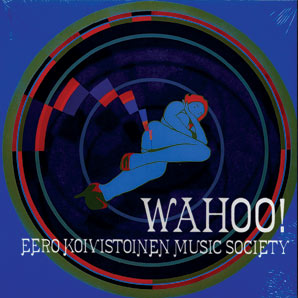
What would we do without those vinyl junkies? You know, those obsessed creatures that scour every record store, flea market, secondhand store and garage sale in hopes of finding some gem that has been lost in the mountain of recordings released over the last seventy years. Without them we would not have the pleasure of revisiting Eero Koivistoinen's fusion monster from Finland, Wahoo!
For some time Wahoo! has been a jealously guarded secret of DJs and collectors. Jon Newey, in his Jazzwise review, states that only 600 copies of the original LP were pressed, and further claims that those originals can often be found for as much as $500. The UK-based reissue label Whatmusic has thankfully brought it to the masses, available with its original artwork on LP or CD-digipak.
Recorded in 1972 with a one-off group, Wahoo! more than measures up to its reputation by delivering an incendiary brew of 70s fusion. It is everything that fusion should have been: raw, electric chaos held together by in-the-pocket beats and a muscular low-end. The music does not fall prey to any of the pitfalls that sank so much of the 70s' over-intellectualized pseudo-funk (i.e. wimpy synthesizers, tricky time signatures played with technical rigor mortis and extended noodling). Moreover, the production catches all the rough edges and the mixing layers the meaty rhythms created by the set-up of two drummers, two bassists and two guitarists.
Every cut provides a different blueprint on how to construct a groove. The title track slow-funk grinds with excruciating pleasure. The musicians ping pong in a syncopated frenzy, teasing with deliciously choppy phrases. Koivistoinen, his soprano sax hooked up to a wah-wah, squeals in delight while guitarists Matti Kurkinen and Ilja Saastamoinen viciously slice up the rhythm.
The ten-minute "Suite 19" masterfully unfurls itself. The track opens with a loose ambience that calls forth the ghost of John Coltrane's "Spiritual" as Koivistoinen, again on distorted soprano sax, glides over Edward Vesala's restless percussion. The band shimmers along in minor key ecstasy that eventually settles into silence. Then the Fender bass sparks a beat, Sabu Martinez brings his congas to a boil, the Rhodes and guitars sear the air and Koivistoinen's sax lines melt all over the red-hot groove. Yet the whole fire is kept from blazing out of control by the airtight bass being laid down.
My adjectives and metaphors could also rage out of control praising Wahoo! , so maybe we should just thank Whatmusic and those vinyl junkies one more time for their public service. They have delivered to us a gritty, passionate set of fusion that should not be overlooked this time around.
:::Review by Matthew Wuethrich:::

Eero Koivistoinen - Wahoo! (1973)

1. Hot C 7:37
2. 7 Up 4:54
3. 6 Down 7:54
4. Suite 19 10:47
5. Bells 5:42
6. Wahoo! 4:15

Credits
Bass [Fender] - Heikki Virtanen , Ilkka Willman
Drums - Esko Rosnell , Reino Laine
Electric Piano [Fender Rhodes] - Olli Ahvenlahti
Guitar [Electric] - Ilja Saastamoinen , Matti Kurkinen
Percussion - Edward Vesala , Sabu Martinez
Saxophone - Eero Koivistoinen
Saxophone [Alto], Flute - Juhani Aaltonen
Saxophone [Baritone], Clarinet [Bass] - Unto Haapa-Aho
Trombone - Juhani Aalto
Trumpet - Kaj Backlund

:::Laya:::

Posted: Monday, 17 May 2010 by jazzlover in Etykiety:
2

"Laya" is one of the most brilliant examples of how well has the RIO trend of prog aged for the new millennium. With one less keyboardist and the addition of violinist extraordinaire Akihisa Tsuboy, Pochakaite Malko was prepared to create and release yet another catalogue of challenging, energetic music. The melodic ideas in this album are as extrvagant as they are captivating, full of exotic elements (Far East, Arabian, Hindu, North African), perfectly blended in a jazz-fusion atmosphere to be matched with the sense of adventure and multicolored creativity inherent to the band's most obvious Occidental infuences: Univers Zero, Present and a bit of early Magma. All in all, despite the tension that feels so patently demanding, this band does not emulate the cerebral darkness of the aforementioned RIO bands, only their density and their orchestral equilibrium. Tsuboy, being the 'new kid on the block', really owns the starring role in the band's overall sound, while the rhythm section guys interact in a display of total versatility all through each and every intrincate number. Last but not least, Ogino knows how to create precise bridges between the violin and the rhythm duo, effectively filling the melodic spaces among the violin leads. 'Laya' and 'Death by Hanging' bear a playful spirit, with the former leaning toward the colorful side of RIO and the latter going for a jazzier road. 'Cristao' finds the musicians organically focused on the elaboration of disturbing dreamy ambiences, with a simplistic bass line whose minimalistic impulse sets the pace for the other instruments to create a sonic polyphonic nightmare. After this emergence of sheer disturbance, comes a very convenient contrast, 'Hallelujah', which is obviously more joyful, mostly due to the special fusionesque vibe used by the band. PM's style doesn't let things get too comfortable here - we must remember, after all, that this is a RIO-inspired band. But the playfulness goes on with 'Frozen Shoulders', one of the most amazing pieces of this amazing album: its mixture of Celtic cadences and traditional Japanese colors is solidly displayed on a 7/8 tempo, with the added percussions being somewhat more featured than the basic drum kit input. Next comes a couple of solemn tracks, 'Meat Powdered Bones' and 'It Came from.', which are when PM get the closest they can to Present's prototype. But even then, of course, we must keep in mind that this band always gets to keep its sound from getting beyond the reasonable tortuous. 'Somewhere in Time' meets the best of PM's both worlds: starting with what seems a tight commitment to jazz-fusion, there are some climatic interludes in which the explosive dangers of RIO arise with fire and steel. A special mention goes to the marriage of organ and bass that erupts somewhere in the middle - quite Magmaesque, indeed. This would have made a perfect closure for the album had the last 11 minutes of the album not been occupied by 'D.N.A.'. This is real music from and for the underworld, made out of Vulcanus' fire to set heat in the listener's brain. The initial 4 1/2 minutes of languid ambiences may seem deceiving at first, but the listener should suspect that there's a subtle air of danger hanging around.
Then comes a 2-minute section of sinister orchestrations, controlled yet positively creepy. At 6:30, teh creepy thing turns a bit more pompous and schematized, even including carnival-like adornments. The return of the creepy section feels particularly strong due to the augmented dose of energy portrayed by the violin and the piano, while Tateiwa and Kuwahara sustain the climax in a very consistent fashion. The final solitary piano chords bid a proper farewell to the listener. "Laya" couldn't find a more proper ending than this, and definitely, Pochakaite Malko should already be regarded as masters of current avant-prog.
:::Review by Cesar Inca:::

Pochakaite Malko – Laya (2004)

1. Laya (4:22)
2. Death By Hanging (5:57)
3. Cristao ~ Peasants' Revolt (5:47)
4. Hallelujah (7:04)
5. Frozen Shoulder (5:08)
6. Meat Powdered Bones (5:47)
7. It Came From ... (4:27)
8. Somewhere In Time (7:19)
9. D.N.A. (11:18)

Credits
- Junzo Tateiwa / tabla, percussion & drums
- Kazuo Ogino / piano, keyboards
- Shigekazu Kuwahara / bass
- Akihisa Tsuboy / electric & accoustic violin

Guest musicians
- Keiku / voice (1)
- Ryuichi Imai / oud (4)

:::Cinque:::

Posted: Thursday, 13 May 2010 by jazzlover in Etykiety:
3

A recent thread discussed the obsession with "band X sounds like band Y" and since then I've been trying to think who Deus Ex Machina sound like. Think of a heavier Gentle Giant mixed with jazz-fusion and Echolyn, with Italian and Latin vocals and you being to approach the sound of this band.They are all masters of their art, from the strong, operatic vocals of Alberto Piras to the tight drumming of Claudio Trotta and the instrumental work on this album is excellent throughout. The production is clear and well- balanced, which brings out the power of this band.
The first song "Convolutus" (Wound) gets us off to a relatively low-key start, then things start to pick up with a hint of funk in "Rhinoceros", featuring some nice keyboards from Fabrizio Puglisi. "Uomo Del Futuro Passato" (The Man of the Past Future) is possibly the best track, finishing as it does with a wonderful jazzy electronic piano solo, under which the rhythm section subtly picks up the beat and heads us off towards the climax.
"One Day The Sun Asked the Earth" takes things down a bit, consisting of just vocals and acoustic guitar. "Luce" is another gentler track, this time instrumental, with acoustic and bass guitars and violin. The final track starts off with violin and vocals, then there is a gap before we get to the "hidden track" - snippets of rehearsal music and studio chatter.
Those of you who have dismissed jazz- fusion as people noodling around on trumpets should hear this album and marvel at the instrumental work, which is as perfect a blend of rock and jazz as anyone could wish for. It's always varying and interesting and is underpinned by one of the best rhythm sections around.
As I mentioned the lyrics are in either Italian or Latin but the sleeve helpfully translates the Latin tracks into Italian and the Italian lyrics are also translated into English. One of the best albums I've heard since discovering PA and a good entrance to the world of jazz-fusion. It's one of those albums you can listen to many times and still find something new to enjoy in it. Highly recommended.
:::Review by chopper:::

Deus Ex Machina – Cinque (2002)

1. Convolutus (7:18)
2. Rhinoceros (Afropuglise) (8:19)
3. Uomo del Futuro Passato (Roccaccione..... (8:42)
4. Olim Sol Rogavit Terram I (Maurino Piras) (5:04)
5. Il Pensiero Che Porta Alle Cose Importanti (7:28)
6. Luce (Pensando a Claudia) (6:19)
7. De Ordinis Ratione (Nuovo) (6:55)
8. Olim Sol Rogavit Terram II (Cadaverone..... (20:22)

Credits
- Claudio Trotta / drums
- Alessandro Porre Porreca / bass
- Maurino Collina / guitar
- Alessandro Bonetti / violin
- Luigi Riccia Ricciardiello / keyboards
- Alberto Piras / vocals

:::Humanum Est:::

Posted: Wednesday, 12 May 2010 by jazzlover in Etykiety:
2

AERA has been a little-known band hailing from a small Bavarian village called "Mechelwind" (hence the title of one track on their second album). Similar to related band EMBRYO members were coming and going but originally the band consisted of guitarist Muck Groh (IHRE KINDER), bass player Dieter Bauer (2066 AND THEN), drummer Wolfgang Teske and wheelchair-bound Klaus Kreuzeder on sax and flute. They issued altogether four studio albums and one live one with changing line-ups and exhibiting different music styles. Their first two releases which can be obtained as a 2-in-1 CD (being a very worthy purchase that luckily I happen to own) are basically revealing a lively jazz-rock sound at times with extended jammin' not that far away from EMBRYO, KRAAN or NUCLEUS.
Their debut "Humanum Est" here in review was already quite an impressing demonstration of their musical prowess though still lacking a bit of variation which is nicely compensated by the addition of their second one on the CD-reissue. The six fully instrumental compositions, all written by guitarist Muck Groh can be basically described as guitar-dominated laid-back virtuoso jazz-rock with some blues and folk tossed in. Very notable are Kreuzeder's presentations on sax and flute, two instruments belonging to my favourites in that kind of music. Though being by all means a very noteworthy debut and a highly enjoyable album especially on second side of this record the music seams to become a bit meandering and repetitive. Thus without his counterpart "Hand und Fuss" "Humanum Est" might appear slightly disappointing for advanced Krautrock fans after a few spins.
Nevertheless AERA can be considered as another very interesting band within the rich German progressive scene of the 70's. Moreover it has been one of those making music just for fun without any commercial concern what's demonstrated very well by the fact that their debut has been rejected by all commercial labels forcing them to publish it on their own one "Erlkönig". By the way for those wondering what the oddly sounding titles actually mean: they are some sensible nonsense partly in ancient Bavarian idiom that is even incomprehensible to some native speakers like me.
:::Review by hdfisch:::

Aera - Humanum Est (1975)

1. Papa Doing (8:22)
2. Demmerawäng (7:07)
3. Hodibbel (5:37)
4. Sechs Achtel (10:45)
5. Jonas Schläft (4:20)
6. Alois' Flötending (2:26)

Credits
- Wolgang Teske / drums
- Klaus Kreuzeder / saxophone & flute
- Dieter Bauer / bass
- Muck Groh / guitar
- Peter Malinowsky / bass (6)

:::Of Love And Peace:::

Posted: Monday, 10 May 2010 by jazzlover in Etykiety: , , , , ,
2

From the year 1964 till 1975 it was hard to predict what style Larry Young would play next. During that eleven year period he played almost every conceivable style of modern jazz and fusion, as well as psychedelic and progressive rock. After starting as a bluesy hard bop organist, Larry moved on to the dry cerebral post bop of 1965's Unity, and in 1966 decided to go avant-garde with this album, Of Love and Peace.
Although this album has many of the noisy moments you would expect from a mid 60s avant jazz record, overall I found the music on here to be a bit more relaxed and controlled than a lot of similar music from this time period. Young has a large ensemble (three horns, two drums, plus himself) assembled for this recording, but the musicians are often sensitive to each other and don't engage in competitive displays of sonic force. I especially enjoyed the two drummers (Wilson Moorman III and Jerry Thomas) who are careful to blend with each other while they create fascinating rhythmic combinations.
This album opens with Pavanne, which treads somewhat familiar ground as a Coltrane styled modal swing driven free-for-all. This is followed by Of Love and Peace, an improvisation that is abstract and somewhat quiet and relaxed compared to the opener. This tune almost sounds like a cross between 20th century concert hall music and some of Sun Ra's more unique approaches to group improvisation.
Miles' Seven Steps to Heaven opens side two and the band give it a fast chaotic and joyful reading that is somewhat reminiscent of Ornette Coleman. The album closes with Falaq, another freely improvised number that starts with a jazz pulse, but becomes more abstract as it goes. Larry turns in some trademark bizarre B3 solos on this one.
This is a great avant-garde jazz album, thoughtful and well executed, Larry and his crew avoid some of the more excessive clichés that were common in the mid 60s and create one more totally unique Larry Young album.
:::Review by Easy Money :::

Larry Young - Of Love And Peace (1966)

1. Pavanne 14:13
2. Of Love And Peace 6:34
3. Seven Steps To Heaven 10:19
4. Falaq 10:09

Credits
Drums - Jerry Thomas, Wilson Moorman III
Organ - Larry Young
Saxophone [Alto], Flute - James Spaulding
Saxophone [Tenor] - Herbert Morgan
Trumpet - Eddie Gale

:::Afro Fire:::

Posted: Saturday, 8 May 2010 by jazzlover in Etykiety:
3

Afro Fire marks Eddie Gale's comeback as a bandleader, and is long overdue. As a sideman his trumpet graced such seminal recordings as Larry Young's 1966 masterpiece Of Love and Peace, Cecil Taylor's 1964 classic Unit Structures, and no less than four Sun Ra offerings, the most notable of which is the revolutionary -- and under-noticed -- Lanquidity. But Gale is best known for his two Blue Note recordings, Ghetto Music and Black Rhythm Happening, issued in 1968 and '69, respectively. These wild platters employed tough soul-jazz, funk, and gospel choruses, and melded militant politics and '60s Aquarian-generation optimism. They are both underground jazz classics. Gale recorded one more date as a leader in 1992, his fine Minute With Miles -- a kind of tribute album to Miles Davis -- with pianist and keyboardist Larry Willis. From its cover, Afro Fire apes the look of a Blue Note title. And though it is an ultramodern side, it feels right as an extension of what he accomplished for that label in the late '60s. Gale is not only unafraid of technology and musical evolution; he actively courts it here and in the numerous dates he's played with hip-hop tribes, rock and funk bands, and electronic ensembles. Assembling a non-traditional quartet for the date, synthesizers and rhythm tracks underscore and complement his spacey, muted trumpet playing, David R. Hayden's bass playing and rhythmic programming construction, and William Nichols' Rhodes piano work. Chet Smith plays "orchestral synthesizer"; he steeps everything here in deep textures and atmospheres. The set opens on the electronica fringe with "Welcome to Silicon Valley," displaying everything from cut-up vocals and treated triple-tracked brass to breakbeats, all of which lace through and boil everything down into a punchy, space-age, jazzy house jam. On "Free You -- Free Me," funk is the teacher, where rhythm tracks lace through Gale's trumpet, and synth and bass pop the space-is-the-place-groove and ease the whole thing into a soulful and trippy groove. But don't let the po-mo feel throw you. This is a jazz record with great soloing, beautiful emotional grooves, and compelling compositions, like "Afro Fire," with its funked-up future Latin tinges; the nocturnal, sensual ambience of "New York After Hours," and the bluesy, space-age soul-jazz on "Tribal Future." Chances are trad-heads jazz-neo-cons won't dig this, but then they didn't like his '60s records, either. For those interested in the edges -- where jazz meets the new musics of the technologic age creating a new sense of "organic" sound -- this is for you.
:::Review by Thom Jurek:::

Eddie Gale - Afro Fire (2004)

1. Welcome To Silicon Valley 3:24
2. Free You - Free Me 4:52
3. Inner Peace To You 6:02
4. Afro-Fire 6:44
5. New York After Hours 6:16
6. Route 95 4:22
7. Tribal Future 5:50

:::Nawyki Przyrody:::

Posted: Friday, 7 May 2010 by jazzlover in Etykiety:
2

Robotobibok (a blend of two Polish words for robot and skiver) was formed in 1998 in Wrocław, Poland. From the very beginning, their music has seemed to combine modern electronic music with the energy of improvised jazz. Strong and acoustic drums, double bass and trumpet intertwine with dreamy vibraphone, electric guitar and characteristic 70's analogue electronica.
The result evokes the atmosphere of 70's electric jazz and early electroacoustic experiments. The core of Robotobibok's music is their post-jazz rhythm section, ostensibly inspired by the newest electronica, but going further and building more intricate structures. Robotobibok also try to develop their own language in improvisation; individual instruments sometimes do solo, but none of them dominates in the end.
:::Info taken from http://www.robot.futuro.info.pl/indexopt.html:::

Robotobibok - Nawyki Przyrody (2004)

1. Kamagi 5:12
2. Symfonia Zmysłów 3:40
3. 54 Kw 6:50
4. Skipping A 4:48
5. 100000 Lat Gwarancji 4:56
6. Tylko dla Zwierząt 4:07
7. Zemsta Gniewosza 3:07
8. Skipping C 4:20
9. Jurij 3:58

Credits
Contrabass - Marcin Ożóg
Guitar, Arp Odyssey - Maciej Bączyk
Percussion, Minimoog - Kuba Suchar
Trumpet, Electric Piano - Artur Majewski

:::The Hapless Child:::

Posted: Wednesday, 5 May 2010 by jazzlover in Etykiety: , , , , , ,
6

A surprising step after his earlier work with the Jazz Composer's Orchestra and their juxtaposition of avant-garde soloists in a modern orchestral context, Mantler created a virtual prog rock album, setting Edward Gorey's Freudian/gothic texts to music that owes far more to Henry Cow than Cecil Taylor. Enlisting ex-Soft Machine drummer Robert Wyatt on vocals and Jan Garbarek alumnus Terje Rypdal for some soaring guitar work, he managed to create a very convincing, enjoyably literary recording with potentially large appeal. The song structures are fairly consistent and the melodies often catchy, alternating from somber dirges (quite appropriate to the text) to up-tempo rockers. Much of the success accrues to Wyatt, whose reedy, intelligent voice gives exactly the right ironic inflection to Gorey's eerie tales. When in the title track he lightly sings the opening line, "There was once a little girl named..." then drops into a minor mode for, "Charlotte Sophia," you know things don't bode well for the song's heroine. Indeed, all of the lyrics are compelling little stories and it's to Mantler's credit that his compositions couch and project them instead of competing for attention. The Hapless Child has assumed a bit of cult classic status as a one-off prog rock project and it largely deserves the rep, holding up reasonably well over time.
:::Review by Brian Olewnick:::

Michael Mantler - The Hapless Child (1976)

1. The Sinking Spell 5:10
2.The Object-Lesson 5:00
3. The Insect God 4:58
4. The Doubtful Guest 4:47
5. The Remembered Visit 6:27
6. The Hapless Child 7:02

Credits
Bass Guitar - Steve Swallow
Drums, Percussion - Jack DeJohnette
Guitar - Terje Rypdal
Lyrics By [Words] - Edward Gorey
Mixed By - Nick Mason (tracks: 1 to 5)
Music By, Engineer - Michael Mantler
Narrator - Alfreda Benge
Piano, Clavinet, Synthesizer [String], Producer - Carla Bley
Vocals - Robert Wyatt

Notes
Recorded July 1975 through January 1976 at Grog Kill Studio in Willow, NY, with the Manor Mobile at Robert Wyatt's house and Delfina's farm in England, and at Britannia Row in London. Mixed January 1976 at Britannia Row / "The Hapless Child" mixed November 1975 at Scorpio Sound.
Originally released 1976.
Title on front and back cover: The Hapless Child and other inscrutable stories

:::Saturday Liquid Sky C4:::

Posted: Saturday, 1 May 2010 by jazzlover in Etykiety:
3

Easily the best album to date by talented jazz/world music percussionist Trilok Gurtu, The Glimpse is a brilliant blend of musical styles paying tribute to the Indian drummer's dearly departed friend, jazz legend Don Cherry. Like Cherry, Gurtu's multicultural influences are often central to his compositions, and with guest musicians like Morocco's Jaya Deva (a member of Cherry's band), India's Geetha Ramanathan Bennett, and Bulgaria's Teodosii Spassov, this is his most ethnically diverse album to date. Nearly every track here is a standout, from the Moroccan groove of "Cherry Town" and the dazzling spoken percussion of "1-2 Beaucoup" to the melancholy balladry of Ornette Coleman's "Law Years." A must-have for fans of world-jazz fusion.
:::Review by Bret Love:::

Trilok Gurtu - The Glimpse (1997)

1. Cherry Town 5:14
2. 1-2 Beaucoup 5:43
3. Law Years 7:52
4. A Ilha Do Caju 6:33
5. Future Heat 10:49
6. Glimpse 6:48
7. Don 9:38

Credits
Bass, Cello - Lars Danielsson
Guitar, Music By - Nando Carneiro (tracks: 4)
Guitar, Voice, Other [Gnaoua, Qaraqaba] - Jaya Deva
Kaval - Theodosii Spassov
Music By - Ornette Coleman (tracks: 3) , Trilok Gurtu (tracks: 1, 2, 5 to 7)
Piano, Harmonium - Andy Emler
Producer, Drums, Tabla, Percussion, Voice - Trilok Gurtu
Trumpet, Flugelhorn - Paolo Fresu
Veena, Voice - Geetha Bennett

:::Friday eXistenZ C4:::

Posted: Friday, 30 April 2010 by jazzlover in Etykiety:
2

Isotope's second album is a fairly different beast than its predecessor, since half the group is gone, including the main songwriter, keyboardist Brian Miller. In to replace Jeff Clyne is Hugh Hopper fresh from Soft Machine (Boyle and Hopper had met on Yamashta's East Wind group), while the keys are taken by the relative unknown Lawrence Scott, while Boyle and Morris remain pat. Released still in 74 and again on Gull Record, with a stunning headphones artwork, hitting a bit pretentiously at how much of an earful the album is.
Needless to say that the line-up change totally changes the group's sound, definitely tilting the balance in Boyle's favour, newcoming Scott simply not able to fill Miller's shoes right from the bat. Songwriting-wise, Boyle and Hopper take the lion's share, while Scott gets two tracks in, and not exactly the weakest - there are none in this album.
What strikes with Illusion is the way the album is much more Mahavishnu-esque, most noticeable in Spanish Sun, but in the title track, or in short Boyle's songs. Boyle is obviously enamoured with McL's playing and tries to emulate it, and somehow manages it to his own credit and no ridicule, far from it.
Hopper's tracks don't necessarily have the Soft machine edge you'd expect, but they do have that little rockier edge (as do Scott's two tracks) over Boyle's.
Generally the album has its own red-hot sound, despite Boyle's MO influence, and Hopper's Sliding Dogs and Golden section are absolute corkers that deserves the album highlight. And just past Boyle's acoustic Marin Country Girl, Hopper's Lily Kong offers a last hurrah for Hugh, while Scott closes the album with the MO-influenced Temper Tantrum.
Family's Poli Palmer's is not exactly top notch though, thus stopping this album to get an even higher rating, but make no mistake, this is Isotope's best album with some margin. After Illusion's recording, the group would tour Western Europe, just as it had before it. Then an Ameruican tour came, some reinforcements (De Souza on percussion) brought in, Scott leaving just before financial problems forced Hopper to leave as well, leaving Morris and Boyle to rebuild once more.
:::Review by Sean Trane:::

Isotope – Illusion (1974)

1. Illusion (3:54)
2. Rangoon Creeper (6:01)
3. Spanish Sun (7:50)
4. Edorian (2:01)
5. Frog (2:31)
6. Sliding Dogs / Lion Sandwich (5:58)
7. Golden Section (5:15)
8. Marin Country Girl (2:10)
9. Lily Kong (2:32)
10. Temper Tantrum (3:46)

Credits
- Gary Boyle / guitars
- Nigel Morris / drums
- Laurence Scott / keyboards
- Hugh Hopper / bass

:::Holy Mountain Thursday C4:::

Posted: by jazzlover in Etykiety:
1

UZ's fourth studio album (fifth release after the short compilation Crawling Winds) is the cornerstone of UZ's career. Up to now, UZ's music had been mostly acoustic RIO, developing sinister moods and searching for human's darker instincts. But with this fourth album, Denis was to change considerably UZ's direction and this was due in no small part to the friendly competition he maintained with ex-UZ Roger Trigaux, who had formed Present (with Denis holding the drum stool), and pushing each other to explore new musical territories. By now, Daniel Denis was the last remaining original member, Berckmans devoting his effort to Von Zamla. In comes future long time collab Dirk Descheemaeker on winds, Genet on bass and assorted string instruments, Plouvier (another future central figure) on keyboards and Mergen on cello and sax. This album, as I said above, is the start of a new direction and can be easily seen as a blueprint for all their future album until Implosion. The music had now shifted from the sinister and macabre to the sombre and mysterious ambiances, the eastern influences being much more present (pardon the pun ;-), than previously. One of the most striking results is that the album is generally more melodious than the previous three, which often flirted with dissonance and atonal music. Here, the music has mystic and grandiose aspects not previously developed. The opener Présage is probably my favourite track as the mystery of the mid-eastern dawns (with the cello strongly inducing Arab ambiances) in a yet-asleep harem (see why I think this is their best track? ;-) and the first smell ogf Green tea as you are heading for the hamam with three beautiful creatures, and the clarinet providing the drama: this almost 10-min track is flawless. The manic Doctor Schwartz is a 100 mph nightmare with Plouvier's piano providing the base for a haunting cello and clarinet. Wrapping up the first side of this wax slice, is Celeste (with two guest-musicians), a slow-developing almost 7-min track where the piano has the dominant role until the monstrous entrance of the "beast and Delory's electric guitar (sometimes reminding you of Pinhas or Fripp) is clearly its angry scream. The only flaw I can think of is that the track ends in a fade-out.
Parade is probably where Miriodor took a good deal of their inspiration and the mad breaking noise are extremely disturbing, but the insane beat is not letting you off the hook. Centrepiece Emmanations is one stunning and most convincing track, where Univers Zero is simply taking on the role of a progressive giant group, but if it is not known widely among the progheads, it is mostly because this album was recorded in 84. Had it been recorded a decade earlier, no doubt that this album would be standing with Magma's 1001° Centigrade or Henry Cow's Legend. Denis's composing powers are simply impressive and his percussions are awesomely inventive, and the oppressive but enthralling ambiances make the almost 16-min track seem too short. In the closing section, the track diverges into electronic delirium, which some twenty years later, Denis will come back to and base his Implosion album around similar themes.
Clearly the album separating the two phases of UZ, this album will serve as a template for UZ albums for two decades to come (including Denis's two solo albums). Absolutely essential music, one if not the best album in its genre.
:::Review by Sean Trane:::

Univers Zero – Uzed (1984)

1. Présage (9:48)
2. L'Etrange Mixture du Docteur Schwartz (3:52)
3. Célesta (for Chantal) (6:55)
4. Parade (6:37)
5. Emmanations (15:43)

Credits
- Daniel Denis / drums, percussion, synthesizer
- Dirk Descheemaeker / soprano sax, clarinet, bass clarinet
- Christian Genet / bass, balafon, bowed guitar, tapes, whistle
- Andre Mergen / cello, alto sax, voice
- Jean-Luc Plouvier / electric & acoustic pianos, synthesizer, piano strings, percussion

:::Taxidermia Wednesday C4:::

Posted: by jazzlover in Etykiety: , , , ,
2

The unique and fresh voice of John Zorn's Masada reigns triumphant once again on this third installment, Gimel. Zorn has challenged and reinvented the face of modern jazz with this quartet. Expanding on traditional Jewish music of various types and adapting it to a jazz environment seems a daunting task, but one that Zorn and company (Joey Baron, Greg Cohen and Dave Douglas) have done well. Zorn's choice of personnel is impeccable, and this is evidenced by the intricate yet powerful sound. The album spans the barrage of songs like "Ziphim," "Katzatz" and "Hekhal" to the sweet moments of "Abidan" and "Sheloshim." At times sounding like an Eastern Ornette Coleman, and sometimes playing with the rampant fury that is characteristic solely of Zorn himself, the band has incorporated and evolved the form of jazz. This album is certainly a highlight of the Masada collection as a whole, and provides a great introduction to the band. Some of the songs can be found reworked on Bar Kokhba as well. There is little more to be said of this album, as the music speaks for itself.
:::Review by Marc Gilman:::

Masada - Vol. 3 Gimel (1995)

1. Ziphim 9:17
2. Abidan 6:48
3. Katzatz 2:24
4. Hazor 6:04
5. Netivot 3:38
6. Karaim 5:58
7. Hekhal 3:02
8. Sheloshim 8:15
9. Lebaoth 5:12
10. Tannaim 8:54

Credits
Bass - Greg Cohen
Drums - Joey Baron
Saxophone [Alto] - John Zorn
Trumpet - Dave Douglas

:::Altered States Tuesday C4:::

Posted: Tuesday, 27 April 2010 by jazzlover in Etykiety: , , , ,
2

East meets west, Canterbury meets Tokyo and Soft Machine meets Daimonji to create 60 minutes worth of improvised jazz, rock and prog fusion on this excellent release from Hux. As the bio says, this was recorded when Hopper and Dean had a day off while touring Japan with Soft Works in 2003. Hopper contacted Japanese underground legend Hoppy Kamiyama, who roped in fellow legend (and fellow member of Daimonji and Jun Togawa) Yoshida Tatsuya, and the whole thing was recorded in two 45 minute sessions with a short break in between.
The improvisational set up is an unusual one. Although the British musicians had played with each other for many years, as had the Japanese, the bassist and drummer had never met before, and neither had the keyboard player and the saxophonist, which created an interesting tension in both the rhythm section and between the melodic lead instruments. All four musicians play superbly, but most of the time it is Elton Dean's fast and furious blowing that takes the lead. Kamiyama plays a lot of piano and electric piano for most of the album, and especially on the first piece lays down some jazzy chords for Dean to work over.
When he switches to synths, as he does about 12 minutes into the first piece, it's highly effective and gives Dean a chance to catch his breath. Hopper and Yoshida gel into an efficient rhythm section, although Yoshida's drumming is a little heavy handed at times - as he's proved in his work with the Sakoto Fuji quartet, he's capable of adapting his style to the subtleties of acoustic jazz, but here he seems to be more in Ruins mode. This works to good effect in the second part, which opens with a sax/bass/drums trio that recalls the Zorn trio Painkiller (who Yoshida also plays with occasionally) but there are also times when a more delicate touch would have worked better. Towards the end of the second part there is a superb duet between Dean and Kamiyama on acoustic piano which is possibly the highlight of the album, although the standard is high throughout. The editing seems to have left the music intact, each piece only fading out when, presumably, the musicians lost the thread or things broke down, although it sounds like the opening of part 2 may have been cut as well. To come up with 60 minutes worth of music this good in 90 minutes is a testimony to the abilities of the musicians involved.
Although it's improvised, the music on Soft Mountain rarely degenerates into atonal squawking. The best comparison is perhaps Daimonji, who have a similar talent for spinning remarkably coherent music apparently out of thin air. Fans of the wilder side of Soft Machine and the Canterbury scene will enjoy this, as will afficianados of the Japanese underground. A fine album, and a fitting memorial to the brilliant Elton Dean.
:::Review by Syzygy:::

Soft Mountain - Soft Mountain (2007)

1. Soft Mountain Suite Pt. 1 (30:40)
2. Soft Mountain Suite Pt. 2 (27:55)

Credits
- Elton Dean / saxophone
- Hugh Hopper / bass
- Yoshida Tatsuya / drums
- Hoppy Kamiyama / keyboards

:::Forbidden Zone Monday C4:::

Posted: by jazzlover in Etykiety: , , , ,
1

The first of trumpeter Freddie Hubbard's three Atlantic albums (reissued on a Koch CD in 2000), this excellent set falls between hard bop and the avant-garde, often hinting at both. Hubbard's regular group of the time (with James Spaulding on alto and flute, pianist Albert Dailey, bassist Bob Cunningham, and drummer Otis Ray Appleton, plus guest conga player Ray Barretto) performs the debut version of his famous "Little Sunflower," an excellent remake of "Up Jumped Spring," and four lesser-known pieces. Hubbard and Spaulding made for an excellent team and there are plenty of exciting moments on this brief but potent set.
:::Review by Scott Yanow:::

Freddie Hubbard – Backlash (1966)

1. Backlash 4:10
2. The Return Of The Prodigal Son 5:37
3. Little Sunflower 7:50
4. On The Que-Tee 5:43
5. Up Jumped Spring 6:39
6. Echos Of Blue 9:44

Credits
Bass - Bob Cunningham
Drums - Otis Ray Appleton
Flute, Saxophone [Alto] - James Spaulding
Percussion - Ray Barretto (tracks: 1 to 3)
Piano - Albert Dailey
Trumpet, Flugelhorn - Freddie Hubbard

:::Saturday Liquid Sky C3:::

Posted: Saturday, 24 April 2010 by jazzlover in Etykiety:
1

The Kilimanjaro Darkjazz Ensemble are a gloriously creepy crawly mutant jazz combo, equal parts DJ Shadow’s Endtroducing, seventies horror movie soundtracks, late night jazz and super sluggish blown out trip hop.
To this day KDJE only released one full album wich is selftitled. They represent as a full on group, not one dude and his laptop, unfurling haunting imaginary soundtracks, dark and dense, smoky and noir, everything in rich lustrous shades of black and grey, shuffling jazzy skitter underpins melancholy moaning horns bathed in reverb, pizzicato strings and minor key guitars hover and dart furtively, a drizzly rainy day jazz dirge, so creepy and mysterious and lovely, and that’s just the first song. The rest of the record wanders similarly rainslicked streets, hat pulled down low, collar pulled way up, face obscured by shadows, the wet streets reflecting the orange grey glow of the streetlights, the buildings like totem poles of shadowy ghosts, the sky a blackish grey, turning the vibrant city into a lonely monochrome.
:::Review by othersidedmusic:::

The Kilimanjaro Darkjazz Ensemble - The Kilimanjaro Darkjazz Ensemble (2006)

1. The Nothing Changes 4:54
2. Pearls For Swine 5:50
3. Adaptation Of The Koto Song 3:58
4. Lobby 6:56
5. Parallel Corners 3:34
6 . Rivers Of Congo 5:28
7. Solomon's Curse 3:20
8. Amygdhala 3:58
9. Guernican Perspectives 4:48
10. Vegas 6:09
11. March Of The Swine 19:59

Credits
Cello - Nina Hitz
Programming - Gideon Kiers
Programming, Bass, Guitar - Jason Kohnen
Trombone - Hilary Jeffries