Showing posts with label Don Cherry. Show all posts

:::Eternal Rhythm:::

Posted: Saturday, 30 April 2011 by jazzlover in Etykiety: , , , , , , ,
4

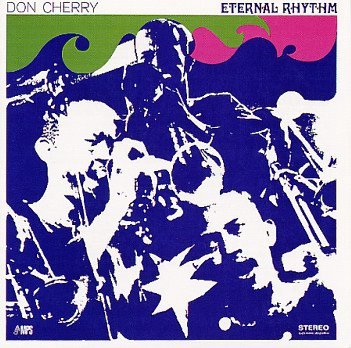
Eternal Rhythm is a masterpiece on several levels. It was one of the earliest major examples of the idea that it was possible for any and all musical cultures to exist simultaneously, a philosophy that rejected any innate musical hierarchy and had no trouble placing the earthiest blues alongside the most delicate gamelan. It was also a summit meeting between representatives of the American and European jazz avant-garde, black and white, dismissing as meaningless both the cautious attitude of American jazz musicians toward Europeans edging onto their turf and the tentative stance of Europeans playing a music that was not "theirs." More importantly, Eternal Rhythm exists as an utterly spectacular, movingly beautiful musical performance, one of the rare occasions where the listener has a visceral sense of borders falling and vast expanses of territory being revealed for the first time. Cherry balanced compositional clarity, wild free improvisation, and a totally inclusive musical consciousness in a manner seldom achieved, resulting in a cohesive, spellbinding session. His own playing throughout on both trumpet and flute is at his highest levels, but the contributions of his fellow musicians are just as amazing. Special mention should be made of guitarist Sonny Sharrock, whose "glass shards" approach is in full bloom here, and vibraphonist/pianist Karl Berger, who throws himself with sublime abandon into both the gamelan and blues aspects of the piece. If only the pallid "world music" of the succeeding decades had followed this model! Eternal Rhythm is Don Cherry's masterwork and one of the single finest recordings from the jazz avant-garde of the '60s. It is required listening.
:::Review by Brian Olewnick:::

Don Cherry - Eternal Rhythm (1968)

1. Eternal Rhythm Part 1 17:45
2. Eternal Rhythm Part 2 23:37

Credits
Bass – Arild Andersen
Cornet, Gamelan [Gender, Saron], Flute [Bengali, Bamboo, Metal, Plastic], Performer [Haitian Guard], Composed By – Don Cherry
Drums, Gamelan [Saron], Gong, Bells, Voice – Jacques Thollot
Guitar – Sonny Sharrock
Piano, Piano [Prepared] – Joachim Kühn
Saxophone [Tenor], Oboe, Clarinet, Flute – Bernt Rosengren
Trombone – Albert Mangelsdorff, Eje Thelin
Vibraphone, Piano, Gamelan [Gender] – Karl Berger

:::Music / Sangam:::

Posted: Tuesday, 11 January 2011 by jazzlover in Etykiety: ,
9

One of the earthiest albums ever from Don Cherry a set of duets with tabla player Latif Khan recorded in Paris in the late 70s, and featuring Cherry in a range of soulful modes! Don doesn't just play his usual trumpet but keyboards, flute, gong, and other percussion as well a really incredible blend of instruments that's often overdubbed, so that Cherry's already adding in a few layers of his own sound before Khan comes in with some really rocking work on tablas! The blend of world and jazz influences is perfect and the album's as much of a treasure as Cherry's equally important Sonet sessions of the 70s. Titles include "Rhythm 58 1/4", "One Dance", "Air Mail", "Untitled", and "Sangam".
:::Review by Dusty Groove America, Inc.:::

Don Cherry & Latif Khan - Music / Sangam (1978)

01. Untitled / Inspiration From Home 05:35 (Ornette Coleman)
02. Air Mail 7:02 (Don Cherry)
03. One Dance 4:35 (Don Cherry)
04. Rhythm 58 1/4 3:13 (Latif Khan)
05. Sangam 13:10 (Latif Khan)

Credits
Tabla, Producer - Latif Khan
Trumpet, Keyboards, Gong, Flute [Bamboo Flute], Performer [Dousso N'koni], Voice, Producer - Don Cherry

:::Jazz Movie #2:::

Posted: Tuesday, 21 December 2010 by jazzlover in Etykiety: , , , , , , , , , ,
10

:::Ebba Jahn - Rising Tones Cross (1985):::
Time: 112 mins
DVD label: FilmPals DVD 01 and the film's,
www.EbbaJahn.com 
through which the DVD can be purchased or the film rented for screenings.

Eye of Sound: It may sound difficult to believe it, but most of the artists listed above were once striving for recognition in the jazz scene and fighting for sheer survival. Ebba Jahn's Rising Tone Cross captures a moment when these artists were just starting to create a "scene", when their sparkling creativity was not yet comforted by certainty and success. More interestingly, perhaps, the film deals with issues of class and race and with the differences between the social contexts of improvised music in Europe and America, challenging many assumptions about musicianship, career building, and the possibilities for an artistic livelihood. What really distinguishes this from other "jazz films", however, is the visual and narrative focus on New York as the metaphorical force behind the musician's creative burst, portraying it as a dirty, poor, rough and lively city not yet tamed by shinny images of  success and bourgeois comfort.
  
This film is a documentary composition of new jazz, New York as the city that generates it, and the musicians playing it. The thoughts of the saxophonist Charles Gayle, the bass player William Parker, and Peter Kowald from Germany accompany the film. Shot on 16 mm in the mid 80s this film remains one of a kind until today.
:::PRODUCTION NOTE:::
"Rising Tones Cross is a nostalgia piece for some, a valuable historical document for others...Many of the musicians are still active players, and unsurprisingly the film captures many who have departed firmly in their element: Charles Tyler, Don Cherry, Frank Wright, Denis Charles, Jeanne Lee, Wilber Morris, Peter Kowald...
The film is romantic. There is a certain appeal and charm to images of a dirtier and grittier New York...and the music is wonderful, compelling stuff even for people jaded about improvised music. Rising Tones Cross provides some continuity, showing how jazz survived..." Andrey Henkin
:::ALL ABOUT JAZZ - NY:::
 
BOY! ARE WE HAPPY TO SEE THE RELEASE OF THIS FIRST ITEM IN TODAY'S NEWSLETTER...
Ebba Jahn's documentary of the 1984 was shot partly at the New York Vision Jazz Festival curated by William Parker and Peter Kowald. Groups and musicians on film include Don Cherry & The Sound Unity Festival Orchestra; Jemeel Moondoc Sextet; Peter Brotzmann Ensemble; Peter Kowald Quartet; Billy Bang's Forbidden Planet; Charles Tyler Quintet; Peter Kowald Trio; William Parker & Patricia Nicholson Dance; Burton; Roy Campbell Jr.; Ruediger Carl; Daniel Carter; Dennis Charles; Ellen Christi; Curtis Clark; Marilyn Crispell; Charles Gayle; Wayne Horvitz; Masahiko Kono; Jeanne Lee; Wilber Morris; Bobby Previte; Irene Schweizer; David S. Ware; Frank Wright; John ZornThe early 1980s were a period of transition for the avant-garde fringe in New York. The loft scene -the days in which Ornette Coleman's home on Prince Street and Sam River's Studio Rivbea provided workshops for experimenters to develop their art - was drawing to a close, and the arrival of the Knitting Factory and its explosive impact on the Downtown scene was still a few years away. It fell to the artists themselves to create new opportunities.
As chronicled in Ebba Jahn's 1984 documentary, Rising Tones Cross, two such motivated visionaries were bassist William Parker and dancer Patricia Nicholson. The film centers around the Sound Unity Festival, a precursor to the couples' current Lower East Side bash, the Vision Festival.
It was the German bassist Peter Kowald, on an extended sojourn in New York that included a hefty formative role in Sound Unity, who convinced Jahn to make a film about the upstart festival. "It was clear to me that I wanted to have a German protagonist and an American protagonist," Jahn says. Her friend Kowald was the German choice, naturally, but America's representative had yet to be confirmed. "Originally, I had thought of Ornette Coleman. But on the day I arrived, first thing in the morning I met Charles Gayle, the most un-famous saxophonist at that time in New York City." That meeting, combined with a chance encounter with a cameraman who was working on Shirley Clarke's Coleman documentary, Made in America, led Jahn to shift her focus "from the most famous avant-garde saxophonist to the most un-famous."
"Instead of simply a compilation of festival footage - though performances by musicians like Jemeel Moondoc, Don Cherry, and Peter Broetzmann abound in the film - Rising Tones Cross was intended to be a "tool for music education. "For many people who saw the film in Germany, it was the first time they ever heard this type of music," she says. To help facilitate this reaction, Jahn put the most difficult music at the end of the film, easing the audience into it gradually. She also included a number of scenes intended to dispel common myths about free jazz. For example when Broetzmann's strapping 11-piece ensemble - boasting a tenor phalanx comprised of the leader, Gayle, David S. Ware, and Frank Wright - seems to be blowing chaotically onstage, Jahn's camera pans across Broetzmann's diagrammatic score to reveal an extraordinary amount of careful detail, planning, and scripting - the architecture girding the maelstrom. And having overcome an initial distrust and some reluctance to take part in the film, the enigmatic Gayle is revealed to be affable, erudite, and quite well-versed in jazz-history, a far cry from his dark public persona and stage presence. "He was perceived as a philosopher in Germany," says Jahn.
" In 1984, before Tonic or CB's Lounge or even the Knitting Factory and Rudy Giuliani, New York City was a rough-and-tumble place filled with a wonderful array of musicians in a state of hyper-creativity. Some of them had come out of the loft scene of the '70s or even earlier and were reconciling all the shades of the avant garde while others were creating entirely new vocabularies still being solidified today.
German filmmaker Ebba Jahn made 'A Jazz Film' that year with interviews, musical performances and fascinating visuals of the city before it became sterilized. For the film's 20th anniversary last year, Jahn put the film onto DVD format, a nostalgia piece for some, a valuable historical document for others. Many of the musicians featured are still active players: Charles Gayle, William Parker, John Zorn, Jemeel Moondoc, Irene Schweizer, Peter Brotzmann.
And unsurprisingly, the film captures many who have departed firmly in their element: Charles Tyler, Don Cherry, Denis Charles, Peter Kowald.
The two main voices of the film are Gayle and Kowald, an American and a German playing improvised music in basements and lofts and in the Sound Unity Festival, the precursor to today's Vision Festival. The film is romantic. There is a certain appeal and charm to the images of a dirtier, grittier New York.
The scene, always the scene, seemed to be more vibrant and the musicians less weighed down. And the music is wonderful, compelling stuff even for people jaded about improvised music. Rising Tones Cross provides some continuity, showing how jazz survived when pop and rap and heavy metal began to fully take over the public consciousness." (Steve Smith, Andrey Henkin, DMG)
:::REVIEW - DOWNTOW MUSIC GALLERY NYC:::

Credits

PETER KOWALD QUINTET
Melting - Lines - Cycle

Charles Gayle
Peter Kowald
Marilyn Crispell
Rashied Ali

PETER KOWALD TRIO
Harvest Green

Charles Gayle
Peter Kowald
John Betsch

JOHN ZORN DUO
Sunday Afternoon at Life Café

John Zorn
Wayne Horvitz

BILLY BANG`S FORBIDDEN PLANET
Music For The Love Of It

Wayne Horvitz
Billy Bang
Oscar Sanders
Kim Clarke
Bobby Previte

WILLIAM PARKER & PATRICIA NICHOLSON ENSEMBLE
A Thousand Cranes Opera

Wayne Horvitz
Ricardo Strobert
Masahiko Kono
William Parker
Denis Charles
Lisa Sokolov
Jeanne Lee
Ellen Christi
Patricia Nicholson-Parker
Maria Mitchell
Carol Penn Muhammed
Frank Boyer
Keith Dames
A.R. Penck piano

CHARLES TYLER QUINTET
Life Can Be Whatsoever

Curtis Clark
Charles Tyler
Roy Campbell jr.
Wilber Morris
John Betsch


DON CHERRY & THE SOUND UNITY FESTIVAL ORCHESTRA
Kangaroo Hoopie

Don Cherry
Peter Brötzmann
Rüdiger Carl
Daniel Carter
Ellen Christi
Felice Rosser
Peter Kowald
Wilber Morris
Denis Charles
Maria Mitchell

JEMEEL MOONDOC SEXTET
In Walked Monk

Jemeel Moondoc
Roy Campbell jr.
Rahn Burton
Ellen Christi
William Parker
Rashied Ali

IRENE SCHWEIZER DUO
For Julian Beck

Irene Schweizer
Rüdiger Carl

PETER BRÖTZMANN ENSEMBLE
Alarm

Peter Brötzmann
David S. Ware
Frank Wright
Charles Gayle
Jemeel Moondoc
Roy Campbell jr.
Masahiko Kono
Irene Schweizer
Peter Kowald
William Parker
Rashied Ali

:::Liberation Music Orchestra:::

Posted: Thursday, 16 September 2010 by jazzlover in Etykiety: , , , , , , , , ,
3

A fascinating reissue that comfortably straddles the lines of jazz, folk, and world music, working up a storm by way of a jazz protest album that points toward the Spanish Civil War in particular and the Vietnam War in passing. Haden leads the charge and contributes material, but the real star here may in fact be Carla Bley, who arranged numbers, wrote several, and contributed typically brilliant piano work. Also of particular note in a particularly talented crew is guitarist Sam Brown, the standout of "El Quinto Regimiento/Los Cuatro Generales/Viva la Quince Brigada," a 21-minute marathon. Reissue producer Michael Cuscuna has done his best with the mastering here, but listeners will note a roughness to the sound -- one that is in keeping with the album's tone and attitude.
:::Review by Steven McDonald:::

Charlie Haden - Liberation Music Orchestra (1969)

1 . The Introduction 1:15
2. Song Of The United Front 1:52
3a. El Quinto Regimento (The Fifth Regiment) 20:58
3b. Los Cuatro Generales (The Four Generals)
3c. Viva La Quince Brigada (Long Live The Fifteenth Brigade)
4. The Ending To The First Side 2:07
5. Song For Chè 9:29
6. War Orphans 6:42
7. The Interlude (Drinking Music) 1:24
8. Circus '68 '69 6:10
9. We Shall Overcome 1:19

Credits
Bass, Producer - Charlie Haden
Clarinet - Perry Robinson
Cornet, Flute [Indian Wood Flute, Bamboo Flute] - Don Cherry (tracks: 3, 5)
French Horn, Percussion [Hand Wood Blocks, Bells], Performer [Crow Call], Whistle [Military Whistle] - Bob Northern
Guitar, Percussion [Thumb Piano] - Sam Brown (tracks: 1, 3 to 7)
Percussion - Andrew Cyrille (tracks: 8) , Paul Motian
Percussion [Tambourine], Arranged By - Carla Bley
Saxophone [Tenor], Clarinet - Gato Barbieri
Saxophone [Tenor], Saxophone [Alto] - Dewey Redman
Trombone - Roswell Rudd
Trumpet - Michael Mantler
Tuba - Howard Johnson

:::Complete Communion:::

Posted: Thursday, 11 February 2010 by jazzlover in Etykiety: , , ,
3

Not counting a couple of sessions he co-led with John Coltrane and Albert Ayler, Complete Communion was the first album Don Cherry recorded as a leader following his departure from the Ornette Coleman Quartet. It was also one of the earliest showcases for the Argentinian tenor saxophonist Gato Barbieri, who Cherry discovered during a stay in Rome. While the music on Complete Communion was still indebted to Coleman's concepts, Cherry injected enough of his own personality to begin differentiating himself as a leader. He arranged the original LP as two continuous side-long suites, each of which incorporated four different compositions and was recorded in a single take. In practice, this meant that several melodic themes popped up over the course of each side; all the musicians free-associated off of each theme, engaging in intense, abstract dialogues before moving on to the next. As the album's title suggests, every member of the group not only solos, but shares the total space selflessly. Bassist Henry Grimes and drummer Ed Blackwell both play extremely active roles, especially Grimes, who solos powerfully and sometimes carries the main riffs. Often the music sounds more like a conversation, as opposed to a solo with support, because the musicians make such intelligent use of space and dynamics, and wind up with a great deal of crackling, volatile interplay as a result.
The leader remains recognizably himself, and his burnished tone is a nice contrast with Barbieri's fiery approach; for his part, Barbieri's playing has a lot of speechlike inflections, and he spends a lot of time in the upper register of his horn, which makes him sound quite similar to Ornette at times. As a whole, the project comes off remarkably well, establishing Cherry as an avant-garde force to be reckoned with in his own right.
:::Review by Steve Huey:::

Don Cherry - Complete Communion (1965)

1. Complete Communion 20:38
a. Complete Communion
b. And Now
c. Golden Heart
d. Remembrance

2. Elephantasy 19:36
a. Elephantasy
b. Our Feelings
c. Bishmallah
d. Wind, Sand and Stars

Credits
Bass - Henry Grimes
Cornet, Composed By - Don Cherry
Drums - Edward Blackwell
Saxophone [Tenor] - Leandro 'Gato' Barbieri

:::Free Jazz:::

Posted: Monday, 12 October 2009 by jazzlover in Etykiety: , , , , , ,
1


As jazz's first extended, continuous free improvisation LP, Free Jazz practically defies superlatives in its historical importance. Ornette Coleman's music had already been tagged "free," but this album took the term to a whole new level. Aside from a predetermined order of featured soloists and several brief transition signals cued by Coleman, the entire piece was created spontaneously, right on the spot. The lineup was expanded to a double-quartet format, split into one quartet for each stereo channel: Ornette, trumpeter Don Cherry, bassist Scott LaFaro, and drummer Billy Higgins on the left; trumpeter Freddie Hubbard, bass clarinetist Eric Dolphy, bassist Charlie Haden, and drummer Ed Blackwell on the right. The rhythm sections all play at once, anchoring the whole improvisation with a steady, driving pulse. The six spotlight sections feature each horn in turn, plus a bass duet and drum duet; the "soloists" are really leading dialogues, where the other instruments are free to support, push, or punctuate the featured player's lines. Since there was no road map for this kind of recording, each player simply brought his already established style to the table. That means there are still elements of convention and melody in the individual voices, which makes Free Jazz far more accessible than the efforts that followed once more of the jazz world caught up. Still, the album was enormously controversial in its bare-bones structure and lack of repeated themes. Despite resembling the abstract painting on the cover, it wasn't quite as radical as it seemed; the concept of collective improvisation actually had deep roots in jazz history, going all the way back to the freewheeling early Dixieland ensembles of New Orleans. Jazz had long prided itself on reflecting American freedom and democracy and, with Free Jazz, Coleman simply took those ideals to the next level. A staggering achievement.
:::Review by Steve Huey:::

Ornette Coleman - Free Jazz (1961)

1. Free Jazz 37:03
2. First Take 17:00

Credits
Bass - Charlie Haden , Scott LaFaro
Clarinet [Bass] - Eric Dolphy
Drums - Billy Higgins , Ed Blackwell
Engineer - Tom Dowd
Producer - Nesuhi Ertegun
Saxophone [Alto] - Ornette Coleman
Trumpet - Freddie Hubbard
Trumpet [Pocket] - Don Cherry

:::The Jazz Composer's Orchestra:::

Posted: Friday, 20 February 2009 by jazzlover in Etykiety: , , , , , , , , , ,
5


German-born composer/trumpeter Michael Mantler and his then-wife Carla Bley were instrumental in developing within jazz the idea of self-sufficiency and independence from established record companies. Their creation of the Jazz Composer's Orchestra, with recordings released on their own label, was the culmination of this endeavor, and the first recording was one of the masterpieces of creative music in the '60s. Mantler had come from the European avant-classical tradition and sought to provide an orchestral framework supporting some of the most advanced musicians in avant-garde jazz -- and he succeeded magnificently. His style tends toward the brooding and darkly romantic with harsh, cynical edges, a perfect foil for the robust, shackle-breaking improvisations found herein. The cloudy, roiling swirls that open "Communications #8," echoed by Bley's stabbing piano chords, lay the groundwork for inspired soloing by Don Cherry and the pre-Last Tango and still extremely fiery Gato Barbieri. Subsequent pieces include an amazing feedback showcase for Larry Coryell and a gorgeous, somber work featuring bassist Steve Swallow and trombonist Roswell Rudd. All of this is a preview for, well, "Preview," an utterly incendiary flight by Pharoah Sanders over a pounding rhythm by the orchestra, a piece that will leave the listener bruised, battered, and exhilarated. Except that the best is yet to come: a 34-minute, two-part composition, a concerto for Cecil Taylor and orchestra, that finds the pianist at the height of his powers, just beginning to enter the third phase of his development where he fused ultra-high energy playing with rigorous logic and heartbreaking beauty. The breadth of this piece, its expansiveness, and its tension between order and chaos is one of the single high watermarks of avant-garde jazz. Communications is a masterwork in and of itself and laid the basis for stunning work by others in decades hence, notably Barry Guy and his London Jazz Composer's Orchestra. It's an essential document for anyone interested in avant jazz and late-20th century creative music.
:::Review by Brian Olewnick:::

The Jazz Composer's Orchestra – s/t (1968)

A1. Communications # 8 (13:52)
A2. Communications # 9 (8:08)
B1. Communications # 10 (13:26)
B2. Preview (3:23)
C. Communications # 11 Part 1 (15:10)
D. Communications # 11 Part 2 (17:47)

Credits
Bass - Alan Silva (tracks: C, D) , Bob Cunningham (tracks: C, D) , Charlie Haden , Eddie Gomez (tracks: A2, B1, B2) , Kent Carter (tracks: A1) , Reggie Johnson (tracks: C, D) , Reggie Workman , Richard Davis (tracks: A1) , Ron Carter (tracks: A1, A2, B1, B2) , Steve Swallow (tracks: A2, B1, B2)
Conductor, Producer - Michael Mantler
Cornet - Don Cherry (tracks: A1)
Drums - Andrew Cyrille (tracks: A1, C, D) , Beaver Harris (tracks: A2, B1, B2)
Flugelhorn - Lloyd Michels , Randy Brecker (tracks: A1) , Stephen Furtado (tracks: A2, B1, B2, C, D)
French Horn - Julius Watkins , Bob Northern
Guitar - Larry Coryell (tracks: A2, B1, B2)
Piano - Carla Bley (tracks: A1, A2, B1, B2) , Cecil Taylor (tracks: C, D)
Saxophone [Alto] - Bob Donovan , Frank Wess (tracks: A2, B1, B2) , Gene Hull (tracks: A1) , Jimmy Lyons (2) (tracks: C, D)
Saxophone [Baritone] - Charles Davis
Saxophone [Soprano] - Steve Lacy (tracks: A1) , Steve Marcus (tracks: A2, B1, B2, C, D)
Saxophone [Tenor] - Gato Barbieri (tracks: A1, C, D) , George Barrow (tracks: A1, A2, B1, B2) , Lew Tabackin , Pharoah Sanders (tracks: B2)
Trombone - Jimmy Knepper , Roswell Rudd (tracks: B1)
Trombone [Bass] - Jack Jeffers
Tuba - Howard Johnson

:::Symphony For Improvisers:::

Posted: Thursday, 5 February 2009 by jazzlover in Etykiety: , , , ,
2


For his second album, Symphony for Improvisers, Don Cherry expanded his Complete Communion quartet -- tenor saxophonist Gato Barbieri, bassist Henry Grimes, and drummer Ed Blackwell -- to a septet, adding vibraphonist Karl Berger, bassist Jean François Jenny-Clark, and tenor saxophonist Pharoah Sanders (who frequently plays piccolo here). The lineup has a real international flavor, since Barbieri was from Argentina, Berger from Germany, and Jenny-Clark from France; Cherry had gigged regularly with all three during his 1964-1965 sojourn in Europe, and brought them to New York to record. With all the added firepower, it's remarkable that Symphony for Improvisers has the same sense of shared space and controlled intelligence as its predecessor, even when things are at their most heated. Once again, Cherry sets up the album as two continuous medleys that fuse four compositions apiece, which allows the group's improvisational energy and momentum to carry straight through the entire program. The "Symphony for Improvisers" suite is the most raucous part of Cherry's Blue Note repertoire, and the "Manhattan Cry" suite pulls off the widest mood shifts Cherry had yet attempted in that format. Even though the album is full of passionate fireworks, there's also a great deal of subtlety -- the flavors added to the ensemble by Berger's vibes and Sanders' piccolo, for example, or the way other instrumental voices often support and complement a solo statement. Feverish but well-channeled, this larger-group session is probably Cherry's most gratifying for Blue Note.
:::Review by Steve Huey:::

Don Cherry - Symphony For Improvisers (1966)

Symphony For Improvisers (19:40)
1a Symphony For Improvisers
1b Nu Creative Love
1c What's Not Serious
1d Infant Happiness
Manhattan Cry (19:17)
2a Manhattan Cry
2b Lunatic
2c Sparkle Plenty
2d Om Nu

Credits
Artwork By [Art Direction And Design] - Michael Boland
Artwork By [Cover Design] - Reid Miles
Artwork By [Creative Direction] - Gordon H Jee
Bass - Henry Grimes , Jean-François Jenny-Clark
Composed By - Don Cherry
Cornet - Don Cherry
Drums - Edward Blackwell
Other [Original Liner Notes] - A. B. Spellman
Other [Reissue Liner Notes] - Bob Blumenthal
Photography [Cover Photograph, Liner Photographs] - Francis Wolff
Producer - Alfred Lion
Recorded By, Remastered By - Rudy Van Gelder
Reissue Producer - Michael Cuscuna
Saxophone [Tenor] - Gato Barbieri
Saxophone [Tenor], Piccolo Flute - Pharoah Sanders
Vibraphone, Piano - Karl Berger

:::The Shape of Jazz to Come:::

Posted: Friday, 23 January 2009 by jazzlover in Etykiety: , ,
2


Ornette Coleman's Atlantic debut, The Shape of Jazz to Come, was a watershed event in the genesis of avant-garde jazz, profoundly steering its future course and throwing down a gauntlet that some still haven't come to grips with. The record shattered traditional concepts of harmony in jazz, getting rid of not only the piano player but the whole idea of concretely outlined chord changes. The pieces here follow almost no predetermined harmonic structure, which allows Coleman and partner Don Cherry an unprecedented freedom to take the melodies of their solo lines wherever they felt like going in the moment, regardless of what the piece's tonal center had seemed to be. Plus, this was the first time Coleman recorded with a rhythm section -- bassist Charlie Haden and drummer Billy Higgins -- that was loose and open-eared enough to follow his already controversial conception. Coleman's ideals of freedom in jazz made him a feared radical in some quarters; there was much carping about his music flying off in all directions, with little direct relation to the original theme statements. If only those critics could have known how far out things would get in just a few short years; in hindsight, it's hard to see just what the fuss was about, since this is an accessible, frequently swinging record. It's true that Coleman's piercing, wailing alto squeals and vocalized effects weren't much beholden to conventional technique, and that his themes often followed unpredictable courses, and that the group's improvisations were very free-associative. But at this point, Coleman's desire for freedom was directly related to his sense of melody -- which was free-flowing, yes, but still very melodic. Of the individual pieces, the haunting "Lonely Woman" is a stone-cold classic, and "Congeniality" and "Peace" aren't far behind. Any understanding of jazz's avant-garde should begin here.
:::Review by Steve Huey:::

Ornette Coleman - The Shape of Jazz to Come (1959)

1. Lonely Woman (4:59)
2. Eventually (4:20)
3. Peace (9:04)
4. Focus On Sanity (6:50)
5. Congeniality (6:41)
6. Chronology (6:05)

Credits:
Bass - Charlie Haden
Cornet - Don Cherry
Drums - Billy Higgins
Engineer [Recording] - Bones Howe
Producer - Nesuhi Ertegun
Saxophone [Alto] - Ornette Coleman

:::Brown Rice:::

Posted: Saturday, 25 October 2008 by jazzlover in Etykiety: ,
1

If Eternal Rhythm was Don Cherry's world fusion masterpiece of the '60s, then Brown Rice is its equivalent for the '70s. But where Eternal Rhythm set global influences in a free jazz framework, Brown Rice's core sound is substantially different, wedding Indian, African, and Arabic music to Miles Davis' electrified jazz-rock innovations. And although purists will likely react here the same way they did to post-Bitches Brew Davis, Brown Rice is a stunning success by any other standard. By turns hypnotic and exhilarating, the record sounds utterly otherworldly: the polyrhythmic grooves are deep and driving, the soloing spiritual and free, and the plentiful recording effects trippy and mysterious. The various ethnic influences lift the album's already mystical atmosphere to a whole new plane, plus Cherry adds mostly non-English vocals on three of the four tracks, whispering cryptic incantations that make the pieces resemble rituals of some alien shaman. The title cut has since become an acid jazz/rare-groove classic, filtering Charlie Haden's acoustic bass through a wah-wah pedal and melding it with psychedelic electric piano riffs, electric bongos, wordless female vocals, short snippets of tenor saxophonist Frank Lowe's free jazz screeching, and, of course, Cherry's whispers and trumpet. Closer "Degi-Degi" works a similarly mind-bending mixture, but the middle two pieces ("Malkauns" and "Chenrezig") are lengthy explorations where Cherry's languid trumpet solos echo off into infinity. Of all his world fusion efforts, Brown Rice is the most accessible entry point into Cherry's borderless ideal, jelling into a personal, unique, and seamless vision that's at once primitive and futuristic in the best possible senses of both words. While Cherry would record a great deal of fine work in the years to come, he would never quite reach this level of wild invention again. [Brown Rice's original title was Don Cherry, which was changed a year after its initial 1975 release.]

:::By Steve Huey:::

Don Cherry - Brown Rice (1975)

1. Brown Rice (5:14)
Bass [Acoustic] - Charlie Haden
Bongos [Electric] - Bunchie Fox
Drums - Billy Higgins
Electric Piano - Don Cherry , Ricky Cherry
Saxophone [Tenor] - Frank Lowe
Trumpet - Don Cherry
Voice - Don Cherry , Verna Gillis

2. Malkauns (13:58)
Bass [Acoustic] - Charlie Haden
Drums - Billy Higgins
Tambura - Moki Cherry
Trumpet - Don Cherry

3. Chenrezig (12:50)
Bass [Acoustic] - Hakim Jamil
Drums - Billy Higgins
Electric Piano - Ricky Cherry
Saxophone [Tenor] - Frank Lowe
Trumpet - Don Cherry
Voice - Don Cherry

4. Degi-Degi (7:06)
Bass [Acoustic] - Charlie Haden
Drums - Billy Higgins
Electric Piano - Ricky Cherry
Piano [Yamaha] - Don Cherry
Saxophone [Tenor] - Frank Lowe
Voice - Don Cherry

Credits
Co-producer - Beppe Muccioli
Mastered By [Digital] - John Snyder , Rudy Van Gelder
Mixed By - Corrado Bacchelli , Kurt Munkacsi
Producer - Corrado Bacchelli
Recorded By - Kurt Munkacsi

Notes
Originally released in 1976 by A & M Records, Inc. Los Angeles.
Recorded by Kurt Munkacsi at the Basement Recording Studios, New York.
Digitally mastered by John Snyder and Rudy Van Gelder at the Van Gelder Recording Studio, Englewood Cliffs, New Jersey, April 1988.