Showing posts with label Sonny Sharrock. Show all posts

:::onion philosophy #5:::

Posted: Sunday, 16 December 2012 by jazzlover in Etykiety: , , , , , ,
11


Machine Gun was an improvising band formed in New York City in 1986. Its members were: Robert Musso: guitars, Thomas Chapin: reeds and flute, John Richey: vocals, cut-ups, tapes, TV, Bil Bryant: drums, Jair-Rohm Parker Wells: basses. Karl Berger is featured on melodica on their eponymous first release.
The band name came from the landmark Peter Brötzmann 1968 album release "Machine Gun", an octet recording often listed among the most notable free jazz albums. One critic has written "Machine Gun" offers "a heavy-impact sonic assault so aggressive it still knocks listeners back on their heels decades later." This style significantly influence this band.
Sonny Sharrock frequently performed with the band and appears on the first release, as well as the second, Open Fire.
:::Info by wiki:::

Machine Gun - Open Fire (1989)

1. In The Beginning 5:24
2. A Sultan's Last Stand 4:26
3. Pentagon 6:15
4. Get The Gun 3:56
5. See Africa 5:10
6. Brass Tactics 6:55
7. Recreation 2:14
8. Arsenal Tech High 7:01
9. Mommie Sir 7:03
10. Obsession + Oblivion 5:11
11. Take No Prisoners 3:32
12. Muffy Fails French 5:14
13. Road Worthy 9:16
14. Chillin 1:19

Credits
Bass – Jair-Rohm Parker Wells
Drums – Bil Bryant
Featuring [Special Guest] – Sonny Sharrock
Guitar, Bass – Robert Musso
Saxophone, Flute – Thomas Chapin
Tape, Vocals – John Richey

:::Seize The Rainbow:::

Posted: Sunday, 1 May 2011 by jazzlover in Etykiety: , , , ,
1

The follow-up to Sonny Sharrock's entirely solo comeback album, Guitar, Seize the Rainbow puts the guitarist at the helm of a rock-styled power trio featuring bassist Melvin Gibbs and Abe Speller and Pheeroan akLaff on drums (producer Bill Laswell also plays bass on one cut). The overall sound of the album is surprisingly straightforward, heavy metal-tinged jazz-rock, though the caliber and taste of the musicians makes it something far more than what rock guitar virtuosos of the period were recording. Still, there isn't too much way-out craziness, aside from some of Sharrock's trademark slide-guitar explorations on the spiritual title track and the riff-driven rockers "Dick Dogs" and "Sheraserhead's Hightop Sneakers." For the most part, Sharrock's playing on Seize the Rainbow is more concerned with melodic themes and traditional single-note solo lines than textural experiments. Fortunately, his tone is still gloriously skronky, and his playing is no less passionate. Bill Laswell's production is bright and immediate, and the rhythm section's agility breathes a spark into the straight-up rock rhythms they're often asked to play. Even if it isn't quite as evocative as the solo sound paintings of Guitar, Seize the Rainbow does place Sharrock's playing in one of its most accessible settings, and it's perhaps the best starting point for rock fans wondering what the fuss is about.
:::Review by Steve Huey:::

Sonny Sharrock - Seize The Rainbow (1987)

1. Dick Dogs 5:10
2. My Song 6:25
3. Fourteen 9:55
4. J.D. Shaa 5:37
5. Seize the Rainbow 4:32
6. The Past Adventures of Zydeco Honeycup 5:22
7. Sheraserhead's High-Top Sneakers 4:07

Credits
Bass – Melvin Gibbs
Co-producer – Bill Laswell
Drums – Abe Speller, Pheeroan Aklaff
Guitar – Sonny Sharrock
Mixed By – Robert Musso

:::Eternal Rhythm:::

Posted: Saturday, 30 April 2011 by jazzlover in Etykiety: , , , , , , ,
4

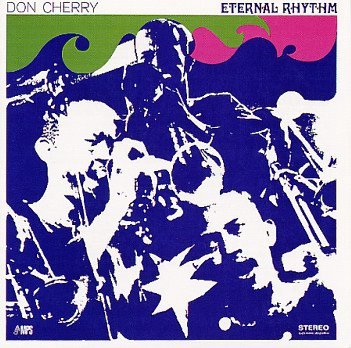
Eternal Rhythm is a masterpiece on several levels. It was one of the earliest major examples of the idea that it was possible for any and all musical cultures to exist simultaneously, a philosophy that rejected any innate musical hierarchy and had no trouble placing the earthiest blues alongside the most delicate gamelan. It was also a summit meeting between representatives of the American and European jazz avant-garde, black and white, dismissing as meaningless both the cautious attitude of American jazz musicians toward Europeans edging onto their turf and the tentative stance of Europeans playing a music that was not "theirs." More importantly, Eternal Rhythm exists as an utterly spectacular, movingly beautiful musical performance, one of the rare occasions where the listener has a visceral sense of borders falling and vast expanses of territory being revealed for the first time. Cherry balanced compositional clarity, wild free improvisation, and a totally inclusive musical consciousness in a manner seldom achieved, resulting in a cohesive, spellbinding session. His own playing throughout on both trumpet and flute is at his highest levels, but the contributions of his fellow musicians are just as amazing. Special mention should be made of guitarist Sonny Sharrock, whose "glass shards" approach is in full bloom here, and vibraphonist/pianist Karl Berger, who throws himself with sublime abandon into both the gamelan and blues aspects of the piece. If only the pallid "world music" of the succeeding decades had followed this model! Eternal Rhythm is Don Cherry's masterwork and one of the single finest recordings from the jazz avant-garde of the '60s. It is required listening.
:::Review by Brian Olewnick:::

Don Cherry - Eternal Rhythm (1968)

1. Eternal Rhythm Part 1 17:45
2. Eternal Rhythm Part 2 23:37

Credits
Bass – Arild Andersen
Cornet, Gamelan [Gender, Saron], Flute [Bengali, Bamboo, Metal, Plastic], Performer [Haitian Guard], Composed By – Don Cherry
Drums, Gamelan [Saron], Gong, Bells, Voice – Jacques Thollot
Guitar – Sonny Sharrock
Piano, Piano [Prepared] – Joachim Kühn
Saxophone [Tenor], Oboe, Clarinet, Flute – Bernt Rosengren
Trombone – Albert Mangelsdorff, Eje Thelin
Vibraphone, Piano, Gamelan [Gender] – Karl Berger

:::Jazz Movie #3:::

Posted: Tuesday, 28 December 2010 by jazzlover in Etykiety:
5


1. Sonny Sharrock - Who does she hope to be?...4:42

2. LastExit Sonny Sharrock,Bochum 1988...10:19

3. Last Exit - Destination-Out (1986)...9:57

4. Linda Sharrock - SOLITUDE...4:41

5. Sonny Sharrock 1988 Knitting Factory...10:00

6. LITTLE ROCK @ ASK THE AGES SONNY SHARROCK...6:39

7. Thurston Moore -Tribute to Sonny Sharrock.mp4...7:27

8. Sonny Sharrock: Greatest. Guitar. Solo. Ever....2:54

9. SONNY SHARROCK QUARTET 1...1:05

10. Sonny Sharrock "Once Upon A Time" 1991...6:31

11. Oasis Chris Sharrock doing Keith Moon...1:02

12. Sonny Sharrock = unknown date , place or musicians...7:36

13. Sonny Sharrock Many Mansions...9:32

14. Sonny Sharrock "Soon" 1970...7:59

15. LINDA SHARROCK Dearly Beloved...3:39
 
Enjoy!

:::Iron Path:::

Posted: Sunday, 20 September 2009 by jazzlover in Etykiety: , , , ,
2


When it comes to avant-garde jazz/rock noise, few bands kicked out the jams better than did Last Exit. A who's-who of jazz players with punk-ass attitudes, Last Exit -- guitarist Sonny Sharrock, bassist Bill Laswell, drummer Ronald Shannon Jackson, and saxophonist Peter Brotzmann -- could swing, rock, and create an all-out free-jazz din all in the blink of an eye. More important, Last Exit was about was the thrill and danger of total improvisation; so much did they believe in this concept that their debut performance in Zurich in 1986 was completely improvised and unrehearsed. Granted, one person's free improvisation is another's tuneless chaos, but Last Exit, due primarily to the skill of its individuals, only infrequently fell off the precipice into the netherworld of arty wanking. These were four men that emotionally, intellectually, and musically belonged together: Sharrock had gotten his start playing blues, but rebelled against structured, proper guitar technique, preferring to play sheets of atonal metallic distortion; Shannon Jackson grew up playing Texas blues, but through working with players such as Blood Ulmer, explored a percussive world that was not regimented by time and meter; Bill Laswell played and produced rock, funk, and "straight" jazz, and in Last Exit he mashed all of these influences into one feral ball of noise and rhythm; and Peter Brotzmann didn't simply blow sax, he blew it to bits as if his life depended on it.
:::www.allmusic.com:::

:::Review by John Dougan@allmusic.com:::

Last Exit - Iron Path (1988)

1. Prayer 4:37
2. Iron Path 3:28
3. The Black Bat (For Aki Ikuta) 4:33
4. Marked for Death 2:19
5. The Fire Drum 4:18
6. Detonator 3:47
7. Sand Dancer 1:56
8. Cut and Run 2:30
9. Eye for an Eye 4:54
10. Devil's Rain 4:12

Credits
Bass - Bill Laswell
Drums - Ronald Shannon Jackson
Engineer - Martin Bisi
Guitar - Sonny Sharrock
Mastered By - Howie Weinberg
Photography, Artwork By [Front Cover Design] - Thi Link Le
Producer - Bill Laswell , Last Exit
Saxophone [Bass] - Peter Brötzmann

:::Ask the Ages:::

Posted: Friday, 27 March 2009 by jazzlover in Etykiety: , , ,
2


Although Charlie Christian introduced the electric guitar to jazz in 1939, everyone playing the instrument in jazz kept his sound and ideas embodied in their playing until the late '60s. During this period the instrument became a vital part of the emerging fusion scene. Some of the electric guitar's most memorable work has come from a handful of rock guitarists who embraced jazz, like Frank Zappa on Hot Rats or Jeff Beck on Blow by Blow. But overall, some of the instrument's finest modern sounds flowed from the fingertips of jazzier players like John McLaughlin. Though each of these artists has had an absolute and immeasurable influence on jazz, the one man who really reinvented the jazz guitar from inside is a player who is barely known outside - or inside - of jazz circles: Sonny Sharrock.
Sharrock (1940-1994) is an interesting piece of the jazz puzzle. He was the first and for the longest time the only guitarist working in the area of free jazz. Though his day job in the late '60s was playing in Herbie Mann's band, his work with Pharoah Sanders, notably on Tauhid, found him really cutting loose, showing a certain genius for creating sound sheets of blistering noise with bop-styled runs. At this point in his life, Sharrock used feedback to duplicate the rips from the brass men he played with, before Jimi Hendrix and Pete Townsend would make it fashionable in the mainstream. His early records as a leader are solid, but he really came together in the '80s when, surprisingly enough the players who were influenced by him began to be noticed in the downtown New York scene. The unaccompanied Guitar (1986) and Seize the Rainbow (1987) were shocking in their unabashed genius, but his last record, Ask the Ages, is unquestionably the greatest achievement of his entire career.
Teaming back up with Sanders, Sharrock does not waste a single note on this record. He summons both his forward sonic attack and a beautifully melodic side with equal ease. Sonny also leads this band with his best compositions ever laid to wax. Working within a variety of time signatures and dropping in riffs that work against the grain of the melody, he maintains a high interest level. Certainly the recording represents a change from what even the most intricate jazz players of the time were doing. He takes nods from Coltrane's modal work and provides a solid and eclectic base.
From the opening run in "Promises Kept," Sharrock builds a fusion-esque groove with drummer Elvin Jones and bassist Charnett Moffett, allowing Sanders to churn out some his strongest playing since the '70s. With the tracks "Little rock" and "As We Used to Sing," the record can almost be seen as a single composition broken into six parts in much the same way as Miles Davis' early-'70s work. These two tracks are the centerpiece and are taken from the same single jam. This makes the whole of the record just as interesting as the individuality of each track. Though they are each unique compositions, after playing the disc through a few times it seems evident that there is a central concept being executed.
One of the highlights on this record is the return of Pharoah Sanders to some of his finest playing in years. Whatever the reason for the renewed enthusiasm, it shows itself throughout. Not only is his playing hot, but there is a true spiritual vibe to his choice of notes and riffs, recalling his classic Impulse work. Sanders' freedom to work outside the perimeter while building up bulk mass fits perfect into the individuality of each tune. The reunion of these two free greats seems to have reenergized their sound, making this recording feel that much more special, especially since it was the last one before Sharrock's death.
The other huge input on this record comes from the man behind the scenes of Sharrock's rise in popularity from the mid-'80s onward: Bill Laswell. Laswell's work on multi-tracking helps to add depth and groove the CD. Laswell is one of the most eclectic voices in music. From the underground noise blasts of his work with Sharrock in Last Exit to his remixes of early rap and dub, he has turned his hand to any number of genres and build a solid vibe. His playing and producing plays as much a role of the final output as Teo Macero's work did with Bitches Brew.
Though Ask the Ages may not be the easiest for jazz guitar fans to get into at first, it is extremely rewarding. Throughout the record Sharrock utilizes a variety of sounds and pushes the limits of his playing. The band certainly picks on the vibe and rips the guts the free jazz's ideas and sound while simultaneously pulling right toward Sharrock's jazz roots.
Spending time in the Sharrock world will certainly help newer jazz fans to understand where players like Bill Frisell, Derek Bailey, and Fred Frith are coming from. Sharrock is without a doubt the brightest beacon of early avant-garde jazz guitar. Running across his records is a schematic that NY downtown guitarists are still using. Certainly the experimental forays of records by Frisell and Frith carry on ideology that Sharrock brought using the guitar as the weapon of means. While most players were spending their woodshedding time learning Wes Montgomery licks, Sonny Sharrock was opening up the jazz guitar to a new world of endless possibility.
:::Review by Trevor MacLaren:::

Sonny Sharrock - Ask the Ages (1991)

1. Promises Kept 9:44
2. Who Does She Hope to Be? 4:41
3. Little Rock 6:35
4. As We Used to Sing 7:32
5. Many Mansions 9:31
6. Once Upon a Time 6:30

Personnel
Sonny Sharrock - Guitar;
Pharoah Sanders - Sax;
Elvin Jones - Drums;
Charnett Moffett - Bass

:::Guitar:::

Posted: Monday, 16 February 2009 by jazzlover in Etykiety: ,
8


This is pure, undiluted Sonny Sharrock. Taking advantage of the overdubbing process, Sharrock accompanies himself in a series of duets that demonstrate the range of his playing, from menacing to tender. The songs are fairly simple; a brief introduction and chord statement lays the foundation, then Sharrock flies about on top of it. The purity of his tone is both powerful and beautiful. "Broken Toys" is almost like a lullaby after the flying shrapnel of "Devils Doll Baby," where Sharrock shows off his dizzying, visceral slide guitar technique. "Black Bottom" is his take on the blues. "Princess Sonata" is a beautiful suite that encompasses all these aspects of his playing. Guitar makes a nice counterpoint to both Seize the Rainbow, a more rock-oriented release, and Ask the Ages, his reunion with Pharoah Sanders. Bill Laswell deserves some credit for revitalizing Sharrock's career in the '80s, and for sympathetic production on all three of these recordings. Guitar is a beautiful statement by one of jazz music's most unique voices.
:::Review by Sean Westergaard:::

Sonny Sharrock - Guitar (1986)

1. Blind Willie (4:50)
2. Devils Doll Baby (4:07)
3. Broken Toys (6:33)
4. Black Bottom (3:56)
5. Kula-Mae (5:05)
6. Princess Sonata (13:00)

Credits
Engineer [Assistant] - Jeff Lippay
Guitar, Written-By - Sonny Sharrock
Producer - Bill Laswell , Sonny Sharrock
Recorded By, Mixed By - Mike Krowiak

:::Last Exit:::

Posted: Tuesday, 27 January 2009 by jazzlover in Etykiety: , , , ,
2


In the mid-'80s, Bill Laswell had a great idea. Why not combine rock's raging rhythms and volume with free improvisation's unfettered creativity and ferocity? To this end, he made three inspired choices to fill out his band. Drummer Ronald Shannon Jackson was a veteran of Ornette Coleman's Prime Time ensemble as well as a past member of Cecil Taylor's volcanic mid-'70s bands. Sonny Sharrock had burst onto the scene in the late '60s with Pharoah Sanders, Don Cherry, and others, establishing a unique approach to free electric guitar playing, only to retreat from the scene before being lured out of retirement by Laswell. The wild card was German saxophone behemoth Peter Brötzmann, known for his classic, shatteringly intense album Machine Gun from 1968 as well as multitudes of subsequent recordings where a premium was placed on visceral, gut-wrenching interplay among musicians. Mix these elements together and Laswell (with his own funky, dub-heavy electric bass anchoring the proceedings) had an incendiary formula, one that perhaps couldn't hold together long but, while it did, it produced some amazingly powerful music. Never was this more in evidence than on this first, self-titled release, one of the very finest albums of the '80s. Entirely improvised, Last Exit nonetheless based most of its pieces on blues forms, even if highly abstracted. This bedrock allowed the musicians, particularly Brötzmann and Sharrock (whose early death in 1994 would cancel any possibility, however tenuous at that point, of the group's continuation) to freely explore the outer boundaries of their instruments, sublimely soaring over the down to earth and dirty rhythm team of Laswell and Jackson. This tension, strongly shown on the first four tracks here, reached almost unbearable degrees; its release when they would slide back into a groove leaves the listener utterly drained. Subsequent albums (notably Koln) would come close to attaining this level of intensity and creativity, but Last Exit ranks as a pinnacle both in Laswell's career and in the rock/free improv genre it spawned. A classic release, one that should be in the collection of anyone interested in either contemporary free improvisation or the more creative branches of rock.
:::Review by Brian Olewnick:::

Last Exit - Last Exit (1986)

1. Discharge (3:23)
2. Backwater (5:27)
3. Catch As Catch Can (2:10)
4. Red Light (7:54)
5. Enemy Within (3:47)
6. Crackin (7:46)
7. Pig Freedom (3:59)
8. Voice Of A Skin Hanger (1:43)
9. Zulu Butter (2:21)

Members: Bill Laswell, Peter Brötzmann, Ronald Shannon Jackson, Sonny Sharrock