:::Cloud Dance:::

Posted: Tuesday, 19 May 2009 by jazzlover in Etykiety: , , ,
1


I’ve always been amazed by Collin Walcott’s expertise in instruments associated with Indian music; as I was pretty early into Ravi Shankar, (The Concert for Bangladesh was a landmark in the early ‘70’s) all those utilizations of the sitar (and occasionally the tabla too) by Rock or PopRock artists who wanted to give a Psych/Ethnic color to their sound, normally sounded only like that: coloring.
Walcott played in another league, as the only Westerner who could fool me into thinking I was listening to natives from India. And the best part is he’d do it in a setting more consentaneous with my listening horizons, than the not always easy to get into Indian Ragas.
But while I know Oregon for well over 30 years, it was only recently that I learned about his solo stuff; this is one of those examples and what a mighty one it is!
Walcott enlisted the help of John Abercrombie guitar, Dave Holland double-bass and Jack DeJohnette drums, but this is no group recording per se, as he hand picks the musicians who he feels best serve the songs.
Thus, practically all possible combinations of the featured instruments are used, making this a rich, and constantly renewed aural experience; On the other hand, and except for a very discreet tabla on “Eastern Song”, he never doubles on a 2nd instrument, thus leaving the music ready to be playable live; “Eastern Song” is one of two duos with Holland, bass and sitar parallel voices meandering trough a Raga like theme, while “Prancing” is an astonishing and vibrant bass/tabla argument.
The duos with guitar were co-written with Abercrombie, his piercing overdriven guitar fighting its way atop the frenetic tabla percussion on “Scimitar”, and speaking in a clean register against the sitar on the eerie “Padma”.
Tracks get longer when the number of players involved increase, and the trio ones are “Night Glider”, a tranquil conversation between guitar and sitar, speaking close melodies or tastefully going separate ways with sympathetically related arguments, atop sparse and gliding full bass figures, and the Holland penned “Vadana”, in a similarly meditative mood and where the bass is more prominent amidst fluid cascades of guitar and sitar sentences.
The quartet tracks open and close the album, “Margarite” introduced by two minutes of sitar setting the mood for an uplifting salute to the joys of being alive, punctuated by DeJohnette inexhaustibly inventive drum sticks, and the title track, driven by a syncopated bass pattern and an almost Funky vibe, filled with competing sitar and guitar flourishes atop counterpoint accents and subtle drum rolls, nourishing an whirlwind of exultant emotions and leaving a feeling of plenitude when the album comes to an end.
:::Review by comusduke:::

Collin Walcott - Cloud Dance (1975)

1. Margueritte (Walcott) - 8:25
2. Prancing (Walcott) - 3:23
3. Night Glider (Walcott) - 6:35
4. Scimitar (Abercrombie/Walcott) - 2:42
5. Vadana (Holland) - 6:59
6. Eastern Song (Walcott) - 2:32
7. Padma (Abercrombie/Walcott) - 2:43
8. Cloud Dance (Walcott) - 5:48

Artists
John Abercrombie - Guitar
Jack DeJohnette - Drums
Dave Holland - Bass
Collin Walcott - Sitar, Tabla

:::Naked City:::

Posted: Monday, 18 May 2009 by jazzlover in Etykiety: , , , , ,
3


Although officially released in 1990 as a John Zorn solo album, “Naked City” was in fact the debut of a whole new band of the same name. Although it turned out to be a short-lived formation (it lasted only a couple of years), it existed long enough to obtain a legendary status among avant-garde fanatics. With his Naked City project - which also featured Wayne Horvitz, Bill Frisell, Fred Frith, Joey Baron, and occasionally Yamatsuka Eye - John Zorn produced a challenging mix of jazz and hardcore/metal. Zorn had already experimented with this combination on the cover album “Spy Vs. Spy” - on which Ornette Coleman tunes in the melody section were set against hardcore ‘grooves’ in the rhythm section - but with Naked City he ventured even further into rock territory. Add to this Zorn’s love for film and cartoon music, superb musicianship, and a good dose of humour, and you’ll get an idea of what “Naked City” sounds like.
The album contains both original compositions and cover songs (seven in total). The latter, however, are arranged in such a way that they fit into the style of the album perfectly and they don’t disturb the flow. The most notable covers are “The James Bond Theme” and “Lonely Woman” - a famous film tune and an early free jazz classic (Ornette Coleman). One of the best originals on the album is the unpredictable “You Will Be Shot”, but even more unpredictable - and also the most impressive - are the eight tracks that make up the center of the album. These agressive bursts of energy, all of which clock in at less than fourty-four seconds, pretty much summarize the musical language of the band. Moreover, the fragmentary character of these pieces is distinctive for John Zorn’s musical vision at the time. (According to the American musicologist Richard Taruskin, Zorn once wrote that “‘I’ve got an incredibly short attention span’, and that his music is meant for listeners who, like him, grew up with television.” *)
In my opinion, “Naked City” is a postmodern masterpiece and an artistic statement in the line of such landmark works as Ornette Coleman’s “The Shape Of Jazz To Come”, Frank Zappa’s “Freak Out!” and Captain Beefheart’s “Trout Mask Replica”. Apart from that it could be a nice introduction into Zorn’s gigantic discography. People who like wild, experimental music will certainly enjoy it, and especially fans of Mr. Bungle or Fantômas will be delighted.

* Richard Taruskin, The Oxford History Of Western Music, Volume 5: The Late Twentieth Century (Oxford University Press, 2005), p. 504
:::Review by Joren:::

John Zorn - Naked City (1990)

1. Batman (2:04)
2. The Sicilian Clan (Ennio Morricone) (3:33)
3. You Will Be Shot (1:31)
4. Latin Quarter (4:12)
5. A Shot In The Dark (Henry Mancini) (3:13)
6. Reanimator (1:43)
7. Snagglepuss (2:20)
8. I Want To Live (Johnny Mandel) (2:12)
9. Lonely Woman (Ornette Coleman) (2:45)
10. Igneous Ejaculation (0:24)
11. Blood Duster (0:17)
12. Hammerhead (0:11)
13. Demon Sanctuary (0:42)
14. Obeah Man (0:20)
15. Ujaku (0:31)
16. Fuck The Facts (0:14)
17. Speedball (0:44)
18. Chinatown (Jerry Goldsmith) (4:28)
19. Punk China Doll (3:06)
20. N.Y. Flat Top Box (0:46)
21. Saigon Pickup (4:50)
22. The James Bond Theme (John Barry) (3:06)
23. Den Of Sins (1:14)
24. Contempt (Georges Delerue) (2:54)
25. Graveyard Shift (3:32)
26. Inside Straight (4:17)

Musicians
- John Zorn / alto sax
- Bill Frisell / guitar
- Wayne Horvitz / keyboards
- Fred Frith / bass
- Joey Baron / drums
special guest:
- Yamatsuka Eye / vocals

:::Contact:::

Posted: Friday, 15 May 2009 by jazzlover in Etykiety: , ,
1

Francois Thollot is a very talented man,who on his first album played all the instruments,the bass,drums,guitar and piano.On this one he calls in some friends to help out,namely Phillipe Bussonnet on bass(MAGMA) and Daniel Jeand'heur on drums(ONE SHOT).From the very first listen i loved this album,and the love has grown.Imagine Robert Fripp playing guitar in a Zeuhl band with a very accomplished Zeuhl bassist, and a drummer who recalls the great jazz drummers.This is dark but not sinister in any way.The piano is such a key ingredient as well.It sounds more like a keyboard to me,and it adds to the melancholic vibe found here. "Ascension" is such an amazing song.The angular guitar melodies with piano, and one of the best rhythm sections i have heard in a while.It's cool when the guitar and piano play the same notes 3 1/2 minutes in,and listen carefully to the way this guy plays drums.Impressive. "Histoire Triste" is more laid back with some beautiful guitar melodies,light drums and piano.Just a great sound.The song does speed up before reverting back to the original melody with those mournful guitar melodies. "Promenade Urgente" features some great bass lines while the drums pound away and the guitar grinds out some melodies.There is a brief calm before the magic comes back. "13e Parallele" opens with intricate guitar melodies that are joined by the piano playing the same melody.Nice.The bass is fantastic and the sound is heavy.The guitar is angular and dark,just the way i like it.Check out the bass later on as well.What a song! "Etude Plombee" made me say to myself "This guy can really play bass".Then i thought "Francois can really play guitar".You know what? They are all incredible musicians.The guitar is firing off some angular solos while the bass continues to boggle my mind.Hey the piano and drumming is wonderful as well. Great track! "Blues Du Crabe" has a jazz vibe to it,the bass is relentless, and there are lots of cymbals.As the guitar comes in the jazz flavour goes away. "Cyclopede" has more angular guitar with some great drum patterns to enjoy. "Leon Le Herisson" is an uptempo tune with Fripp like guitar and piano.The bass playing really shines late in the song. "Cabanon Oriental" features some heavy bass and drums as the guitar plays slowly over top.Nice. "Indefiniment" is the only song with synths,and they arrive 2 1/2 minutes in.The drumming is impressive as usual,as the guitar joins in to create a terrific melody.The guitar to end the song is a highlight. I had no idea what to expect with this record,but i didn't consider that it would become one of my favourite records. It has.
:::Review by sinkadotentree:::

François Thollot – Contact (2002)

1. Ascension 6:03
2. Histoire Triste 4:30
3. Promenade Urgente 4:18
4. 13e Parallèle 5:38
5. Etude Plombée 4:11
6. Blues Du Crabe 4:00
7. Cyclopède 4:39
8. Léon Le Hérisson 3:36
9. Cabanon Oriental 3:39
10. Indéfiniment 4:35

Musicians
- François Thollot / guitar, keyboards
- Philippe Bussonnet / bass
- Daniel Jeand'heur / drums, keyboards

:::Indígena:::

Posted: Thursday, 14 May 2009 by jazzlover in Etykiety:
3


This is indeed one of the best bands i´ve heard from South America and maybe the whole Latin America! I had the big, big luck to see these guys playing live in march this year and it was a blast, the way they took the stage and performed like only the experimented ones do, really amazed us all. Also i had the chance to meet Julio Tobar (Sax, flute player and singer) and Cristián Larrondo (Bass & stick) and let me tell you that they are very nice, young and humble guys. It was a great experience to chat with these extremely talented musicians.
OK, to the album... I did get to know this CD and their debut at the same time because i bought both arfter the concert and i really liked their first homonym disc but this second album is just something else. You can clearly hear the improvement of the compositions and their tighter and more original sound. Althought you can still listen to the KC influence, they reached maturity and creativeness at the top. Another thing i liked about this output is that Julio doesn't sing as much as the 1st album, and that's a good sign because they focused on the instrumental part which is their real strength (keep playing sax and flute pal !).
All of these guys are very high skilled musicians, and you can hear it as the songs progress, no one really overshadows another member. It is very common to say that the guitarist or the keyboardist (here doesn't exist) or X person is the leader or the dominant player of the band, but in this case the group is quite cohesive and you can enjoy equally all instruments (BTW they have both drummer and percussionist).
Without being exactly influences, i can hear some little flashes here and there from bands like Anekdoten(and KC of course), Rush, Cabezas De Cera, Fromuz, VDGG, Porcupine Tree, Naikaku, Jethtro Tull and Flor the Loto among others.
I'm pleased to see how are emerging new great bands in all the different fields of Prog, like Fromuz in the Jazz-Rock fusion genre or Flor the Loto and Cabezas De Cera from Latin America, and the excellent Mar De Robles which fits in both categories i mentioned.
:::Review by FranMuzak:::

Mar de Robles – Indígena (2007)

1. Chúcaro (08:28)
2. X_2004 (04:19)
3. Perimontu (05:43)
4. Rancagua Nocturno (07:42)
5. Aborigen (04:58)
6. Sobreviviente (05:43)
7. Chileneos (07:37)
8. Mar De Robles (05:20)
9. Ubuntu (05:33)

Musicians
- Julio Tobar / vocals, tenor saxophone, traverse flute
- Rodrigo Moris / guitars
- Cristián Larrondo / fretless bass, Chapman Stick
- Jesús Parada / drums, percussion
- Ignacio Larrondo / congas, djembé, percussion

:::The Moontrane:::

Posted: Thursday, 7 May 2009 by jazzlover in Etykiety: , , , , ,
3


In a genre full of tragically short-lived performers, Woody Shaw's story is exceptionally tragic. Legally blind and beset with emotional problems, he was killed in a subway accident in 1989 without ever attaining the recognition attentive listeners knew he deserved. The Mosaic box set of his Columbia recordings a few years ago placed him in a linear development of trumpet players between Hubbard and Marsalis; this was, no doubt, a highly questionable analysis (mainly because it left out Miles Davis altogether), but it indicated the high regard and influence Shaw has had — or should have had — over other trumpet players.
The Moontrane, recorded in late 1974, was Shaw's breakthrough album. It is aptly named, for although Shaw was during his lifetime routinely (and with relative inaccuracy) compared to Hubbard, he sounds more like John Coltrane. Now to replicate Coltrane's lightning runs and dense harmonic lines on trumpet is no mean feat; Shaw not only does it repeatedly, but with impeccable precision and taste. The Moontrane sports the Coltrane-ish tenor and soprano man Azar Lawrence, who was also part of McCoy Tyner's Coltrane-ish modal recordings of the early Seventies.
"Sanyas," by a young Steve Turre, who is also part of Shaw's basic quartet, is a modal workout with some intense soprano work by Lawrence, recalling the reedy Eastern feel of many of Coltrane's soprano recordings. Shaw is simply stunning here, with long clean lines to take the breath away. Then comes pianist Onaje Allen Gumbs, a Shaw favorite, playing unplugged on this track a first-rate McCoy Tyner impersonation. Cecil McBee plays bass on three tracks, Buster Williams on two. (There are also two alternates, both featuring McBee.) Victor Lewis on drums keeps things going, but doesn't light any fires. Percussionists Tony Waters and Guilherme Franco join in here and there.
"The Moontrane" became Shaw's signature tune. Here it gets a straightforward reading enlivened by the sterling trumpet of the master himself. "Tapscott's Blues" is more passionate, with Lawrence and Shaw vying intriguingly for Best Post-Coltrane Solo honors. Turre sounds throughout the disc a little less developed than the trombonist he has subsequently become, but that doesn't mean he doesn't hold up his end. Actually, as the only one of the frontmen not to be deeply influenced by the Coltrane Quartet, he adds piquancy to the sound.
"Katrina Ballerina" is a boppish tune with more stunning work from Shaw, whose fluency in the trumpet's lower register is just as striking as his speed.
Gumbs shines on his own "Are They Only Dreams," as does Turre on the opening sections of his "Sanyas." Shaw himself penned "The Moontrane" and "Katrina Ballerina," putting him in the group of great jazz performers who could write their own great tunes. Alas that he didn't write more.
:::Review by Robert Spencer:::

Woody Shaw - The Moontrane (1975)

1. The Moontrane (6:54)
2. Sanyas (13:05)
3. Tapscott´s Blues (6:41)
4. Katrina Ballerina (7:36)
5. Are They Only Dreams (9:12)
6. Tapscott´s Blues (Alt.) (6:50)
7. Katrina Ballerina (Alt.) (8:01)

Credits
Artwork By [Graphic Design] - Nancy Dwyer , Page Simon
Bass - Buster Williams (tracks: 1, 5) , Cecil McBee (tracks: 2 to 4, 6, 7)
Congas - Tony Waters (tracks: 2, 4, 5, 7)
Drums - Victor Lewis
Electric Piano - Onaje Allen Gumbs
Engineer - Eddie Korvin , Jan Rathburn
Mastered By - Gene Paul
Other [Production Coordinator] - Michael Weiner
Percussion - Guilherme Franco (tracks: 2, 4, 5, 7)
Photography [Photo Illustrations] - Oliver Wasow
Piano - Onaje Allen Gumbs
Producer - Michael Cuscuna
Producer [Series Produced By] - Joel Dorn
Saxophone [Soprano] - Azar Lawrence
Saxophone [Tenor] - Azar Lawrence
Trombone - Steve Turre
Trumpet - Woody Shaw

:::Mingus Mingus Mingus Mingus Mingus:::

Posted: Wednesday, 6 May 2009 by jazzlover in Etykiety: , ,
2

Having completed what he (and many critics) regarded as his masterwork in The Black Saint and the Sinner Lady, Charles Mingus' next sessions for Impulse found him looking back over a long and fruitful career. Mingus, Mingus, Mingus, Mingus, Mingus is sort of a "greatest hits revisited" record, as the bassist revamps or tinkers with some of his best-known works. The titles are altered as well -- "II B.S." is basically "Haitian Fight Song" (this is the version used in the late-'90s car commercial); "Theme for Lester Young" is "Goodbye Pork Pie Hat"; "Better Get Hit in Your Soul" adds a new ending, but just one letter to the title; "Hora Decubitus" is a growling overhaul of "E's Flat Ah's Flat Too"; and "I X Love" modifies "Nouroog," which was part of "Open Letter to Duke."
There's also a cover of Duke Ellington's "Mood Indigo," leaving just one new composition, "Celia." Which naturally leads to the question: With the ostensible shortage of ideas, what exactly makes this a significant Mingus effort? The answer is that the 11-piece bands assembled here (slightly different for the two separate recording sessions) are among Mingus' finest, featuring some of the key personnel (Eric Dolphy, pianist Jaki Byard) that would make up the legendary quintet/sextet with which Mingus toured Europe in 1964. And they simply burn, blasting through versions that equal and often surpass the originals -- which is, of course, no small feat. This was Mingus' last major statement for quite some time, and aside from a solo piano album and a series of live recordings from the 1964 tour, also his last album until 1970. It closes out the most productive and significant chapter of his career, and one of the most fertile, inventive hot streaks of any composer in jazz history.
:::Review by Steve Huey:::

Charles Mingus - Mingus Mingus Mingus Mingus Mingus (1963)

1. II B.S. (4:46)
2. I X Love (7:38)
3. Celia (6:12)
4. Mood Indigo (4:43)
5. Better Get Hit In Yo' Soul (6:28)
6. Theme For Lester Young (5:50)
7. Hora Decubitus (4:41)
Bonus Track
8. Freedom (5:10)

Credits
Artwork By [Art Direction] - Hollis King
Artwork By [Graphic Design] - Jason Claiborne
Bass - Charlie Mingus
Drums - Dannie Richmond (tracks: 2, 3) , Walter Perkins (tracks: 1, 4 to 8)
Engineer - Bob Simpson
Guitar - Jay Berliner (tracks: 2, 3)
Mastered By [Remastered] - Erick Labson
Narrator - Charlie Mingus (tracks: 8)
Oboe - Dick Hafer (tracks: 2, 3)
Photography [Cover, Liner Photos] - Joe Alper
Piano - Charlie Mingus (tracks: 2, 3) , Jaki Byard
Producer - Bob Thiele
Reissue Producer - Michael Cuscuna
Saxophone [Alto] - Charles Mariano (tracks: 2, 3)
Saxophone [Alto], Flute - Eric Dolphy (tracks: 1, 4 to 8)
Saxophone [Baritone, Soprano], Flute - Jerome Richardson
Saxophone [Tenor] - Booker Ervin (tracks: 1, 4 to 8)
Saxophone [Tenor], Clarinet, Flute - Dick Hafer (tracks: 1, 4 to 8)
Trombone - Britt Woodman (tracks: 1, 4 to 8) , Quentin Jackson (tracks: 2, 3)
Trumpet - Eddie Preston (tracks: 1, 4 to 8) , Richard Williams , Rolf Ericson (tracks: 2, 3)
Tuba - Don Butterfield

:::Third:::

Posted: Tuesday, 5 May 2009 by jazzlover in Etykiety:
3


The Soft Machine plunged deeper into jazz and contemporary electronic music on this pivotal release, which incited the Village Voice to call it a milestone achievement when it was released. It's a double album of stunning music, with each side devoted to one composition -- two by Mike Ratledge, and one each by Hopper and Wyatt, with substantial help from a number of backup musicians, including Canterbury mainstays Elton Dean and Jimmy Hastings. The Ratledge songs come closest to fusion jazz, although this is fusion laced with tape loop effects and hypnotic, repetitive keyboard patterns. Hugh Hopper's "Facelift" recalls "21st Century Schizoid Man" by King Crimson, although it's more complex, with several quite dissimilar sections. The pulsing rhythms, chaotic horn and keyboard sounds, and dark drones on "Facelift" predate some of what Hopper did as a solo artist later (this song was actually culled from two live performances in 1970). Robert Wyatt draws on musical ideas from early 1967 demos done with producer Giorgio Gomelsky, on his capricious composition "Moon in June." Lyrically, it's a satirical alternative to the pretension displayed by a lot of rock writing of the era, and combined with the Softs' exotic instrumentation, it makes for quite a listen (the collection Triple Echo includes a BBC broadcast recording of this song, with different albeit equally fanciful lyrics). Not exactly rock, Third nonetheless pushed the boundaries of rock into areas previously unexplored, and it managed to do so without sounding self-indulgent. A better introduction to the group is either of the first two records, but once introduced, this is the place to go.
:::Review by Peter Kurtz:::

Soft Machine – Third (1970)

1. Facelift* (18:54)
2. Slightly All The Time (18:14)
3. Moon In June (19:18)
4. Out-Bloody-Rageous (19:17)

* 'Facelift' was recorded live at Fairfield Hall, Croydon, January 4, 1970 and at Mothers Club, Birmingham, January 11, 1970.

Musicians
- Robert Wyatt / drums, vocals (track 3), piano (track 3), organ (track 3), bass guitar (track 3)
- Hugh Hopper / bass guitar
- Mike Ratledge / organ, piano (except track 3), electric piano (except track 3)
- Elton Dean / alto sax (except track 3), saxello (except track 3)
- Lyn Dobson / flute, soprano sax (track 1)
Guest musicians:
- Nick Evans / trombone (track 2)
- Jimmy Hastings / flute, bass clarinet (track 2)
- Rab Spall / electric violin (track 3)

:::Les Stances a Sophie:::

Posted: Monday, 4 May 2009 by jazzlover in Etykiety: ,
4


In 1970, the members of the Art Ensemble of Chicago were living as expatriates in Paris. The group had only recently expanded to its permanent quintet status with the addition of drummer/percussionist Don Moye when they were asked by New Wave director Moshe Misrahi to provide the soundtrack for his movie, Les Stances a Sophie. The music was never used in the film but, luckily, it was recorded. The result was one of the landmark records of the burgeoning avant-garde of the time and, simply put, one of the greatest jazz albums ever. On two of the tracks, the Art Ensemble is joined by vocalist Fontella Bass, at the time the wife of trumpeter Lester Bowie and riding the success of her pop-soul hit Rescue Me. She's featured most prominently on the opening number, Theme De Yoyo, an astounding piece that has achieved legendary status as the finest fusion of funk and avant-garde jazz ever recorded. The mix is indeed seamless, with Moye and Favors laying down a throbbing, infectious groove, Bass singing the surreally erotic lyrics with enormous soul and the horn players soloing with ecstatic abandon. The remaining pieces cover a wide range stylistically with no less beauty and imagination, including two variations on a theme by Monteverdi, intense free improvising and soft, deeply probing sonic investigations.Their extensive knowledge of prior jazz styles, love of unusual sound sources (the so-called "little instruments) and fearless exploration of the furthest reaches of both instrumental and compositional possibilities came into full flower on this record.
:::Review by Brian Olewnick:::

Art Ensemble of Chicago - Les Stances a Sophie (1970)

1. Thème de Yoyo
2. Thème de Céline
3. Variations sur un Thème de Monteverdi (I,II)
4. Thème Amour Universal
5. Proverbes (I, II, III)
6. Thème Libre

Personnel
Roscoe Mitchell: soprano, alto and bass saxophones, clarinet, flute, percussion;
Joseph Jarman: tenor, alto and soprano saxophones, flut, percussion;
Lester Bowie: trumpet, flugelhorn, percussion;
Malachi Favors: acoustic bass, electric bass, percussion;
Don Moye: drums;
Fontella Bass: vocals, piano.

:::Elegant Gypsy:::

Posted: Friday, 1 May 2009 by jazzlover in Etykiety: , , , , , , ,
2


Al Di Meola's second album is ultimately my favorite album of his and is one of the best jazz rock albums available. All the elements of total success are here, stellar musicianship, creative songwriting, and fun and imaginative variances in the music. From heavy hitting power riffing to soft spoken acoustic guitar interludes, it is all here. From the very first second of Flight Over Rio to the pulsating closing seconds of Elegant Gypsy Suite, one thing is clear, this is an album that will be remembered for many many years to come. Like I said with my review for Casino, this album will surely be up the alley of any fan of guitar oriented music and any fan of high velocity Spanish influenced jazz rock.
Flight Over Rio opens the album with some intuitive bass riffing from Anthony Jackson and some very smooth keyboards from Jan Hammer. There's a definite mellow mood during this introduction, but once Di Meola enters everything slowly changes. The track becomes more fast paced and high energy, with some stellar ascending riffs from Di Meola and great and precise percussion from Mingo Lewis, as well as a great keyboard/guitar duel between Di Meola and Hammer. It opens the album brilliantly, and the quality of the songs never really goes down. Midnight Tango has a very mellow atmopshere in comparison to Flight Over Rio, with some intuitive soloing from Di Meola over a steady rhythm section and some great wavy piano lines. Slowly the pace increases, although not to the pace of the first track. The well timed chord based bass guitar work is also really well conceived. Mediterranean Sundance begins with a nice drum/percussion duet between Mingo Lewis and Lenny White, but soon becomes an exceedingly complicated piece with some great acoustic work from Di Meola and Paco de Lucia.
The interplay between these two (and later along with John McLaughlin on Friday Night in San Francisco) is incredible and shows some stellar abilities for both musicians who take turns hammering out the main beat while another solos on top of it, eventually becoming a duel solo movement.
Race With Devil on Spanish Highway is probably my favorite song on this album. Beginning with a strong percussive rhythm and a cool bass line, the song soon evolves into an all out shred piece with riff after riff of powerful guitar lines that intertwine and spell out brilliance. There's a riff in this song that the group Liquid Tension Experiment would also quote in their song Acid Rain (or so I believe, they are very very similar). But besides that, there's nothing to dislike about this song, it's just high energy and very inspiring to listen to. Lady of Rome, Sister of Brazil is a short interlude before the finale of the album, Elegant Gypsy Suite. It is a little acoustic ditty that has some very somber playing on the part of both Di Meola and Paco de Lucia, who create a very mellow and light atmosphere with this piece. The album ends with the song Elegant Gypsy Suite, which begins with some acoustic work from Paco de Lucia before becoming a nicely flowing piece, with a great bassline from Anthony Jackson and some great underlying percussion from Mingo Lewis. As with all the tracks on the album, Di Meola is nothing short of brilliant, who really creates some gentle yet rough riffs on this piece, as well as gentle and incredibly complicated leads that utilize a nice wah/phaser effect. Throughout the 9 minutes of the track, there is a great sense of evolution and progression, and I never really tire of this stellar piece.
In the end, Elegant Gypsy is right up there with Bill Bruford's One of a Kind as one of my favorite records in the jazz rock genre. There's a lot of excellent musicianship, killer songs, great arrangements, and an overall spectacular feel I get from this album. As I said in my opening paragraph, fans of guitar oriented music and highly technical jazz rock will probably be right at home with this album. I can't call this album anything less than a masterpiece and I am very impressed with this album. You probably won't be either. 5/5.
:::Review by Cygnus X-2:::

Al di Meola - Elegant Gypsy (1977)

1. Flight Over Rio (7:10)
2. Midnight Tango (6:14)
3. Mediterranean Sundance (5:07)
4. Race With Devil On Spanish Highway (6:15)
5. Lady Of Rome, Sister Of Brazil (1:44)
6. Elegant Gypsy Suite (9:12)

Credits
Acoustic Guitar - Paco De Lucía (tracks: 3)
Bass - Anthony Jackson (tracks: 1, 2, 4, 6)
Congas, Percussion, Keyboards - Mingo Lewis (tracks: 1, 2, 4, 6)
Drums - Lenny White (tracks: 2, 4) , Steve Gadd (tracks: 1, 6)
Guitar, Keyboards, Percussion - Al Di Meola
Keyboards - Barry Miles (tracks: 2, 4) , Jan Hammer (tracks: 1, 6)
Producer, Arranged By, Composed By - Al Di Meola

:::Pig Inside the Gentleman:::

Posted: Wednesday, 29 April 2009 by jazzlover in Etykiety:
3


Contemporary Noise Quintet is certainly not what the name implies. They play jazz in the way they think it should be played and that means infusing it with many idioms. But they do this with finesse, unparalleled skill and a great sense of humor. Contemporary Noise Quintet was formed by brothers Kuba Kapsa (piano, melodica, samples, voice) and Bartek Kapsa (drums and percussion). Their first band was called Something Like Elvis. They changed direction with Contemporary Noise Quintet. The band transcends musical genres. Any kind of music can go into the mix, and when it does they mesh it all in seamlessly.
Kuba Kapsa composed the with a vivid sense of imagination. He knows where the lure of composition lies, just as he knows how to give his band the space to reinvent and pollinate the germane.
Several of the tunes begin with a gentle head. The mood change comes in a burst of energy, a seething attack of saxophone, trumpet and piano egged on by the rhythm section. Bartek Kapsa bursts through with the first surge of energy on "Million Faces." The melody glides seamlessly with Kuba Kapsa, Tomek Glazik (tenor saxophone) and Wojteck Jachna (trumpet). The tenor and the trumpet converse, letting their lines sing in harmony before diverging and diving back into a burning cauldron. Bartek's rhythmic pulse stirs a shuffling beat into the mix. The meter is at odds with the form, but it sits in perfectly nevertheless.
The rollicking "P.I.G" is set in motion by Kapsa on the piano. He opens a floodgate of emphatic notes, before pulling back and calming things down. The music now flows mid-tempo, with Glazik and Jachna joining in. The ambit changes soon enough, the groove driven deeper, particularly by the horns, whose tensile phrases jump out and impact deeply.
The quintet finds stimulus in their creative energies. In doing so, the let the rambunctious and the restrained make for mighty fine music.
:::Review by Jerry D'Souza:::

Contemporary Noise Quintet - Pig Inside the Gentleman (2006)

1. Million Faces 8:04
2. Army of the Sun 5:49
3. A Coin Perfectly Spinning 4:21
4. Goodbye Monster 6:14
5. Walking Sun 5:40
6. Even Cats Dream About Flying 5:00
7. Evil Melody 7:32
8. Invisible Train 5:20
9. P.I.G. 5:42
10. Sophie 7:03

Credits
Kuba Kapsa - piano, melodica, samples, voice,
Tomek Glazik - tenor and baritone saxophones, synthesizer,
Wojteck Jachna - trumpet and flugelhorn,
Paweł Urowski - double bass,
Bartek Kapsa - drums and percussion.

Additional musicians
Kamil Pater - guitar,
Marcin Muras - trombone,
Radosław Manthey - double-bass.

:::Lawrence Of Newmark:::

Posted: Tuesday, 28 April 2009 by jazzlover in Etykiety:
1


The late Larry Young was an organist whose fairly brief career had lots of highs and very few middles or lows. Take this session from 1973 -- his first non-Blue Note date as a leader and post-Lifetime -- as a for instance. It is startling for its fresh look at how the organ is used in jazz and in improvisation, period. On Lawrence of Newark, Young enlisted a host of younger New York session cats who were hanging around the fringes of the funk and avant-garde scenes -- James Blood Ulmer, trumpeter Charles MacGee, Cedric Lawson, and about a dozen others all jumped into Young's dark and freaky musical stew. Made up of only five tracks, rhythm is the hallmark of the date as evidenced by the conga and contrabass intro to "Sunshine Fly Away." Deirdre Johnson's cello opens up a droning modal line for Young to slide his organ over in what passes for a melody but is more of an idea for a theme and a trio of variations. Armen Halburian's congas echo the accents at the end of the drum kit and Young's own tapering pronouncements moving back and forth between two and four chords with a host of improvisers inducing a transcendent harmonic hypnosis. The centerpiece of the album is "Khalid of Space Pt. 2: Welcome." Sun Ra's edict about all of his musicians being percussionists holds almost literally true in Young's case. The soprano saxophonist sounds as if it could be Sonny Fortune (billed as "mystery guest"), but he's way out on an Eastern modal limb. Young's right hand is punching home the counterpoint rhythm as Abdul Shadi runs all over his kit. Blood Ulmer is accenting the end of each line with overdriven power chords, and various bells, drums, congas, and djembes enter and depart the mix mysteriously. Young is digging deep into the minor and open drone chords, signaling -- à la Miles -- changes in intonation, tempo, and frequency of rhythmic attack. And the cut never loses its pocket funk for all that improvisation. It's steamy, dark, brooding, and saturated with groove. The CD reissue has fine sound and sells for a budget price; it should not be overlooked. The DJs just haven't discovered this one yet. Awesome.
:::Review by Thom Jurek:::

Larry Young - Lawrence Of Newmark (1973)

1. Sunshine Fly Away (8:37)
2. Khalid Of Space Part Two - Welcome (12:25)
3. Saudia (4:27)
4. Alive (1:50)
5. Hello Your Quietness (Islands) (10:05)

Credits
Bass - Don Pate , Juni Booth
Bongos - Abdoul Hakim
Cello - Diedre Johnson
Congas - Stacey Edwards , Umar Abdul Muizz
Drums - Abdul Shahid , Howard King , James Flores
Drums, Electric Piano - Art Gore
Electric Piano - Cedric Lawson
Guitar - James Blood Ulmer
Organ, Bongos, Vocals - Larry Young
Percussion - Armen Halburian , Jumma Santos , Poppy La Boy
Saxophone - Dennis Mourouse
Trumpet - Charles Magee

:::Hot Rats:::

Posted: Thursday, 23 April 2009 by jazzlover in Etykiety:
3


Aside from the experimental side project Lumpy Gravy, Hot Rats was the first album Frank Zappa recorded as a solo artist sans the Mothers, though he continued to employ previous musical collaborators, most notably multi-instrumentalist Ian Underwood. Other than another side project -- the doo wop tribute Cruising With Ruben and the Jets -- Hot Rats was also the first time Zappa focused his efforts in one general area, namely jazz-rock. The result is a classic of the genre. Hot Rats' genius lies in the way it fuses the compositional sophistication of jazz with rock's down-and-dirty attitude -- there's a real looseness and grit to the three lengthy jams, and a surprising, wry elegance to the three shorter, tightly arranged numbers (particularly the sumptuous "Peaches en Regalia"). Perhaps the biggest revelation isn't the straightforward presentation, or the intricately shifting instrumental voices in Zappa's arrangements -- it's his own virtuosity on the electric guitar, recorded during extended improvisational workouts for the first time here. His wonderfully scuzzy, distorted tone is an especially good fit on "Willie the Pimp," with its greasy blues riffs and guest vocalist Captain Beefheart's Howlin' Wolf theatrics. Elsewhere, his skill as a melodist was in full flower, whether dominating an entire piece or providing a memorable theme as a jumping-off point. In addition to Underwood, the backing band featured contributions from Jean-Luc Ponty, Lowell George, and Don "Sugarcane" Harris, among others; still, Zappa is unquestionably the star of the show. Hot Rats still sizzles; few albums originating on the rock side of jazz-rock fusion flowed so freely between both sides of the equation, or achieved such unwavering excitement and energy.
:::Review by Steve Huey:::

Frank Zappa - Hot Rats (1969)

1. Peaches en Regalia (3:37)
2. Willie the Pimp (9:16)
3. Son of Mr. Green Genes (8:58)
4. Little Umbrelllas (3:04)
5. The Gumbo Variations (16:55)
6. It Must Be A Camel (5:15)

Musicians
- Frank Zappa / guitar, octave bass and percussion
With:
- Ian Underwood / keyboards and winds
- Captain Beefheart / vocals
- Sugar Cane Harris / violin
- Jean-Luc Ponty / violin
- John Guerin / drums
- Paul Humphrey / drums
- Ron Selico / drums
- Maz Bennett / bass
- Shuggy Otis / bass

:::Valentyne Suite:::

Posted: Saturday, 18 April 2009 by jazzlover in Etykiety:
2


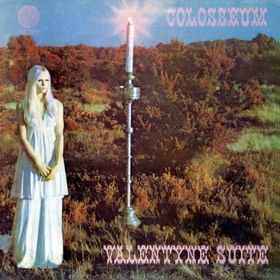
I was completely blown away by this album. Especially since I never warmed-up to their following effort, "Daughter of Time". "Valentyne Suite" was their second and final album with the original lineup of keyboardist Dave Greenslade, bassist Tony Reeves, guitarist/vocalist James Litherland, drummer Jon Hiseman, and saxist Dick Heckstall-Smith. Reeves and Litherland would be the ones to defect from the band after this album.
"Valentyne Suite" was the very first album ever released on the "swirl" Vertigo label (if you own the version on Bronze Records, you have the reissue, which was issued after the band made the move to that label in '71). Without a doubt, this is by far the most interesting John Mayall-related album I have ever heard (Heckstall-Smith and Reeves had played in Mayall's Bluesbreakers). "The Kettle" is a rather rocking number, dominated by heavy use of guitar. "Elegy" is a rather jazzy piece complete with strings. Great piece. "Butty's Blues" is, as you expect, a bluesy-piece, but you get lots of CHICAGO or BLOOD, SWEAT & TEARS-like horns. "The Machine Demands a Sacrifice" is more hard rocking, blues-influenced number then unexpectedly (at the end) finds the band doing a bizarre experiment that reminds one of Krautrock bands that would appear in the next couple of years. The album closes with the totally amazing title track, divided in to three movements. This is basically Dave Greenslade's time to shine. The music is just unbelievably intense, and you should check out Jon Hiseman's drumming! I can hardly believe it! Amazing album, and for those who don't mind jazz and blues in their prog rock, you should get this album.
:::Review by Proghead:::

Colosseum - Valentyne Suite (1969)

1. The Kettle (4:25)
2. Elegy (3:10)
3. Butty's Blues (6:44)
4. The Machine Demands A Sacrifice (3:52)
5. The Valentyne Suite:
Theme One: January's Search (6:25)
Theme Two: February's Valentyne (3:33)
Theme Three: The Grass Is Always Greener (6:55)


Musicians
- Dave Greenslade / Organ, Vocals
- Dick Heckstall-Smith / Sax
- John Hiseman / Drums
- Tony Reeves / bass
- James Litherland / guitar, vocals

:::Air Lore:::

Posted: Thursday, 16 April 2009 by jazzlover in Etykiety: , , ,
5


Recorded for RCA in 1979, the vanguard trio Air set out to explore its jazz roots. In fact, not only the trio's jazz roots, but everybody's right back to Scott Joplin and Jelly Roll Morton as they were inventing a music that would tear up the streets of New Orleans and later change the world. Interestingly, since most of the music here -- all written by the aforementioned except for one tune -- was composed by pianists and is widely regarded as piano music, Air's exploration entirely struck the piano from the conversation. Reedman Henry Threadgill, bassist Fred Hopkins, and drummer Steve McCall turned the ragtime music of the fathers inside out and created an exploratory reinsertion of it into the avant-garde of the late '70s. Jelly Roll's "Buddy Bolden's Blues" becomes a blues from another century in the melodic universe of Threadgill, who doesn't give a damn about changes as much as he does stretching the harmonics of the blues idiom into other musics entirely. And in the familiar "King Porter Stomp," also by Morton, Threadgill challenges McCall, who quadruples the time so Henry and Fred can stop up the middle eight with some weird angular intervals where arpeggiated harmony and modal striation become one and the same thing. Finally, on Joplin's "Weeping Willow Rag," the band moves through the changes and then undermines them, turning them inside out as if this were really a party tune from somewhere that willow trees didn't exist or had already disappeared into some toxic twilight. Here are the joyous blues, the raucous blues, the rip 'em up and then send 'em home blues trapped in a color palette so rich and so varied it's difficult to find only one or two textures to fit them inside. Through it all, this remains the album most Air fans love most, precisely because of all the joy and irreverence in the proceedings, which didn't update the old music, but brought it into focus for the revolutionary improvisational template that it is.
:::Review by Thom Jurek:::

Air - Air Lore (1979)

1. The Ragtime Dance (9:20)
2. Buddy Bolden's Blues (9:30)
3. King Porter Stomp (3:52)
4. Paille Street (2:20)
5. Weeping Willow Rag (11:31)

Credits
Bass - Fred Hopkins
Drums, Percussion - Steve McCall
Producer - Michael Cuscuna
Saxophone [Tenor, Alto], Flute - Henry Threadgill

:::Word Of Mouth Revisited:::

Posted: Wednesday, 15 April 2009 by jazzlover in Etykiety:
2


Back before he turned everyone's idea of bass playing inside out, Jaco Pastorius spent five years on the bandstand with the Peter Graves Orchestra at Bachelors III, a swanky spot in his hometown of Ft. Lauderdale. Nearly three decades after the future star's departure in 1975, and 16 years after his brutal murder, Graves got the guys back together, christened them in their former colleague's name, and invited the most prominent bass guitarists of the early 21st century down to join them in a project dedicated to Pastorius' legacy. Throughout these polished performances, the bass parts testify to how profoundly Pastorius altered that instrument's role. Bottom line (so to speak): he gave them the option of playing from a soloist mentality and blowing all over the beat, as fast and free as any saxophonist, as long as he or she had chops and didn't subvert the groove. The guest bassists on this collection absorbed this lesson long ago. Each can scatter quick licks, some of them even faster than Pastorius himself. So why does a vague disenchantment haunt these performances?
Perhaps it's because these players, great as they are, are still emulating more than discovering. Some imitate even the nuances of the Pastorius tone and phrasing, as does Richard Bona on "Punk Jazz" -- which, of course, may be a form of tribute in this context. On an opposite extreme, the light-speed, staccato hailstorm unleashed by Victor Wooten on "Teen Town" is fundamentally unmusical, focusing on the player more than the material being played -- which is, come to think of it, the real revelation here. Pastorius' tunes reflect a compositional maturity that wasn't always evident in the more improvisational context of Weather Report, and his arrangements -- notably an idiosyncratic treatment of "Killing Me Softly" and the marimba-flavored exotica of "Opus Pocus" - suggest that had he had more time, he would have written history with his pen as much as his performance. One complaint: the samples of Pastorius' voice, chopped into microbits that carry no meaningful content and seem intended to function as objects of postmodern reflection, if not reverence. All these interruptions accomplish is to remind you that some artists speak most eloquently without words.
:::Review by Robert L. Doerschuk:::

Jaco Pastorius Big Band - Word Of Mouth Revisited (2003)

1. Jaco Speaks (0:07)
2. Jaco Pastorius Big Band Havona (5:20)
Arranged By - Larry Warrilow
Bass - Jimmy Haslip
Written-By - Jaco Pastorius
3. Jaco Pastorius Big Band Teen Town (4:11)
Arranged By - Larry Warrilow
Bass - Victor Wooten
Written-By - Jaco Pastorius
4. Jaco Speaks (0:04)
5. Jaco Pastorius Big Band Punk Jazz (5:04)
Bass - Richard Bona
Saxophone [Tenor] - Mike Scaglione
Written-By, Arranged By - Jaco Pastorius
6. Jaco Speaks (0:05)
7. Jaco Pastorius Big Band Barbary Coast (5:54)
Arranged By - Larry Warrilow
Bass - Gerald Veasley
Written-By - Jaco Pastorius
8. Jaco Pastorius Big Band Killing Me Softly (4:23)
Arranged By - Jaco Pastorius
Bass - Jeff Carswell
Written-By - Charles Fox , Norman Gimbel
9. Jaco Speaks (0:05)
10. Jaco Pastorius Big Band (Used To Be A) Cha Cha (6:54)
Arranged By - Dan Bonsanti
Bass - Victor Bailey
Written-By - Jaco Pastorius
11. Jaco Pastorius Big Band Wiggle Waggle (5:47)
Arranged By - Stan Webb
Bass - Jaco Pastorius
Written-By - Herbie Hancock
12. Jaco Speaks (0:11)
13. Jaco Pastorius Big Band Continuum (3:22)
Bass - Jimmy Haslip
Written-By, Arranged By - Jaco Pastorius
14. Jaco Speaks (0:04)
15. Jaco Pastorius Big Band Elegant People (6:30)
Arranged By - Jaco Pastorius
Bass - Gerald Veasley
Percussion [Hand Drums] - Bobby Thomas Jr.
Written-By - Wayne Shorter
16. Jaco Pastorius Big Band Opus Pocus (5:15)
Arranged By - Larry Warrilow
Bass - David Pastorius
Marimba - Gary Mayone
Written-By - Jaco Pastorius
17. Peter & Jaco Speaks (0:47)
18. Jaco Pastorius Big Band Domingo (6:45)
Bass - Victor Bailey
Written-By, Arranged By - Jaco Pastorius
19. Jaco Pastorius Big Band Forgotten Love (4:02)
Arranged By - Larry Warrilow
Bass - Christian McBride
Flute - Mike Scaglione
Written-By - Jaco Pastorius
20. Jaco Speaks (0:04)
21. Marcus Miller Punk Jazz Revisited (6:35)
Bass, Clarinet [Bass], Drums, Clavinet, Saxophone [Soprano], Scratches - Marcus Miller
Saxophone [Soprano] - Roger Byman
Trumpet - Michael "Patches" Stewart
Written-By - Jaco Pastorius , Marcus Miller

Credits
Conductor - Peter Graves
Drums - Mark Griffith (2)
Guitar, Koto [Synth] - Randy Bernsen
Piano, Keyboards - Michael Levine
Saxophone [Alto, Soprano], Flute, Flute [Piccolo] - Billy Ross
Saxophone [Baritone], Clarinet [Bass], Flute - Mike Brignola
Saxophone [Tenor, Alto], Clarinet, Flute - Gary Keller
Saxophone [Tenor, Soprano], Clarinet - Ed Calle
Trombone - Dana Teboe
Trombone [Bass] - Craig Gosnell (tracks: 5, 10, 18) , John Kricker
Trumpet, Flugelhorn - Jason Carder , Jeff Kievit , Ken Faulk

:::Čikori:::

Posted: Tuesday, 14 April 2009 by jazzlover in Etykiety:
1


Iva Bittová does not release albums very often, making each one something to treasure. Cikori is her first major project since her critically acclaimed duet with Vladimír Václavek, the 1997 Bilé Inferno, and her first group effort since she left Dunaj. Cikori is actually both the title of the album and the name of this quintet, which is also comprised of Václavek (acoustic guitar), Frantisek Kucera (trumpet), Jaromír Honzák (double bass), and Milos Dvorácek (drums and percussion). The three new players already appeared as guests on selected tracks from Bilé Inferno. Basically, this opus develops more elaborate arrangements around the sound of the previous album. Václavek remains an essential part of the atmosphere, but the added instruments provide a wider palette for the singer. Songs like "Krídla" and "Zapísej" show the same attention to melodies, sparse arrangements, delicate build-ups, and charm. In "Jungle" and "První," the group adopts a quasi-Latin mood, which gives Bittová's very personal scats a new color. And who could resist her mischievous child tone when she meows in "Kocha"? Cikori may not be as gripping as Bilé Inferno, but it still represents a strong effort. It's full of beautiful, light, playful pop with an avant-garde twist. Recommended.
:::Review by François Couture:::

Iva Bittová – Čikori (2001)

1. Kočka
2. Mravenčí
3. Křídla
4. Jungle
5. Přání
6. První
7. Polykaka Nožů
8. Zapískej
9. Kazu

Credits
Vladimír Václavek - acoustic guitar
Frantisek Kucera – trumpet
Jaromír Honzák - double bass
Milos Dvorácek - drums and percussion

:::Balladyna:::

Posted: Friday, 10 April 2009 by jazzlover in Etykiety: , , ,
3


Stanko's first recording for the ECM label; it would be twenty years until the next! "First Song" is characterized by a meter that constantly, subtly shifts.
Holland and Vesala blaze as the anchors, but this essentially themeless music is held together by an audible structure that allows Stanko and Szukalski infinite freedom yet never devolves into mere blowing. This track is a wonderful example of how Stanko makes sense by allusion yet sounds free. "Balladyna" starts out as what sounds like a folk melody and mutates in a freeform exploration of pure sound and rhythm. Marvelous!
:::Review by Budd Kopman:::

Tomasz Stańko - Balladyna (1976)

1. First Song (7:38)
2. Tale (3:28)
3. Num (7:11)
4. Duet (2:55)
5. Balladyna (7:59)
6. Last Song (6:02)
7. Nenaliina (5:29)

Credits
Bass - Dave Holland
Drums - Edward Vesala
Producer - Manfred Eicher
Tenor And Soprano Saxophone - Tomasz Szukalski
Trumpet - Tomasz Stańko

:::Afro-Cuban Jazz Moods:::

Posted: Tuesday, 7 April 2009 by jazzlover in Etykiety: , , ,
5


Here we have a summit meeting late in the careers of the pioneering titans of Afro-Cuban jazz -- Dizzy Gillespie fronting the Machito orchestra on trumpet, with Mario Bauza as music director, alto saxophonist/clarinetist, and organizing force, and Chico O'Farrill contributing the compositions and arrangements. This could have been just a nostalgic retro gathering 25 years after the fact, but instead, these guys put forth an ambitious effort to push the boundaries of the idiom. The centerpiece is a 15-minute trumpet concerto for Dizzy called "Oro, Incienso Y Mirra," where O'Farrill melts dissonant clusters, electric piano comping, and synthesizer decorations together with hot Afro-Cuban rhythms into a coherent, multi-sectioned tour de force. Dizzy, who apparently had never been in the same room with synthesizers before, is magnificent as he peels off one patented bebop run after another over Machito's band and in the gaps between. There is also an equally sophisticated suite of O'Farrill pieces grouped under the title "Three Afro-Cuban Jazz Moods," which mixes rock elements into the rhythms. Parts of "Pensativo" sound as if O'Farrill had been carefully listening to Santana, the teacher learning from the student, as it were. It adds up to a paltry 32 minutes of music, yet one can forgive the short weight, this being all there is of a historic recording session.
:::Review by Richard S. Ginell:::

Dizzy Gillespie - Afro-Cuban Jazz Moods (1975)

1. Oro, Incienso Y Mirra (15:39)
2. Calidoscopico (5:09)
3. Pensativo (5:25)
4. Exuberante (5:45)

Credits
Bass [Fender] - Carlos Castillo
Bongos, Cowbell - Mario Grillo
Conductor, Arranged By - Chico O'Farrill
Congas - Pepin Pepin
Drums - Mickey Roker
Drums [African] - Julito Collazo , R. Hernandez
French Horn - Brooks Tillotson , Don Corrado (track: 1 only)
Leader - Machito
Maracas, Claves - Frank "Machito" Grillo
Piano [Electric] - Jorge Dalto
Producer - Arturo O'Farrill , Mario Bauza
Saxophone [Alto], Clarinet - Mario Bauza
Saxophone [Alto], Flute, Piccolo Flute - Mauricio Smith
Saxophone [Baritone], Clarinet [Bass] - Leslie Yahonikan (tracks: 2-4 only)
Saxophone [Tenor], Clarinet - Jose Madera Sr.
Saxophone [Tenor], Flute [Alto] - Mario Rivera (2)
Soloist - Dizzy Gillespie
Synthesizer - Dana McCurdy
Timbales, Cabasa - Jose Madera Jr.
Trombone - Barry Morrow , Jack Jeffers , Jerry Chamberlain (tracks: 2-4 only) , Lewis Kahn (tracks: 2-4 only)
Trumpet, Flugelhorn - Manny Duran , Ramon Gonzalez Jr. , Raul Gonzalez (4) , Victor Paz
Tuba [Bass] - Bob Stewart (track: 1 only)

:::Execution Ground:::

Posted: Saturday, 4 April 2009 by jazzlover in Etykiety: , , ,
2


A trio consisting of alto saxophonist John Zorn, bassist Bill Laswell,and drummer Mick Harris, Painkiller was a novel blend of free improv, jazz, dub, and death metal. Although the lineup occasionally expanded to include the uniquely gifted Japanese vocalist Yamantaka Eye and other guests, Execution Ground is an investigation of the power and range of the core trio. The first disc of this inventive and unsettling two-disc set features three long improvisations that show off the band's dub influence. The second disc, subtitled "Ambient Dub," is a rethinking/remix of the third and first improvs on the first disc. Overall less thrashy than some Painkiller excursions, the improvisations here are striking for their greater sonic space without sacrificing any of the heaviness. At times, the band rests, making way for ominous breathing and distant sustained screams, which recur throughout. The transitions from silence to groove to noise and back are relentless and dramatic. Harris proves to be an astonishingly inventive drummer, consistently varying the foundation in surprising ways. Laswell's tone varies from the brightness of flanged round-wound strings scraping the frets to a clean, menacing low-frequency pulse, and sticks mostly to elemental, non-flashy lines that keep the mood deep and dark. Zorn's playing is excellent here, varying between extremely overblown piercing tones (perhaps the best way of being heard over such a rhythm section) and nearly conventional jazzy lines that confidently ride atop the din. An occasional microtonal chorus effect warps his playing, and the effect is so disturbing that it's surprising he soon abandoned this technique.
:::Review by Maurice Rickard:::

Painkiller - Execution Ground (1994)

Execution Ground
1-01. Parish Of Tama (Ossuary Dub) (16:05)
1-02. Morning Of Balachaturdasi (14:45)
1-03. Pashupatinath (13:47)
Ambient
2-01. Pashupatinath Ambient (20:00)
2-02. Parish Of Tama Ambient (19:19)

Credits
Artwork By [Layout, Design] - Studio T.
Bass, Samples - Bill Laswell
Drums, Samples, Vocals - Mick Harris
Engineer - Oz Fritz (tracks: 1-01 to 1-03) , Robert Musso (tracks: 2-01, 2-02)
Saxophone, Vocals - John Zorn

:::Queen Of All Ears:::

Posted: Thursday, 2 April 2009 by jazzlover in Etykiety:
3


John Lurie's so-called "non-jazz" approach is in full flower on this fascinating record. The ever-growing (nine-piece at this point) band builds layers of rhythm and melody with unique effect throughout. On "The Birds Near Her House," a serpentine melodic line weaves through a steady rhythmic bed, building to a frenetic climax. "Scary Children" is a foreboding dirge that still manages to exude true humor. Perhaps that is the most significant aspect of this music: it has real character and life. It doesn't just groove -- it starts a conversation.
:::Review by Tim Sheridan:::

The Lounge Lizards - Queen Of All Ears (1998)

1. First and Royal Queen 3:59
2. Birds Near Her House 11:40
3. Scary Children 4:07
4. She Drove Me Mad 4:21
5. Queen of All Ears 5:25
6. Monsters over Bangkok 10:13
7. Three Crowns of Wood 4:01
8. John Zorn's S&M Circus 6:13
9. Yak 5:41
10. Queen Reprise 3:46

Credits
Artwork By [Cover Painting] - John Lurie
Bass - Erik Sanko
Cello - Jane Scarpantoni
Clarinet [Bass] - Michael Blake
Drums - Calvin Weston
Guitar - David Tronzo
Mastered By - UE Nastasi
Mixed By - Pat Dillett*
Organ - Evan Lurie
Percussion - Ben Perowsky
Piano - Evan Lurie
Producer - John Lurie , Pat Dillett*
Recorded By - James Farber
Saxophone [Alto] - John Lurie
Saxophone [Tenor] - John Lurie , Michael Blake
Trumpet - Steven Bernstein
Written-By - John Lurie