:::The Man Who Does Not Nod:::

Posted: Thursday, 5 May 2011 by jazzlover in Etykiety:
7

I've seen a real avant-jazz band in Japan playing flexibly.
What a tensive and unequivocal but enjoyable and relaxed play they could give to us! Now the more and more I listen to the live work, the stronger and stronger my impression and amazement can be. At first listen to it! The sharp saxophone sounds can tell us all about the album.
Their music style is basically jazzy, funky, freaky, and free-formed one, with complex and improvisatory rhythm and play. Really...really we should be fallen into their battles with a saxophone, guitars, and percussion - especially the rhythm section can make all sounds twisted and sharp-edged but strict and steady...have the key role I consider! Indeed there are lots of 'big waves' with alternative beats (so difficult for the outfit to play, harmonize strictly and steadily), but on the stage they could build the songs up freely, naturally. Wanna say, you can't believe this work be of some of their live performances, can you? I'm sure this recording condition should be quite good with heavy and clear instrumental sounds and, on the other hand their skill of playing should be beyond expression. Their intention and purpose - they should kick the core or medulla of avant-jazz rock deeply into our brain - can move and blow us away without any stop.
Although we may not have notice this be a live album without applause between some songs, let me say that the audience should be an invisible (inaudible?) instrument and also the audience could make the songs with the band together. Otherwise, I guess this tension must not be born here.
Yes, this brilliant masterpiece could be born from the ground of the earth, without any artifacts or artifices.
:::Review by DamoXt7942:::

Tipographica - The Man Who Does Not Nod (1995)

1. Naked lunch (GOGO Version)
2. Tipographica's worst date
3. King's Golden Toilet
4. MC500 MC-500 in a ZEN room
5. The turf have disordered gravity
6. The man who does not nod
7. A smell of gunpowder, and a flavor of she

Credits
- Tsuneo Imahori / guitar
- Naruyoshi Kikuchi / saxophone
- Osamu Matsumoto / trombone
- Akira Minakami / keyboards
- Hiroaki Mizutani / bass
- Akira Sotoyama / drums

:::Rocksession:::

Posted: Wednesday, 4 May 2011 by jazzlover in Etykiety:
1

Excellent jazzy Krautrock
Rock session is another album consisting of material they recorded during sessions between 1971 and 1972. Actually the band was planning to release this stuff already in 1972. But their record company UA was not pleased by it, so they recorded first Father, Son & Holy Ghosts and the songs from these sessions have been used for this album here and Steig aus. The line-up is almost identical on these two albums, with the difference that Sigi Schwab was replacing Roman Bunka on guitar. But it's anything else than a bad album and rather a very interesting one who is deeply into typical jazz-rock in the Krautrock vein.
The opener A place to go is a very orientally influenced piece with marimbas, keys, electric guitar, percussion and very "kraut-ish" sounding vocals. Really great stuff and anyone loving this sub-genre will be fascinated by it. Entrances, the longest track is dominated by Schwab's excellent jazzy guitar before Hammond is taking over. The work of the rhythm section is as well just awesome. It's a highly jazzy piece on an album that is probably the most jazzy one of their three session records, no wonder since jazz pianist Mal Waldron was involved in three of the four tracks as a composer. In the last third of the track there is an excellent sax solo by Hofmann. This one is for sure the highlight of the album.
Second side of the record is the more relaxing and soaring one starting with Warm canto, a very soft and mellow track played on vibes, keys, violin and percussion plus electric guitar and piano by Waldron in its second half. Although being a rather quiet song in the beginning it's revealing a fascinating development in its course. Last one Dirge is starting as well with a highly soaring atmosphere with vibes, guitar and then violin and e-piano. As on the whole album the bass and drum work is again excellent. Also this song is developing after a while to a fascinating one.
As a SUMMARY this album might be in a way different from their excellent other ones like Father,Son... or Embryo's Rache, but nevertheless I would say it's an essential one by them and recommended to any lover of jazzy Krautrock.
:::Review by hdfisch:::

Embryo - Rocksession (1973)

1. A Place To Go (4:25)
2. Entrances (15:35)
3. Warm Canto (10:07)
4. Dirge (9:35)

Credits
- Christian Burchard / drums
- Jorg Evers / bass
- Edgar Hofmann / saxophone and violin
- Jimmy Jackson / organ
- Dave King / bass
- Siegfried Schwab / guitar
- Mal Waldron / electric piano

:::Almost Splendid:::

Posted: Tuesday, 3 May 2011 by jazzlover in Etykiety:
1

Four musicians, five instruments and countless inspirations from all over the world have brought about this quartet and their sound that is so hard to pin down to a genre. Is it avantgarde-jazz? Post-rock? Nu-jazz? Avant- pop? What you can be sure of is that with Jazzpospolita’s courage and conviction to push boundaries, whilst always respecting the traditions, they are always sure to head towards the unknown. Debuting in 2009, JAZZPOSPOLITA achieved great success in alternative music circles in Poland and toured extensively. They experienced a very positive reception to the release of their critically acclaimed EP, Almost Splendid, bringing about enviable comparisons to greats such as Cinematic Orchestra, Jaga Jazzist and Tortoise. Indeed, the opening track of the EP has been used on the brand new ‘Jazz Lounge Cinema 4’ compilation.

“Probably the finest polish nu-jazz stuff since Skalpel” – Michał Zagroba, PORCYS

“Surprisingly mature and of stunning composition - a figment of imagination" – Borys Dejnarowicz, PULP

“Difficult to categorize and compare to something, impossible to say: someone’s already played like that” – POLISZ MNIE
:::Review by www.myspace.com/jazzpospolita:::

Jazzpospolita - Almost Splendid (2010)

01. Laszló And Cousins
02. Fashion For Orient In The 70's
03. Oh!
04. Tribute To Aerobit
05. Polished Jazz
06. Insects
07. Looking Thru Ambient Breathing Thru Dub
08. Splendid
09. Sea,Panther,Shallow
10. Laszló And Sisters - Remix By Excessive Music Productions

Credits
Stefan Nowakowski - acoustic bass, bass guitar
Wojtek Oleksiak - drums
Michał Przerwa-Tetmajer - guitar
Michał Załęski - keyboards, synthetizers

:::Dark Magus Live:::

Posted: Monday, 2 May 2011 by jazzlover in Etykiety: , , , , , , ,
3

For those of you still looking for that ever elusive progressive rock album by Miles Davis, you have found it here. This is not jazz or jazz fusion, funk-rock or funky jazz, this is 100% psychedelic avant-garde hard rock totally devoid of any filler or useless by-products. On this album Miles writes out his old jazz credentials with a razor blade onto a jagged piece of metal, crumples it up and stuffs it down the throat of every critic who tried to tell him who he is and what kind of music he should play. If the jazz establishment thought Bitches Brew was tough, nothing could prepare them for this sonic onslaught. The best way to describe this album is equal parts Iggy Pop, Sun Ra, John Zorn, Stockhausen, MC5, Hendrix, Velvet Underground with John Cale and live King Crimson improvs.
I have always thought that Miles was heavily influenced by the early 70s Detroit rock scene during this phase of his career. The Detroit scene was particularly rough, as well as creative and featured bands like Iggy Pop and the Stooges, The MC5 and Funkadelic, long before Funkadelic gave up their psychedelic hard-rock roots to become a funk/dance band. These bands mixed hard proto-punk beats with bluesy funk and avant-garde noise and were light years ahead of many other American rock bands as far as the future of rock was oncerned.
Creative noisy hard rock is hardly the only influence on here. Dark Magus is similar to other 70s recordings by Miles in that he often breaks the beat down into free sections that are sometimes loud and busy, and other times quiet and ominous. These sections always show the usual Stockhausen and Sun Ra influences, but the difference on this record is that Miles has a bigger band and the sound collages are more dense and interesting. Some of my favorite moments happen when Mtume holds a cheap 70s drum machine up to the microphone and creates humanly impossible dense layers of rhythms while the other band members add electronic sounds and incidental percussion. There are some saxophone led hard funk-rock jams occaisonally, but these sections sound more like Crimson's Earthbound album or Band of Gypsys than 70s party music.
The star of this show is the incendiary avant-psychedelic guitar shaman Pete Cosey. Robert Fripp has referred to Cosey's guitar playing as 'wall paper shredding' and probably Fripp, and/or McLaughlin are the only guitarists I can think of that could possibly match this man's sonic outbursts. This isn't my personal favorite Miles album, but this is probably his best when it comes to creative avant-prog rock.
:::Review by Easy Money:::

Miles Davis - Dark Magus Live (1974)


CD1
01. Moja (Part 1) 12:28
02. Moja (Part 2) 12:40
03. Wili (Part 1) 14:20
04. Wili (Part 2) 10:44

CD2
01. Tatu (Part 1) 18:47
02. Tatu (Part 2) (''Calypso Frelimo'') 06:29
03. Nne (Part 1) (''Ife'') 15:19
04. Nne (Part 2) 10:11

Credits
Miles Davis - trumpet, organ
Dave Liebman - flute (2), soprano sax (1), tenor sax
Azar Lawrence - tenor sax
Reggie Lucas - guitar
Pete Cosey - guitar
Dominique Gaumont - guitar
Michael Henderson - electric bass
Al Foster - drums
Mtume - percussion

:::Seize The Rainbow:::

Posted: Sunday, 1 May 2011 by jazzlover in Etykiety: , , , ,
1

The follow-up to Sonny Sharrock's entirely solo comeback album, Guitar, Seize the Rainbow puts the guitarist at the helm of a rock-styled power trio featuring bassist Melvin Gibbs and Abe Speller and Pheeroan akLaff on drums (producer Bill Laswell also plays bass on one cut). The overall sound of the album is surprisingly straightforward, heavy metal-tinged jazz-rock, though the caliber and taste of the musicians makes it something far more than what rock guitar virtuosos of the period were recording. Still, there isn't too much way-out craziness, aside from some of Sharrock's trademark slide-guitar explorations on the spiritual title track and the riff-driven rockers "Dick Dogs" and "Sheraserhead's Hightop Sneakers." For the most part, Sharrock's playing on Seize the Rainbow is more concerned with melodic themes and traditional single-note solo lines than textural experiments. Fortunately, his tone is still gloriously skronky, and his playing is no less passionate. Bill Laswell's production is bright and immediate, and the rhythm section's agility breathes a spark into the straight-up rock rhythms they're often asked to play. Even if it isn't quite as evocative as the solo sound paintings of Guitar, Seize the Rainbow does place Sharrock's playing in one of its most accessible settings, and it's perhaps the best starting point for rock fans wondering what the fuss is about.
:::Review by Steve Huey:::

Sonny Sharrock - Seize The Rainbow (1987)

1. Dick Dogs 5:10
2. My Song 6:25
3. Fourteen 9:55
4. J.D. Shaa 5:37
5. Seize the Rainbow 4:32
6. The Past Adventures of Zydeco Honeycup 5:22
7. Sheraserhead's High-Top Sneakers 4:07

Credits
Bass – Melvin Gibbs
Co-producer – Bill Laswell
Drums – Abe Speller, Pheeroan Aklaff
Guitar – Sonny Sharrock
Mixed By – Robert Musso

:::Eternal Rhythm:::

Posted: Saturday, 30 April 2011 by jazzlover in Etykiety: , , , , , , ,
4

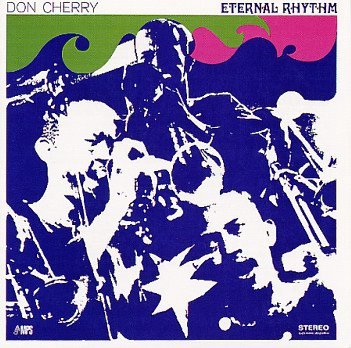
Eternal Rhythm is a masterpiece on several levels. It was one of the earliest major examples of the idea that it was possible for any and all musical cultures to exist simultaneously, a philosophy that rejected any innate musical hierarchy and had no trouble placing the earthiest blues alongside the most delicate gamelan. It was also a summit meeting between representatives of the American and European jazz avant-garde, black and white, dismissing as meaningless both the cautious attitude of American jazz musicians toward Europeans edging onto their turf and the tentative stance of Europeans playing a music that was not "theirs." More importantly, Eternal Rhythm exists as an utterly spectacular, movingly beautiful musical performance, one of the rare occasions where the listener has a visceral sense of borders falling and vast expanses of territory being revealed for the first time. Cherry balanced compositional clarity, wild free improvisation, and a totally inclusive musical consciousness in a manner seldom achieved, resulting in a cohesive, spellbinding session. His own playing throughout on both trumpet and flute is at his highest levels, but the contributions of his fellow musicians are just as amazing. Special mention should be made of guitarist Sonny Sharrock, whose "glass shards" approach is in full bloom here, and vibraphonist/pianist Karl Berger, who throws himself with sublime abandon into both the gamelan and blues aspects of the piece. If only the pallid "world music" of the succeeding decades had followed this model! Eternal Rhythm is Don Cherry's masterwork and one of the single finest recordings from the jazz avant-garde of the '60s. It is required listening.
:::Review by Brian Olewnick:::

Don Cherry - Eternal Rhythm (1968)

1. Eternal Rhythm Part 1 17:45
2. Eternal Rhythm Part 2 23:37

Credits
Bass – Arild Andersen
Cornet, Gamelan [Gender, Saron], Flute [Bengali, Bamboo, Metal, Plastic], Performer [Haitian Guard], Composed By – Don Cherry
Drums, Gamelan [Saron], Gong, Bells, Voice – Jacques Thollot
Guitar – Sonny Sharrock
Piano, Piano [Prepared] – Joachim Kühn
Saxophone [Tenor], Oboe, Clarinet, Flute – Bernt Rosengren
Trombone – Albert Mangelsdorff, Eje Thelin
Vibraphone, Piano, Gamelan [Gender] – Karl Berger

:::Cozy Endings:::

Posted: by jazzlover in Etykiety:
2

With their alluring cover art and a bunch of song titles ("Open Up", "Geyser", "The Happy Minotaur") that might also double as the names of exotic sex positions, it might appear that Artanker Convoy are actively courting the swank bachelor pad market. It can also occasionally sound that way on Cozy Endings, the Brooklyn instrumental sextet's second album for Social Registry, but typically with a lot else going on besides.
Incorporating elements of jazz and dub, the eclectic group can recall some of the Beastie Boys' better homegrown funk instrumentals, as well as the dusky post-rock of Chicago's Tortoise / Isotope 217 contingent. Whatever it is they're up to, Artanker Convoy deliver it all with a laidback, cultured flair that seems specifically designed to complement your personal activities rather than compete with them.
Drummer/ band leader Artanker and bassist Joe Fiorentino played with LCD Soundsystem's James Murphy in the short-lived Jimi Clambake Explosion, and their easy chemistry anchors Cozy Endings with a graceful, self-assured authority. The rest of the players-- most notably saxophonist Jake Oas and multi-instrumentalist Chris Seeds-- all display considerable chops as well, but the emphasis here is less on soloing or individual voices than it is on joint exploration. Though the Convoy's sound can point in the direction of the electric 70s grooves of Miles Davis or Herbie Hancock, there is a hazy sense of restraint here that keeps noisier commotion at bay, as the musicians concentrate their energies on servicing the album's hypnotic, understated melodies.
This strategy works to near perfection on the first track "Open Up", which builds with exquisite patience from an extended intro of glassy drones and fluttering percussion into a loose-limbed Krautrock stride, with narcotic guitar figures joining Oas' sax in midair for some tranquil dialogue. Less ambitious, but no less pleasant, are the more funk-oriented likes of "Geyser" or "Black Dauphin", whose smoky organ flourishes and organic rhythms ride with a relaxed, cocktail-hour motion. Sturdy though these performances are, however, there's little here that'll likely leave the listener with more than a few residual traces of perfume or second-hand smoke, and one can soon begin to wish that Artanker Convoy had taken a few more wild chances with their production or arrangements.
The only vocals to speak of are Artanker's indecipherable space-whispers on "Ejector", one of the few tracks here that threatens to come loose from its moorings. The addition of his voice does bring a welcome element of disorientation, with the song's trajectory aided by Jon Warren's extra percussion and an electronic shimmer that recalls the humid jazz-funk fusion of Herbie Hancock's Sextant. Even more surprising is the presence of pedal steel on "The Happy Minotaur"; a brief exercise that illustrates how much more intriguing Artanker Convoy can be when they alter just one or two ingredients in their formula. Cozy Endings comes packaged with an extra DVD of visuals supplied by the art and dance collective MUX, whose members have also frequently performed with Artanker Convoy in concert. And though the addition of these videos does greatly enhance the appeal of the album, they also serve to accentuate the impression that this music might be best appreciated when there's other sensual stimulation available at the same time.
:::Review by Matthew Murphy:::

Artanker Convoy - Cozy Endings (2007)

1. Open Up 12:03
2. Black Dauphin 6:35
3. Ejector 7:09
4. Rabbit 6:16
5. Geyser 5:14
6. The Happy Minotaur 2:04

Credits
Artanker (drums),
Joe Fiorentino (bass),
Chris Seeds (keyboard),
Art Lavis (guitar),
Jon Warren (percussion),
Jake Oas (sax)

:::Sun Ship:::

Posted: by jazzlover in Etykiety: , , ,
1

Other than First Meditations, which was not released at the time, Sun Ship (reissued on CD by Impulse) was the final studio album by John Coltrane's classic quartet (with pianist McCoy Tyner, bassist Jimmy Garrison, and drummer Elvin Jones) before Pharoah Sanders joined the band on second tenor. At this point in time, Coltrane was using very short repetitive themes as jumping-off points for explosive improvisations, often centered around one chord and a very specific spiritual mood. Tyner sounds a bit conservative in comparison, but Jones keeps up with Trane's fire (especially on "Amen"). Even in the most intense sections (and much of this music is atonal), there is a logic and thoughtfulness about Coltrane's playing.
:::Review by Scott Yanow:::

John Coltrane - Sun Ship (1965)

1. Sun Ship 6:12
2. Dearly Beloved 6:27
3. Amen 8:16
4. Attaining 11:26
5. Ascent 10:10

Credits
Bass – Jimmy Garrison
Drums – Elvin Jones
Piano – McCoy Tyner
Tenor Saxophone – John Coltrane

:::Ghostwriter's Joke:::

Posted: Thursday, 21 April 2011 by jazzlover in Etykiety:
2

This is a vibrating, colorful, sometimes film like, but in the next moment explosively intense jazz album from Poland. The Kapsa brothers, who earlier formed the legendary emo-hardcore band called Something Like Elvis, established originally the Contemporary Noise Quintet transformed afterwards into Sextet. Their debut album called “Pig Inside The Gentleman” was released in the autumn of 2006. The variety of sounds does not allow pigeonholing their music style unambiguously. Smooth and hard elements crossing over in a dense texture of colorful elements, it’s like kind of film music without movie and jazz music without being quit jazz, but still, very classy tunes and elements are perfectly built in into the improvising and sometimes quit jazz-rock fusion taste like music. There’s actually no “noise” in their music, but definitively this is absolutely contemporary, breathing and alive music with exciting turns, moods and charming pulse.
“Ghostwriter’s Joke” actually it’s like a dream or a journey into a moving, shifting, changing universe, like riding on a train and looking out through the window. It’s quit an exciting trip where Jewish and Eastern European musical roots joins together with pieces of jazz-rock, modern jazz and kind of ambiental contemporary music. Tomek Glazik (Kult, ex-4Syfon, Sing, Sing Penelope) proved to be quit an incredible saxophonist just like Wojtek Jahna (Sing, Sing Penelope, Mordy) is a great trumpet player, Kamil Pater knows to rock his guitar, but also plays nice and discrete parts and finally, but not at least, Patryk Weclawek pump his bass extraordinarily.
Their elegance, class and maturity still keeps something from the punk energy, the compositions are incredibly spacious but filled with ingenious solos and all kind of twists, turns and “happenings”, there’s a perfect balance between the superb rhythm combo and the brass section, colored with exciting guitar tunes. This is the kind of album that you can take it off from your CD player.
:::Review by brushvox:::

Contemporary Noise Sextet - Ghostwriter's Joke (2011)

1. Walk with Marylin (06:06)
2. Morning Ballet (06:43)
3. Is That Revolution Sad? (04:53)
4. Old Typewriter (06:43)
5. Chasing Rita (06:43)
6. Norman's Mother (09:13)
7. Kill the Seagull, Now! (04:29)

Credits
Kuba Kapsa - piano, Rhodes, synthesizer
Wojtek Jachna - trumpet
Tomek Glazik - tenor, baritone saxophones, syntezator
Kamil Pater - guitar, baritone guitar
Patryk Weclawek - bass, bass guitar
Bartek Kapsa - drums

:::Kofi:::

Posted: Tuesday, 19 April 2011 by jazzlover in Etykiety: , , , , , , , , ,
3

Kofi was extracted from some of last Blue Note sessions of the 1960s before Byrd's ventures into soul fusion territory. The playing here is no less than stellar, with seasoned veterans such as Ron Carter and Airto Moreira giving Byrd more than ample support to stretch out and soulfully foreshadow elements of future recordings. Lew Tabackin easily shares the spotlight with his beautiful flute passages on the title track, while Frank Foster and the rest of the supporting group complement Byrd's playing with a grace that emulates the early chemistry between the early Miles Davis groups of the early '60s. The subtle relaxed tones of this album make it truly one of the essential releases in Byrd's catalog, not only from a historical standpoint (his future collaborations with the Mizell brothers would take him to an entirely different plane of thought), but from a casual listening standpoint as well.
:::Review by Rob Theakston:::

Donald Byrd - Kofi (1969)

1. Kofi 9:30
2. Fufu 9:45
3. Perpetual Love 8:00
4. Elmina 8:30
5. The Loud Minority 10:00

Credits
Bass – Ron Carter
Drums – Mickey Roker
Drums, Percussion – Airto
Electric Bass – Bob Cranshaw
Electric Piano – Duke Pearson
Flute, Saxophone [Tenor] – Lew Tabackin
Guitar – Wally Richardson
Percussion – Dom Um Romao
Saxophone [Tenor] – Frank Foster
Trombone – Bill Campbell
Trumpet – Donald Byrd

:::High Energy:::

Posted: by jazzlover in Etykiety: ,
3

High Energy (1974): Freddie Hubbard left CTI Records in 1973, having become a much bigger star than most jazz players could ever hope to be, to sign a million-dollar contract with Columbia Records, long the home of Hubbard's hero and fellow trumpeter Miles Davis. In addition to the money, Hubbard sought more control of his music than CTI allowed him, and the opportunity to record with his own band rather than the all-star studio assemblages CTI forced upon him. For his first Columbia album, High Energy (1974), Hubbard did use his own band, a quintet that featured George Cables on piano and Junior Cook on tenor sax (both were also heard on Hubbard's final CTI album, Keep Your Soul Together), plus a collective sweetening of L.A. studio musicians, arranged with surprisingly minimal impact by Dale Oehler. There are two strong Hubbard originals here ("Baraka Sasa" and the album's single, "Crisis"), two excellent Cables originals (the Hubbard-like "Camel Rise," also arranged by Oehler for Bobby Hutcherson's 1975 album Montara, and the slightly well-known "Ebony Moonbeams," which Hubbard also covered on his Japanese-only live LP, Gleam, and Cables also performed on his 1975 solo debut as well as with Hutcherson on the vibist's 1979 album Un Poco Loco) and two Stevie Wonder tunes ("Too High" and the little-known "Black Maybe"). While the arrangements are more minimal than even those that Don Sebesky provided Hubbard at CTI, the electronics quotient is a little higher than usual here with Ian Underwood adding Headhunters-like synth effects (ala Patrick Gleeson), Hubbard employing echo effects and Cables on electric piano throughout. While Hubbard sounds especially strong here, very much in his element, the album never really rises above a genuinely engaging listening experience. But, in praise of the thing, it is a genuinely engaging listening experience.
:::Review by Douglas Payne:::

Freddie Hubbard - High Energy (1974)

A1. Camel Rise
Flute [Bass Flute] – Ernie Watts
Written-By – G. Cables 6:23
A2. Black Maybe
Drums – Harvey Mason
Written-By – S. Wonder 4:58
A3. Baraka Sasa
Written-By – F. Hubbard 10:29
B1. Crisis
Trombone – Dick Hyde
Drums – Harvey Mason
Written-By – F. Hubbard 5:44
B2. Ebony Moonbeams
Bass Clarinet – Pete Christleib
Soprano Saxophone – Ernie Watts
Written-By – G. Cables 6:55
B3. Too High
Tenor Saxophone – Junior Cook, Pete Christleib
Flute – Ernie Watts
Written-By – S. Wonder 6:37

Credits
Bass – Kent Brinkley
Clavinet, Organ – Joe Sample
Conductor, Arranged By – Dale Oehler
Congas – King Errisson
Drums – Ralph Penland
Electric Piano – George Cables
Flute, Tenor Saxophone – Junior Cook
Guitar – Dean Parks
Percussion – Victor Feldman
Synthesizer [Arp] – Ian Underwood
Timbales – Carmello Garcia
Trombone – Dick Hyde, George Bohanon
Trumpet, Flugelhorn – Freddie Hubbard

:::The Original Sin:::

Posted: by jazzlover in Etykiety:
3

Lump-in-throat jazz rock loveliness from this very under-recognized Finnish saxophonist, with an atmosphere as inviting as a warm bath. The rich and relaxed Canterbury-derived moves heard here exist in a direct lineage from Soft Machine's Third and early Nucleus and merits comparison with some of the other Euro units of the era that were carrying a flame forward for this sound, like France's Magma-associated Rhesus O and the related Belgian outfits Placebo and Solis Lacus.
:::Review by mutant-sounds.blogspot.com:::

Eero Koivistoinen - The Original Sin (1971)

A1. The Original Sin 10:05
A2. Rock & Roll 4:52
A3. Bye Bye / Hello 9:09
B1. Both & And 10:02
B2. Summersea 6:30
B3. Sinner 5:48

Credits
Bass – Pekka Sarmanto
Clarinet [Bass] – Unto Haapa-Aho
Drums – Esko Rosnell, Reino Laine
Guitar – Lance Gunderson
Piano – Eero Ojanen
Saxophone [Alto] – Eero Koivistoinen, Pekka Pöyry
Saxophone [Baritone] – Pentti Lahti
Saxophone [Soprano] – Eero Koivistoinen
Saxophone [Tenor] – Eero Koivistoinen, Pekka Pöyry
Trombone – Erkki Lipponen, Juhani Aalto
Trumpet – Tapani Luuppola

:::Stargazer:::

Posted: Saturday, 16 April 2011 by jazzlover in Etykiety: , , , , , ,
1

Trumpeter Dave Douglas, continuing the innovative approach to tribute records he began in 1994 with the Booker Little homage In Our Lifetime, dedicates Stargazer to the great Wayne Shorter. Only three tracks, however, are Shorter compositions: "Pug Nose," "On the Milky Way Express," and "Diana." The rest are Douglas originals that are inspired by Shorter, although Douglas is far too clever to make the inspiration obvious.
Listeners will have to rely on their imaginations to make the Shorter/Douglas connection, which is as it should be with creativity on so high a level. "Goldfish," with its awe-inspiring, chant-like main riff, is the album's highlight. The fast, complex unison lines and free jazz episodes of "Stargazer," with solo spots by drummer Joey Baron and pianist Uri Caine, are also wonderful. Hard-swinging numbers like "Spring Ahead" and "Intuitive Science" contrast strikingly with the tension-filled dissonance of "Four Sleepers" and "Dark Sky." Douglas's writing and playing are highly unpredictable and emotionally rich. His remarkable sextet delivers every note with conviction and finesse. Along with Baron and Caine, bassist James Genus, tenor sax/clarinetist Chris Speed, and trombonist Josh Roseman join forces with Douglas to create music full of character and beauty.
:::Review by David R. Adler:::

Dave Douglas - Stargazer (1996)

1. Spring Ahead 4:25
2. Goldfish 10:33
3. Stargazer 6:42
4. Four Sleepers 10:26
5. On The Milky Way Express 4:14
6. Pug Nose 4:46
7. Dark Sky 5:55
8. Intuitive Science 8:55
9. Diana 4:33

Credits
Bass – James Genus
Drums – Joey Baron
Piano – Uri Caine
Saxophone [Tenor], Clarinet – Chris Speed
Trombone – Joshua Roseman
Trumpet, Producer, Arranged By – Dave Douglas
Written-By – Dave Douglas (tracks: 1 to 4, 7, 8), Wayne Shorter (tracks: 5, 6, 9)

2

For whatever reason, what Miles Davis accomplished with Bitches Brew - arguably the album that put fusion on the map - has never been matched and has rarely been emulated. Fusion and various forms of jazz-rock abound thanks to Miles and other pioneering artists, but the sounds and textures of Bitches Brew remain nearly unique - fusion artists took different directions and, for whatever reason, ended up sounding more directly derived from groups like Mahavishnu Orchestra than the free-form, spacious Bitches Brew-era Miles.
John Zorn's Electric Masada, here recorded at a gig in New York, is one of the few fusion groups that actually sounds a lot like Miles circa Bitches Brew. The group takes seven Masada compositions and turns them into raging, energetic beasts. "Idalah-abal", from Alef, here becomes a ferocious number with Marc Ribot's guitar jamming on an anchoring riff while Zorn flails away at his saxophone. "Hadasha" is the most Bitches Brew-like number, what with Ribot's wah-wah guitar, Zorn's more controlled blowing, and an open, spacious texture. The performances are inspired and inspiring; fitting for the occasion, part of Zorn's massive 50th birthday bash in New York.
Throughout it all, the percussion holds the group together and provides a consistently interesting and controlled backdrop to the sometimes chaotic improvisation (particularly by Zorn and electronics whiz Ikue Mori). With two drummers and a percussionist, the rhythms here are fascinating yet always groovy; for instance lending the last track, "Kisofim", a Latin shuffle kind of feel. With such a reliably interesting rhythm section, Zorn and his cohorts are free to jam into outer space. And jam they do.
If you enjoy fusion a la Bitches Brew - wide-open improvs anchored by a great groove and the occasionally rocking riff (and spiced up, once in a while, by an intensity that compares best to Naked City) - Electric Masada is one of the best things that's come along in the past decade. No exaggeration.
:::Review by Brandon Wu:::

Electric Masada - 50th Birthday Celebration Volume 4 (2004)

1. Tekufah (14:33)
2. Idalah-Abal (6:18)
3. Hadasha (13:48)
4. Hath-Arob (4:07)
5. Yatzar (9:20)
6. Lilin (15:41)
7. Kisofim (8:41)

Credits
- Cyro Baptista / percussion
- Joey Baron / drums
- Trevor Dunn / bass
- Ikue Mori / laptop electronics
- Marc Ribot / guitar
- Jamie Saft / keyboards
- Kenny Wollesen / drums
- John Zorn / alto saxophone

:::Sleeping Beauty:::

Posted: Friday, 15 April 2011 by jazzlover in Etykiety: , , , , , , , , , , , ,
5

This is the great late-night Sun Ra chillout album you never knew about. The band had been working in a more groove-oriented setting off and on for over a year, as evidenced by the albums Lanquidity and On Jupiter, with both featuring prominent electric bass and electric guitar. Sleeping Beauty picks up right where On Jupiter left off, with the gentle, swaying "Springtime Again" echoing the same mellow vibe of "Seductive Fantasy" from On Jupiter. A skittering intro coalesces as different instruments pick up bits of the melody, which is then fully expressed by the horn section and ensemble vocals. It's a simple two-chord vamp, with beautiful solos that seem to embody the reawakening and rebirth of springtime. "The Door of the Cosmos" starts with a gospel-like chant and handclaps, with comments from Ra's electric piano and electric guitar. A strong bassline enters, very reminiscent of "A Love Supreme, Pt. 1: Acknowledgement," but the accompanying chant celebrates the mysteries of the unknown rather than the universal truth of A Love Supreme. This track builds in intensity, but never loses its groove or becomes nearly as raucous as the Arkestra is sometimes known for. "Sleeping Beauty" is the album centerpiece, taking up all of side two. Ra's beautiful electric piano gets things rolling, and the band falls into a peaceful groove before the vocals enter, led by the wonderful June Tyson. These songs are all built on the simplest of structures, and the playing from everyone is understated and sublime. Sleeping Beauty is truly a high point in an unwieldy discography, and something of an anomaly at the same time. There's a good reason copies of this album go for several hundred dollars on the collector's market, but it really deserves a proper release so more people can hear it. Outstanding.
:::Review by Sean Westergaard:::

Sun Ra - Sleeping Beauty (1979)

1. Springtime Again 9:17
2. Door of the Cosmos 8:58
3. Sleeping Beauty 11:52

Credits
Sun Ra (synth, organ vocals)
John Gilmore (tenor sax, percussion)
Marshall Allen (alto sax)
Danny Thompson (baritone sax, flute, percussion)
Michael Ray (trumpet)
Noel Scott (alto sax)
June Tyson (vocals)
Eloe Omoe (bass clarinet)
Craig Harris (trombone)
Tommy Hunter (drums)
Al Evans (flugelhorn)
Jarbu Shahid (bass)
Samarai Celestial (drums)
Vincent Chancey (french horn)
Francisco Mora, Tani Tabbal (percussion): Bright Moments (congas)
The Bell Brothers (bells)
John Ore (bass)
James Jackson (Ancient Egyptian Infinity Lightning Drum)

:::Bring Your Own:::

Posted: Wednesday, 13 April 2011 by jazzlover in Etykiety:
1

Writing about Led Bib's Mercury Prize-nominated album, the raucous and confrontational Sensible Shoes (Cuneiform, 2009), Britain's Rupert Murdoch-owned Sun newspaper—which speaks with as much authority about jazz as Murdoch's Fox News speaks about politics—declared: "Led Bib are the band bringing jazz back to contemporary music's cutting edge."
A slightly more measured response came from the Guardian's jazz critic, who described the album as "a gale of fresh air." All About Jazz observed that "the band continues its mission of taking jazz by the scruff of the neck [and] punching it in the face."
For all their faults, awards such as the Mercury Prize—which is riddled with weaknesses, beginning with a deplorable lack of transparency of process—do, at least, assist a band in extending its commercial reach. Along with the Sun review, Led Bib got, in 2009/10, a quantity of mass market print and broadcast exposure most bands can only dream about. But an award also presents a problem: how to follow it up. Dumb down and milk it? Or carry on following your muse regardless?
For Bring Your Own, Led Bib's fifth album and Sensible Shoes' follow-up, and another turbulent and in-your-face affair, the band has steered a middle course, carefully negotiating mammon while pursuing art. On the taking-care-of-business front, and in contrast to the first four albums, a producer with a rock track record has been involved: Head, who co-produced art rocker PJ Harvey's 2001 Mercury-winning, Island album, Stories From The City, Stories From The Sea, is credited as "recording" the disc. On the taking-care-of-the-muse front, Led Bib continues to scramble dense, high decibel skronk, power beats and ostinatos, futuristic electric keyboards and fierce, free-tinged, jousting alto saxophones. Most of the tunes, also as previously, were written by drummer/leader Mark Holub.
Head has trodden lightly among Led Bib's trademark motifs, his biggest influence (if it is his) being confined to a general shortening of track playing times. These now average a fraction over five minutes, curtailing extended improvisation on all but the longest tracks. But, as tenor saxophonist Ben Webster said: "if you can't dump your shit in two choruses, forget it." And as soloists, Leb Bib saxophonists Pete Grogan and Chris Williams—passionately engaged though they always are—benefit from a little enforced brevity. Less so, keyboardist Toby McLaren, a more harmonically and texturally adventurous improviser, whose relatively extended solo on the 6:44 "Little x" leaves you wanting much more.
The main caveat with Bring Your Own is the same as it was with Sensible Shoes: Leb Bib is undervaluing its considerable facility with lyrical, reflective material. There are even fewer such passages on the new album than there were on the last. A little more light and shade would be welcome.
But that is to tinker round the edges. Bring Your Own is another, benificent hurricane of fresh air.
:::Review by Chris May:::

Led Bib - Bring Your Own (2011)

1. Moth Dilemma 4:18
2. Is That A Woodblock? 4:45
3. Little X 6:44
4. Hollow Ponds 2:41
5. Power Walking 4:07
6. Service Stop Saviour 5:39
7. Engine Room 5:30
8. Shapes & Sizes 5:55
9. Walnuts 5:50
10. Winter 6:18

Credits
Alto Saxophone - Chris Williams, Pete Grogan
Bass - Liran Donin
Composed By - Chris Williams (tracks: 3), Mark Holub, Toby McLaren (tracks: 6)
Drums - Mark Holub
Piano - Toby McLaren

:::Septober Energy:::

Posted: Tuesday, 12 April 2011 by jazzlover in Etykiety: , , , , , ,
5

This is a very unique and original record that mixes free jazz and avant-garde music with early 70s hippie jam freakouts and compositional variety. Although this record features a lot of musicians from King Crimson and Soft Machine, and occasionally sounds like either of those bands more "out" moments, a lot of this record has more in common with ultra-expressive jazz musicians such as Albert Ayler or Pharoh Sanders.
Part one mixes semi-Gregorian vocal drones with free jazz sections. Part two opens with a mellow string and soft percussion drone before heading into a bluesy funk jam that eventually slips into a free jazz jam. Part three is probably the most interesting with a long repeating string part backed with drums that is somewhat similar to Crimson's Devil's Triangle or something off of Lizards, especially when Nick Evans and the other horn players pile up chaotic solos on top of each other. This side ends with some layered vocal improvs similar to Cathy Berbarian's work with Luciano Berio. Part 4 is the least interesting, it mostly contains a very 60s sounding utopian socialist hippie chant that has not aged well.
The various soloists add what they can, but the purely instrumental sections on this album are far better than the sections with vocals.
Robert Fripp is the producer on this record and it is interesting to notice how much influence he picked up from working with Keith Tippet. Some of the Crimson cuts that show influence from this record include the quiet opening section on Larks Tounge, the vocal improvs on Formentara Lady, the bluesy funk jams that build into free jazz on Earthbound, and a lot of the improv music on Lizards and Poseidon.
This is a surprisingly good record and different from a lot of the free jazz that was coming out at this time because Tippet broke the improv sections up with unique composed sections that give the record variety in texture and volume. I highly recommend that you get this one on vinyl because the gatefold album cover art is incredible.

:::Review by Easy Money:::

Centipede - Septober Energy (1971)

Disc 1 (45:17)
1. Septober Energy - Part 1 (21:43)
2. Septober Energy - Part 2 (23:34)

Disc 2 (40:06)
1. Septober Energy - Part 3 (21:21)
2. Septober Energy - Part 4 (18:45)

Credits
- Wendy Treacher, John Trussler, Roddy Skeaping, Carol Slater, Louise Jopling, Garth Morton, Channa Salononson, Steve Rowlandson, Mica Gomberti, Colin Kitching, Philip Saudek, Esther Burgi / violins
- Wilf Gibson / lead violin, conductor
- Michael Hurwitz, Timothy Kramer, Suki Towb, John Reese-Jones, Katherine Thulborn, Catherine Finnis / cellos
- Peter Parkes, Mick Collins, Ian Carr, Momgesi Fesa, Mark Charig / trumpet, flugelhorn, cornet
- Elton Dean, Jan Steel, Ian MacDonald, Dudu Pukuwana / Alto saxophone, Flute, Soprano saxophone
- Larry Stabbins, Gary Windo, Brian Smith, Alan Skidmore / Tenor saxophone
- Dave White, Karl Jenkins, John Willimas / Baritone saxophone, bass saxophone, oboe, clarinet
- Nick Evans, Dave Amis, Dave Perrottet, Paul Rutherford / trombone
- John Marshall, Tony Fennell, Robert Wyatt / drums, percussion
- Brian Godding / guitars
- Brian Belshaw, Roy Babbington, Jill Lyons, Harry Miller, Jeff Clyne, Dave Markee / basses
- Maggie Nicholls, Julie Tippett, Mike Patto, Zoot Money, Boz / vocals
- Keith Tippett / piano
- Robert Fripp / produce

:::Mosaic:::

Posted: Monday, 11 April 2011 by jazzlover in Etykiety:
4

If King Crimson had continued to become an improvising power trio, operating at a level of intensity several degrees above "Starless and Bible Black," it's possible they might have grown to achieve the power of Altered States. Led by Ground Zero guitarist Kazuhisa Uchihashi, this group, liberally augmented by a number of guest musicians on this recording, romps and lurches through rhythmically diverse, brutally strong instrumentals that recall King Crimson at their best, with a more than a dash of bands like Naked City and a dollop or two of funk thrown in for good measure. The level of communication is such that it's difficult to believe that most of the music is improvised; certainly some basic riffs were laid down. But it's just that freedom of interplay that breathes life into what could otherwise be a sterile exercise in math rock. The first ten tracks are all around five minutes in length and inhabit somewhat similar, propulsive territory, with the odd effect (like Koichi Makigami's lunatic vocals on "Issai-Kai-Ku") breaking the seriousness on occasion. The final track, the 30-minute-long "Suite Circle," is more expansiveness, though not much intensity is lost. As the title suggests, it's in a suite-like format, more ethereal sections abutting torrentially frenzied ones full of additional percussion, alongside psychedelia and abstract mutterings, with the basic trio expanded to 12 musicians. If it meanders a bit, it also illustrates the range of these musicians and the amount of ground they were able to cover. It's an altogether fine effort, highly recommendable not only to fans of the Japanese rock/improv axis, but also to adventurous rock fans looking for something with a bit more bite.
:::Review by Brian Olewnick:::

Altered States – Mosaic (1995)


1. Martzmer (4:20)
2. Emer (4:04)
3. Silly Old Bear (5:10)
4. Dan-go (3:26)
5. D*W*D (4:21)
6. Issai-kai-ku (4:41)
7. Billiken (5:37)
8. Motif A (3:00)
9. Sosukan (3:23)
10. Da Dou (5:18)
11. Suite "Circle" (28:12/1:04)

Credits
All music by Kazuhisa Uchihashi, except track 4 by Ned Rothenberg and Altered States, and track 11 by Altered States and the guest musicians

- Kazuhisa Uchihashi / guitar, effects
- Mitsuru Nasuno / bass
- Yasuhiro Yoshigaki / drums, percussion

Guests
- Kazutoki Umezu (10, 11) / alto sax, clarinet
- Shizuru Ohtaka / voice (11)
- Yuji Katsui (5, 11) / electric violin, ponchi
- Hiromichi Sakamoto / cello (1)
- Yuki Saga / voice (11)
- Kumiko Takara (11) / vibraphone, percussion
- Ned Rothenberg / alto sax (4)
- Ichiko Hashimoto (11) / piano, voice
- Junji Hirose / tenor sax (8, 11)
- Koichi Makigami / voice (6, 11)
- Yoshinori Motoki / tapes (9, 11)

:::Meditations:::

Posted: Sunday, 10 April 2011 by jazzlover in Etykiety: , , , , ,
5

This CD reissues what was arguably the finest of the John Coltrane-Pharoah Sanders collaborations. On five diverse but almost consistently intense movements ("The Father and the Son and the Holy Ghost," "Compassion," "Love," "Consequences," and "Serenity"), the two tenor saxophonists, pianist McCoy Tyner, bassist Jimmy Garrison, and both Elvin Jones and Rashied Ali on drums create some powerful, dense, and emotional music. Unlike some of the live jams of 1966, the passionate performances never ramble on too long and the screams and screeches fit logically into the spiritual themes. This would be the last recording of Coltrane with Tyner and Jones.
:::Review by Scott Yanow:::

John Coltrane - Meditations (1965)

1. The Father and the Son and the Holy Ghost 12:50
2. Compassion 6:50
3. Love 8:11
4. Consequences 9:10
5. Serenity 3:31

Credits
Bass - Jimmy Garrison
Drums - Elvin Jones, Rashied Ali
Engineer - Rudy Van Gelder
Producer - Bob Thiele
Saxophone [Tenor] - John Coltrane, Pharoah Sanders
Piano - McCoy Tyner

:::Codename Dustsucker:::

Posted: Wednesday, 6 April 2011 by jazzlover in Etykiety:
2

As the band who happened to be at the front of the queue when the Wire were distributing the latest batch of slightly grandstanding genre names, Bark Psychosis have gathered quite a reputation among post-rock fans. Sure, Hex may have come after Spiderland and Laughing Stock and Millions Now Living...but it was the album that finally booted the music press into action, and made them see a constellation in the diversity of different bands that were to fall under the term, however unwillingly.
This album is not Hex. It's better than Hex (ho ho ho), if less singular. It has a vibe of its own, and it is a vibe that hides very well the fact that mastermind Graham Sutton has spent the intervening near-decade making, of all things, tech-step. Perhaps it is the presence of Lee Harris in the drumstool, but Dustsucker is very much more in the shadow of Talk Talk than its predecessor. It is easy to forget what a great skinsman Harris actually is, a master of slow but busy grooves with lots of jazzy work on the cymbals and hats. (Most of dustsucker fairly crawls along, rumbling in the lower registers, with the only bright notes coming from those cymbals.)
And if Harris's turn here highlights how Talk Talk was more than Mark Hollis, Tim Friese-Green and a lot of heroin, the overall sound itself brings out the collaborative elements of the original line-up. Those famous dubby basslines have followed their creator off stage, replaced by intermittent threatening growls and a general focus on atmosphere rather than groove. The synths are almost gone, barring some very subtle atmospherics and a 10mph acid line on Miss Abuse.
So what we have is less Hex 2 than Laughing Stock '04. And that's no bad thing, really. It's odd, given how influential that record was, how little use has been made of its most interesting devices; schizoid instrumental performances, wild sweeps in dynamics, intervention of harsh noise in the most soporific possible way - all power Dustsucker magnificently. By turns gorgeous, tense and terrifying, no post-rocker should be without it.
:::Review by tragiclifestories:::

Bark Psychosis - Codename Dustsucker (2004)


1. From What Is Said To When It's Read (5:27)
2. The Black Meat (6:49)
3. Miss Abuse (6:10)
4. 400 Winters (5:48)
5. Dr. Innocuous/Retarded (1:04)
6. Burning The City (5:10)
7. Inqb8tr (7:59)
8. Shapeshifting (6:02)
9. Rose (5:49)

Credits
- Peter Beresford / vibraphone
- Colin Bradley / guitar
- Anja Buechele / vocals
- Del Crabtree / trumpet
- Rachel Dreyer / piano, vocals
- Lee Harris / percussion, drums
- Alice Kemp / guitar
- T.J. Mackenzie / trumpet
- David Panos / bass
- Silke Roch / vocals
- Mark Simnett / drums
- Graham Sutton / bass, guitar, piano, keyboards, vocals