:::air cavalry #4:::

Posted: Tuesday, 27 November 2012 by jazzlover in Etykiety:
2


During one of the timeout in Yves Simon's schedule, his backing band profited from the spare time to record their first album. Indeed this was quite quick (6 days in mid-May at Studio Davout), because they had had time to prepare it, and where even playing their own numbers at soundchecks of the singer's tours. 
The standard prog quartet developed an excellent jazz-rock that was rivalling the classic-driven Mahavishnu Orchestra, where the songwriting was fairly evenly spread out between the four accomplished musicians, although I wouldn't call them seasoned veterans. On a Spanish scale, you could place them between Fusioon's first two albums and Iceberg's jazzier opus like Coses Nostres.
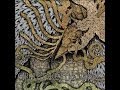
The artwork might induce you to think the group is very percussive, but the sound is very much balanced. 14 relatively short tracks (max 3'40") that meddle into one giant number. In some ways, you'd guess that the tracks written by drummer Bouvier are more rhythmic, but then once they morph into bassist Guselli- written ditties, they don't necessarily become funky. As the short tracks keep speeding by, the listener is never bored, because they (tracks) are all very different and never repeat themselves. Their jazz-rock is still fairly academic, but complex, melodious and subtle finesse.
An excellent but short debut album that did not go unnoticed in the French jazz scene, Priglacit (no idea as to what the title means) is probably the best introduction to Transit Express' music, but you can't go wrong by choosing anyone of their three opus. And when this is the case, it's best to start chronologically.
:::Review by Sean Trane:::

Transit Express - Priglacit (1975)

1- Priglacit 
2- Drousia I 
3- Drousia II 
4- Contrat Session 
5- Planerie 
6- Bahar 
7- Contradiction 
8- Ludition 
9- Vanda 
10- Vinitier 
11- Connection 
12- Flaure 
13- Coexistence 
14- ls

Credits
Dominique Bouvier / drums, vibraphone, percussion
Jean-Claude Guselli / el & ac bass
Christian Leroux / guitars, synths
Serge Perathoner / el & ac piano, clavinet, ring modulator, synths

:::off the back of a lorry #4:::

Posted: Monday, 26 November 2012 by jazzlover in Etykiety:
4


Saxophonist Hafez Modirzadeh seems right at home on Pi Recordings, who have steadily assembled a roster of serious conceptualists. The Californian player and academic (do yourself a favor and check out his writings) has always impressed with his synthetic imagination, but on Post-Chromodal Out! he sets himself an almost impossibly ambitious task. Modirzadeh himself describes his “quest to create a seamless exchange of musical structures across cultures.” But rather than another entry in the history of faintly awkward jazz and exotica “fusions,” Modirzadeh’s “chromodality” system is rooted in a very rigorous tuning and harmonization concept that explores the intersections between Iranian dastgahmusic and improvisational polytonality ranging from Harry Partch to Joe Maneri.
Over the course of two lengthy suites — his own nearly 50-minute “Weft Facets” and James Norton’s “Wolf and Warp” (Modirzadeh wanted to see if his system could stand up to another composer’s explorations) — the results prove to be surprising, quizzical, and “fuck yeah” exhilarating. This quintet — the leader on tenor and soprano, trumpeter Amir ElSaffar (with whom Modirzadeh co-led Radif Suite), pianist Vijay Iyer, bassist Ken Filiano and drummer Royal Hartigan — plays with so much range and feeling and technique that they at times sound nearly orchestral. At the heart of these often head-turning effects is the integration of standard and Iranian classical tunings and intonations to shape improvisational possibilities. There’s microtonality simply everywhere, not just in the subtle intervals Modirzadeh uses to make up his craggy, fast-moving lines, but in the timbre of the horns and the piano (Iyer is a knockout from start to finish, playing an instrument retuned to three-quarter tones). Each of these multi-sectioned suites moves through sequences of fascinating tension between passages for swing rhythm section and jabbing piano (“Wolf Two,” for example, or “Facet Seventeen,” which sounds like a Persian Ornette cover band with player piano, buoyed by an immense Filiano/Hartigan groove). Modirzadeh and ElSaffar play fascinating solos where the horn tones seem to flip, quaver, vibrate, and have their own bottom drop out (notice the soprano flourishes on “Facet Twenty-Two” or ElSaffar’s exchanges with Iyer on “Facet Twenty-Four”), as Iyer shifts deftly between disorienting prepared piano and conventional playing, often within a single bar. It’s a pretty terrific effect.
The “Weft Facets” suite features three guests who pop up for extra timbre to boot: Danongan Kalanduyan plays Filipino kulintang on three sections; Faraz Minooei plays Persian santur on another three; Tim Volpicella handles guitar on two. “Interlude One” and “Facet Sixteen,” in particular, shine with these contributions, and Iyer sounds outrageously good alongside the santur on “Interlude II.” Filiano and Hartigan are absolutely central to the coalescence of these multiple moments, an ominous throb here, an anchored groove there, a terpsichorean race all popping up rapid-fire as definable rhythmic and harmonic shapes both set and scramble the contexts for Modirzadeh’s thematic material.
Norton’s “Wolf & Warp” starts out sounding superficially more like what one expects from “jazz.” But as the close harmonies of the horns develop alongside Filiano’s arco and pounding, decentered piano, it speaks to you in its own language that is distinct from the compositional material in Modirzadeh’s suite, even as it is shaped by his concept. And while the leader’s writing tends to blur the boundaries of composition and improvisation more emphatically, Norton’s slightly more lyrical writing (just check the gorgeous closing fragment) tends to put the spotlight on good ol’ solos just a bit more. “Wolf Two – Ensemble” and “Wolf Six” are tours de force for Iyer in this piano idiom, with probing accompaniment from Filiano (who also does some slurring double-stops to great effect). But Modirzadeh and ElSaffar are dazzling as well, combining quick melodic imagination with false fingerings, a wide range of embouchures, and modest overblowing here and there to bring out polytonality.
The effect of Post-Chromodal Out! is like having your head buffeted by a barrage of head-scrambling information, all of it resisting conventional listening, and most emphatically not announcing itself as anything close to conventional jazz-plus-exotica. It’s a powerful statement from a composer, instrumentalist, and band that deserve your time and acclaim.
:::Review by Jason Bivins:::

Hafez Modirzadeh - Post-Chromodal Out! (2012)

1. Facet Thirteen 2:57
2. Facet Fourteen 8:26
3. Facet Fifteen 1:49
4. Interlude I 2:44
5. Facet Sixteen 1:46
6. Facet Seventeen 6:04
7. Facet Eighteen 1:49
8. Interlude II 2:06
9. Facet Nineteen 0:41
10. Facet Twenty 3:12
11. Facet Twenty-one 2:48
12. Facet Twenty-two 3:36
13. Interlude III 1:47
14. Facet Twenty-three 0:55
15. Facet Twenty-four 3:11
16. Interlude IV 2:24
17. Facet Twenty-five/Reprise 2:16
18. Wolf One 1:57
19. Wolf Two-piano Solo 0:57
20. Wolf Two-ensemble 3:40
21. Wolf Two-bass Solo 1:44
22. Warp Three-ensemble 2:39
23. Warp Three-drum Solo 1:00
24. Warp Four 2:29
25. Wolf Five-part One 2:41
26. Wolf Five-part Two 2:24
27. Wolf Six 2:43
28 .Wolf Seven 2:40

Credits
Bass – Ken Filiano
Drums – Royal Hartigan
Piano – Vijay Iyer
Saxophone – Hafez Modirzadeh
Trumpet – Amir ElSaffar

:::onion philosophy #3:::

Posted: Thursday, 8 November 2012 by jazzlover in Etykiety:
2


If jazz was ever meant to be a religion, its prayers might sound something like Nan Madol. The title means “spaces between,” and no description of this music could be more apt. The album is an eclectic mandala of drones, eruptions of ecstatic liberation, and snatches of melody from both near and far. Influences range from Japanese folk melodies to Alpine herding calls, and all of them strung by a powerful understatement of continuity.
We open our eyes to find ourselves in a field at night in which a nearby forest looms with untold life. Soprano sax verses mingle with the shawm-like nagaswaram, dripping with the luscious slowness of honey from a broken hive as abstract solos bounce over a corroded surface of ever-so-slightly detuned harps. We proceed from meditation to incantation, calling upon the sounds of spirits rather than the spirits of sound. Melodies drag, are picked up, only to drag again: the final paroxysms of a dying organism laid bare for our imaginations. Motifs flit in and out of earshot like radio transmissions struggling to hang on. The instruments weep as if the entire album were nothing but a cathartic ritual. 
On the surface, the musicians seem unaware of each other, all the while reveling in their secret synergy far beyond the threshold of audibility. This is music on its own plane and we must approach it as we are. There is no middle ground, no meeting point to be had.
This may not be “fun” album to listen to, and certainly not an easy one to describe, but it is rewarding in more metaphysical ways. Far from a jazz album to tap one’s foot to, it is instead a free-form surrender to the possibilities of automatic music. Its mood is inward while its exposition is extroverted and full of exquisite contradictions. If nothing else, the stunning “Areous Vlor Ta” will leave you breathless and vulnerable to the grand Return that brings the listener full circle to where it all began.
:::Review by ecmreviews.com:::

Edward Vesala - Nan Madol (2007)

1. Nan Madol
2. Love For Living
3. Call From The Sea
4. The Way Of...
5. Areous Vlor Ta
6. The Wind

Credits
Alto Saxophone, Performer [Snaga Varam], Flute – Charlie Mariano (tracks: 5, 6)
Double Bass, Voice – Teppo Hauta-aho (tracks: 1, 4 to 6)
Flute – Sakari Kukko (tracks: 1)
Harp – Elisabeth Leistola (tracks: 4)
Soprano Saxophone, Bass Clarinet – Pentti Lahti (tracks: 5, 6)
Soprano Saxophone, Flute – Seppo Paakkunainen (tracks: 5, 6)
Tenor Saxophone, Soprano Saxophone, Flute, Piccolo Flute, Bells, Voice – Juhani Aaltonen (tracks: 1, 2, 4 to 6)
Trombone – Mircea Stan (tracks: 5)
Trumpet – Kaj Backlund (tracks: 1, 4, 5)
Violin, Viola, Voice, Bells – Juhani Poutanen (tracks: 1, 4 to 6)

:::old dogs with new tricks #3:::

Posted: Monday, 5 November 2012 by jazzlover in Etykiety: , , ,
3


(Editor) One of the best and most significant recordings of then just 27-years old legendary Polish altoist Zbigniew Namysłowski...

"Jazz fills up my life. It means to me everything -- said Namyslowski. -- Playing in a quartet suits me best... Until recently I did not set great store by composition. But now to be successful one cannot merely play Horace Silver's themes and other people's arrangements. And so I have created my own quartet and my own music, to be able to play what I want and how I want...". 

Quoting these words I cannot help recalling a thin and insignificant looking boy who burdened with a huge cello scrambled on to the gigantic stage of the Forest Opera in order to play with the Modern Combo group, which was taking part at the II International Jazz Festival at Sopot (August 1957), as a completely unknown soloist. And yet a few years later Zbyszek Namyslowski won recognition not only with jazz fans and connoisseurs at home but also with the exacting critics abroad -- after numerous tours of his quartet in such countries as Italy, Belgium, West Germany, Switzerland, Czechoslovakia, Yugoslavia, Finland, USA. Namyslowski went through most suitable stages before he achieved his present-day results; he played the trombone in traditional and swing bands, for some time also the trumpet and cornet, and when there was need he accompanied the vocalists on piano. 

But the ambitious musician was never after the label of a "multi-instrumentalist". Eventually he chose the alto saxophone in which he could prove himself completely. What we appreciate with Namyslowski particularly is his equally enthusiastic attitude to all styles in jazz; he is always himself while playing hard-bop along with rhythm and blues, free-jazz and the third current along with the fringes of pop-music, and who at the same time would feel an irresistible fascination towards new ventures? A separate chapter could be devoted to Namyslowski's compositions, the more so that his ambition is to draw inspiration from Polish folk-lore which leads to the sort of music that Poland exports as her contribution to the world of jazz. 

While writing on Namyslowski we must say a few words about the remaining members of the band as they also have their say in modern jazz. The pianist ADAM MATYSZKOWICZ (b. 1940) made his first steps as jazzman within the Cracow "jazz boheme"; in 1963 he made his mark as member of "The Jazz Darlings", and already in those days critics predicted him a fine career which was to lead him subsequently to appearances in the quartet of the known Polish tenore saxophonist Michal Urbaniak. His greatest success abroad was his accompanying to the known Polish group "Novi" which won the first prize at the 15th International Jazz Festival in Zurich (1965). The percussionist CZESLAW BARTKOWSKI also became a jazzman in a student milieu having begun his career in the FAR quartet. In 1961 he made himself known to the wider public at the International Jazz Jamboree at the Warsaw Philharmonic, then he participated in the triumphant tour of Namyslowski's quartet (among others in Britain, Italy, West Germany). From time to time he joins other bands such as the excellent quartet of the Polish pianist Krzysztof Komeda. The bass player JANUSZ KOZLOWSKI (b. 1941) started, like his colleagues, as member of modern student bands. For some time he played with traditional bands such as "Warsaw Stompers", Ragtime Jazz Band, the group Bossa Nova Combo and "Pagart's" big band with whom he went on numerous tours abroad.

Siodmawka (Seven-Four Bars) -- After the composition based on Polish mountaineer's themes called "Piatawka" (Five-Four Bars) in which Namyslowski used rarely appearing in jazz rhythm 5/4, the composer went here still farther and used in "Siodmawka" the beat 714. Along with the free form we hive here harmonies of a mountaineer's tune. This is undoubtedly one of the most interesting items of the record. 

Despair -- In respect of melody and harmony, an equally interesting piece. This is a twelve-bar form of  blues, but without the use of the blues scale. 

Frances the Terror -- Here we come to know the quartet operating within free-jazz, the sort of music which perhaps does not appeal to all, but expresses, however, the artistic changes occurring in our days and the evolution of jazz. The band is improvising in two tempi, two phases, and does it very consistently. 

The Beetle Humming in the Reeds -- A folk-tune again, this time it's a Krakowiak. The quartet plays it with dash and half-jokingly. 

My Dominique -- A typical ballad of simple harmonies, in slow tempo. The composer wrote it with his little daughter, Dominika, in mind. 

The Wardrobe -- The composition, which is being played dynamically and in a "dirty" way, may be regarded as a mixture: free harmony + big beat. Let's hear what's been the result. 

Mead Drinker Lola -- A sort of Charleston, a musical joke with typical solo parts. It can do without commentary, being simply a musical relaxation. 

"Despite the comings and goings of our many American visitors in 1964, one of the most refreshing things to hit the British jazz scene last year was the visit of these four young Poles. This album... is a striking illustration of the high standard of European jazz. ("Melody Maker", London, Jan. 9th 1965) "...As an orthodox modern jazz group, they possess all the qualities one would look for in their American counterpart... As a group, the four men are obviously well accustomed to each other's playing.. In addition their music has a strange attractive flavor which one can only put down to their contact with Polish folk music...".  
:::Review by polish-jazz.blogspot.com:::

Zbigniew Namysłowski Quartet - Polish Jazz Vol.6 (1966)

1.  Siódmawka / Seven-Four Bars 8:05
2.  Rozpacz / Despair  6:10
3. Straszna Franka / Frances The Terror 10:55
4. Chrząszcz Brzmi W Trzcinie / The Beetle Humming In The Reeds 9:00
5. Moja Dominika / My Dominique 7:10
6. Szafa / The Wardrobe 7:10
7. Lola Pijąca Miód / Mead Drinker Lola 1:30

Credits
Zbigniew Namysłowski - alto sax
Adam Matyszkowicz - piano
Janusz Kozłowski - bass
Czesław Bartkowski - drums

:::air cavalry #3:::

Posted: Sunday, 4 November 2012 by jazzlover in Etykiety:
2


Latest (so far, the fourth) album from Forgas' troupes, and maybe the best one yet, but it comes after a three or four year silence (Soleil 12 dates from 05) that had us worried. Actually, parts of the compositions were already written a while ago(the next album was originally scheduled in 06), but the line-up suffered a few changes (now a septet), then some tracks were re-written (trimmed down), more added and by the time all of this was dealt with, they were in the summer 08. Just four tracks, all penned by Patrick, packed in an uncompromising fluvial artwork
Opening on one of the older track La Clef that's been on the live repertoire quite while and it shows because the band is really tight on this track, Mlodecka's violin and Alexaline's trumpet on the forefront, the latter distilling a light Spanish ambiance throughout the album. The 16- mins+ title track is the album centrepiece, first as a piano-driven tune where Trognon alternate on sax and flute, then allowing everyone to have its moment in the sunshine. The other cornerstone on which the album is built is the trimmed-down 14-mins Double Sens, a piece that lost over 20 minutes of ideas, most likely to pop up on future albums. What's left is an impressive and tight composition, starting on a strong bass line, but later (the second half) featuring a grandiose exchange of brass, violin and guitar licks, lines and solos over a delightful electric piano. No doubt the album's highlight. The closing 13th Moon starts out as a smooth bass and electric piano-driven mid-tempo on which trumpet, flute and guitar and violin are gliding , but gradually speeds up, gets frantic, than manic ( love these short brass answers between solos and ending up in a wild guitar solo.
Not only is Forgas a brilliant drummer, he's also become an excellent composer (something he wasn't in the 90's), but he's also letting his mates plenty of room for them to express themselves musically. As good as Soleil 12 was, it easy to understand that the FBP has jumped another hurdle and reaches the category of the giant JR/F of the millennium. One of my album of the year.
:::Review by Sean Trane:::

Forgas Band Phenomena - L'Axe Du Fou (2009)

1.La Clef (10:50)
2.L'axe du Fou (16:32)
3.Double-Sens (13:50)
4.La 13ème Lune (8:24)

Credits
-Patrick Forgas/ drums
-Sébastien Trognon/ tenor & soprano sax, flute
-Dimitri Alexaline/ trumpet & flügelhorn
-Benjamin Violet/ guitar
-Karolina Mlodecka/ violin
-Igor Brover/ keyboards
-Kengo Mochizuki/ bass

:::off the back of a lorry #3:::

Posted: Saturday, 3 November 2012 by jazzlover in Etykiety: , , ,
3


No, Martin Küchen isn't a composer of programmatic music, conceived only to accompany silent movies, dancers or stage actors, but even if this wonderful Swedish saxophonist also had made music for theatre, dance and cinema, his main work in the fields of jazz and free improvised music has as a personal characteristic the particularity of telling stories. Or, at least, of presenting specific situations you can visualize. Each recording of the several projects lead by Küchen is, somehow, a narrative, and the new Trespass Trio album 'Bruder Beda', is no exception. We're told about a relative of his, Ernst Gerson, a Jewish German veteran of the World War I who became a Catholic monk, adopting the name Bruder Beda. When he decided to return to the secular world, when both the Nazis and the Zionist movement were growing, big troubles waited for him. The music has a narrative drive, telling us a story without words but with emotional depth. It's like a film with sounds, enabling our imagination to build the details. There's intense moments and there's space, with the interposed silences adding more unquietness to the flux of events. Always combining economy of notes and restraint of expression, only going to the extremes when it's relevant and necessary, this is another great accomplishment by Trespass Trio, With other words; Martin Küchen, Per Zanussi and Raymond Strid are back! Don't miss this one: the sax, the bass and the drumkit cry, shout and sigh as if they were alive; Per Zanussi always present, an true anchor, he stands like an old beautiful tree in the middle of a newly erected garden... and Raymond Strid , a master of timbre and dýnamics, is sometimes forceful, other times delicate, but always strangely precise in everything he does. Highly recommended

Trespass Trio - Bruder Beda (2012)

1. Ein Krieg In Einem Kind (take 3)
2. Don't Ruin Me
3. Bruder Beda ist Nicht Mehr
4. Todays Better Than Tomorrow
5. A Different Koko
6. Ein Krieg In Einem Kind (take 4)

Credits
Martin Küchen – alto & baritone saxophones
Per Zanussi – double bass
Raymond Strid – drums

:::onion philosophy #2:::

Posted: Monday, 1 October 2012 by jazzlover in Etykiety:
7


An astonishing blend of industrial, metal, free jazz, and raw electronic noise, Shining's Blackjazzrepresents more than a leap forward for the band; it's the kind of album artists will be striving to equal for years to come. Comparable to Ministry's The Mind Is a Terrible Thing to Taste, Blackjazz mixes scorched-earth synth-guitar riffs and concussive drumming with the unholy shrieks and post-Coltranesaxophone of group leader Jørgen Munkeby. The production by Sean Beavan, who's worked with Nine Inch Nails and Marilyn Manson, among others, gives this a pummeling edge -- the drums sound sampled from NIN's "March of the Pigs," while the synths and guitars have a fullness and warmth that are crushingly heavy without being mere noise for its own sake. Munkeby's vocals are a death metal roar, his lyrics the usual metallic litany of rage and despair. All this would be impressive enough, but it's even more so considering how mild, relatively speaking, Shining's last two discs, 2005's In the Kingdom of Kitsch You Will Be a Monster and 2007's Grindstone, were. The electronics and general loudness of those two albums were significantly reined-in compared with the howling chaos of songs like "Healter Skelter," "The Madness and the Damage Done," and "Exit Sun," not to mention the positively apocalyptic, nearly nine-minute cover of King Crimson's "21st Century Schizoid Man," sung by Enslaved vocalistGrutle Kjellson, that closes the disc. This is one of the most assaultive, addictive albums around, a rip-roaring journey through sonic violence that will leave most quivering in the corner and others (a special few) totally enraptured.

:::Review by Phil Freeman:::

Shining - Blackjazz (2010)

1. The Madness And The Damage Done (5:20)
2. Fisheye (5:08)
3. Exit Sun (8:36)
4. Exit Sun (0:57)
5. HEALTER SKELTER (5:35)
6. The Madness And The Damage Done (3:24)
7. Blackjazz Deathtrance (10:52)
8. Omen (8:46)
9. 21st Century Schizoid Man (8:41)


Credits
- Munkeby / Vocal, guitars & Saxophone
- Lofthus / Drums
- Kreken / Bass
- Moen / Keys & Synths 

:::old dogs with new tricks #2:::

Posted: Wednesday, 19 September 2012 by jazzlover in Etykiety: , , , ,
4


Although a four-LP Mosaic box set purportedly includes every recording led by the obscure but talented tenor saxophonist Tina Brooks, this 1994 CD has previously unreleased alternate takes of "True Blue" and "Good Old Soul" that Mosaic overlooked. Brooks is teamed with the young trumpeter Freddie Hubbard(on one of his earliest sessions), pianist Duke Jordan, bassist Sam Jones, and drummer Art Taylor for a set dominated by Brooks' originals. None of the themes may be all that memorable ("Nothing Ever Changes My Love for You" comes the closest), but the hard bop solos are consistently excellent.
:::Review by Scott Yanow:::

Tina Brooks - True Blue (1960)

01. Good Old Soul
02. Up Tight’s Creek
03. Theme For Doris
04. True Blue
05. Miss Hazel
06. Nothing Ever Changes My Love For You

Credits
Bass – Sam Jones
Drums – Art Taylor
Piano – Duke Jordan
Recorded By – Rudy Van Gelder
Tenor Saxophone – Tina Brooks
Trumpet – Freddie Hubbard

:::air cavalry #2:::

Posted: Tuesday, 18 September 2012 by jazzlover in Etykiety:
2


A great work "Qualia" is ? I absolutely enjoy this sophomore release by Syrinx, and I wish I had known it at the time so I could vote for it the 2009 Top lists. All I can do in the present days, in retrospect, is praise it with all my heart. This French ensemble was quite a big surprise a few years back with their debut effort "Reification", exploring a sort of progressive experimental rock that combined mystic atmospheres and dense, semi-creepy moods; in 2008, "Qualia" retook this interesting trend and instilled a renewed energy into it. As usual, the band's sonic framework is built upon the articulation pondered among the harmonies/leads performed on a much featured acoustic guitar and the driving force driven on by the rhythm section, while the keyboard inputs rigorously fill abundant spaces all over the place. 'Liber Nonacris' opens up the album with agile atmospheres, but eventually, at the 3 minute mark, the sonic development turns to slightly denser grounds. From the onward, the piece evolves in an amazing set of varied themes, abundant yet not overwhelmingly overdone. There are moments in which the keyboard orchestrations assume the leading role in the melodic developments; there is also a mysterious passage in which the bass guitar's interventions get a bigger exposure, in this way adding some stamina to the overall sound. The use of synthesized choral ornaments and emulated mellotron helps to reinforce the recurrent mesmeric ambience. 'Acheiropoietes' features soprano sax in the first passage, which assumes an air of distinction through the unhidden sense of mystery that prevails. The colorfulness portrayed in the subsequent development states a landscape of tension that ends up released during the track's closing section. 'Le Grand Dieu Pan' brings a grayish ambience, properly focused on autumnal textures. The solo piano passage bears a nostalgic beauty, conveniently balanced with the agile section that follows immediately, eventually leading to a majestic display of moderate bombast. Once again, the bass guitar manages to make itself noticed among the whole equilibrated architecture. 'Le Vingt-Et-Unieme Cercle' occupies the album's last 5 ¾ minutes. It is evidently more serene than any of the other preceding tracks, but the overall feel is totally consistent with the spirit of outworld mystery that has assumed control of the musical arrangements in the whole album. The climatic ending may bring some 70s Pulsar memories to some. Well, this was "Qualia", a superb album by one of the best French prog ensembles currently around.
:::Review by Cesar Inca:::

Syrinx - Qualia (2009)

1. Liber Nonacris (19:38)
2. Acheiropoiètes (8:40)
3. Le Grand Dieu Pan (14:45)
4. Le Vingt-et-unième Cercle (5:45)

Credits
- David Maurin / acoustic guitar
- Benjamin Croizy / keyboards
- Samuel Maurin / bass
- Philippe Maullet / drums

:::off the back of a lorry #2:::

Posted: Wednesday, 12 September 2012 by jazzlover in Etykiety: , , ,
3


Composer John Zorn is a man of many projects, genres and styles. When once asked about styles, in Option, he replied "I'm not afraid of styles; I like them all." He also has a short attention span and because of that his music is a unique aural crosscut of styles—be it avant jazz, classical, cartoon cutups, free improv, computer music—continuously plunging himself into less expected musical territories. Being an intrepid explorer and musical sponge, his wide-ranging interests are so vast and ever-changing that is futile to place him in anything but in a category for himself. It seems that exploration is the motivation and main engine that leads Zorn along his journey to the extreme limits of constant and rigorous research. But not only are his musical interests so wide; his literary and film interests and influences are equally maddeningly broad and diverse, too.
All those references to literary and film interests can mainly be found in the titles of records and compositions. Zorn has found equal inspiration in various literary sources, from crime novels and Japanese manga comic books to occult subjects such as the books of Aleister Crowley, various seekers of the truth and mystics such as G. I. Gurdjieff, the Kabbalah mysticism, and demonology or Gnosticism; in other words, the alternative branch of Christianity. Literary and mystical sources aside, Gnostic Preludes is a fine example of Zorn's unique and fascinating fusion of classical music with western improvisation.
It could have easily been part of his Filmworks series because of its meditative nature. The melody of opening track, "The Middle Pillars" (referencing one of the recommended practices for Sophian initiates) closely resembles the main theme of Filmworks XIII: Invitation to a Suicide (Tzadik, 2002).
Zorn uses the talents of this unusual combination of instruments—harp, vibraphone, bells and guitar—to maximum effect and, as always, he fully engages the performers to be not just dutiful interpreters, but creatively invested collaborators. The sense of beauty lies in the way these instruments are melded in a multi-textured tapestry of sound. Guitarist Bill Frisellis particularly inspired, as his playing shows him being more engaged and focused than he has ever been. Rather than hiding behind his immediately recognizable slow and weaving guitar tones and melodicity, he is more playful and virtuosic. The interplay between vibraphonist Kenny Wollesen, Frisell and harpist Carol Emanuell on "Book of Pleasure" is beautiful, with characteristically minimalistic repetitive motifs on vibes and Frisell providing Dave Gilmour-esque edgy guitar works. It is a gorgeously slow tune with lyrical imagery for the mind and the soul.
"Prelude of Light" continues down this strange yet inviting path. It alters between beautiful backwash of harp and vibes melodies and drones, with Sephardic melodies provided by the intricate guitar. The shimmering nature of the sounds produced on "Diatesseron," "Sounds of the Spheres" and "Circumbulation" creates delicate filigrees that pulsate with absorbing detail. The layered production gives these compositions a hypnotically captivating quality that induces a dreamlike state; the effect is really intoxicating. "Sign and Signal" is another delightful track, featuring beautiful and intricate interplay between Emmanuel and Wollesen's vibes and bells. 
It shimmers with Steve Reich -like pulsating repetitive motifs taken further with Frisell's overtly blissful Sephardic guitar lines. 
It is an infinitely fascinating track that begs to be revisited over and over.
Gnostic Preludes is an intriguing and seductive recording, with a gentle and contemplative feeling that resonates with emotive power. 
It combines the feel of ambiance music with lyrical and melodic prowess seldom seen in Zorn's work. As such, it is a moving work well worth surrendering to.
:::Review by Nenad Georgievski:::

John Zorn - The Gnostic Preludes (2012)

1. Prelude 1: The Middle Pillar 6:39
2. Prelude 2: The Book Of Pleasure 6:06
3. Prelude 3: Prelude Of Light 5:56
4. Prelude 4: Diatesseron 4:35
5. Prelude 5: Music Of The Spheres 8:14
6. Prelude 6: Circumambulation 6:34
7. Prelude 7: Sign And Signal 6:22
8. Prelude 8: The Invisibles 3:35

Credits
Composed By, Arranged By – John Zorn
Guitar – Bill Frisell
Harp – Carol Emanuel
Vibraphone, Bells – Kenny Wollesen

:::onion philosophy #1:::

Posted: Tuesday, 28 August 2012 by jazzlover in Etykiety: , , , ,
2


Samaria Celestial is was the drummer for the SUN RA Intergalactic Cosmo Love Adventure Arkestra.  Isis Sun is his first solo outing and acts as a personal tribute to Sun Ra and his unique collection of musical proteges.  The album was almost completely improvised and utilizes numerous complex rhythm tracks, space synth backwash, his brother's wood flute and Samarai's own unique Intergalactic Space Rap.  The package is completed with stunning artwork with full color tray cards, rainbow spiral galaxies, Egyptian temples, resplendent fractals and even an appearance by Sun Ra himself.
For over thirty years, Sun Ra's Intergalactic Arkestra stretched the creative boundaries of avant-jazz. Sun Ra claimed to be from Saturn, and said that he "arrived" on earth to spread the Creator's greatest gift: music. While his outrageous statements gained him attention, it was his talent as a musician and bandleader that earned him respect. Ra was an amazingly gifted musician, but he also surrounded himself with a like-minded, similarly gifted group of musicians. Samarai Celestial played drums for the Sun Ra Arkestra steadily from 1979-1985, and again from 1994 until he passed away in at age 43 in 1997, after a four-year battle with heart disease. 
Celestial credits Ra as one of the greatest musical masters ever, and he dedicated his first solo album, Isis Sun (1995), to the memory of his teacher (Ra passed away in 1992, and the Arkestra continues to tour under the direction of Marshall Allen).
Celestial's music is a far-out cosmic exploration, full of polyrhythms, funky beats, and ear-bending sound experiments. In the liner notes to Isis Sun, Celestial wrote that he was trying to "create something different in music that contained Masterful Elements of the past, present, and future to give my Master thanks for the hours of lessons, dedicated purity, and the development of the omniversal spirit of the arts." The result is a mixture of lightning-fast drumming, free improvisation, and synthesized insanity that both honors Ra's legacy of creative musical expression and highlights Celestial's innovative skill.

Samarai Celestial - Isis Sun (1995)

1. Sun Ra   14:26
2. Isis Sun   12:26 
3. Unifying Rhythm   20:50
4. Nation Time   15:13 
5. Sun Ra (Edit Version)   7:47

Credits
Bobby Zankel, 
Jason Oettel, 
Rick Iannacone, 
Samarai Celestial, 
Tyrone Hill

:::old dogs with new tricks #1:::

Posted: Sunday, 26 August 2012 by jazzlover in Etykiety: , , , , , , , ,
8


Unlike Ornette Coleman—who wanted to blow orthodox jazz form out of the water—John Coltrane and Eric Dolphy initially worked to change the system from within, making music that fit the jazz standards of the time while injecting their own unique spin. This is why Outward Bound, Dolphy's first recording as a leader, is a not-so-distant relative of Coltrane's My Favorite Things(Atlantic, 1960).
On balance, both discs have a conventional base. While Coltrane stuck to the Great American Songbook, Dolphy penned over half the tunes on Outward Bound; even so, those originals mesh perfectly with classics like "On Green Dolphin Street and Charles Greenlea's "Miss Toni. It's the respective opening tracks that separate both discs from the norm. As Coltrane used an innocuous song from The Sound of Music to launch us into space, so does Dolphy use "G.W. to prove Coleman's theory that "you could play sharp or flat in tune.
A fast 4/4 beat drives borderline-dissonant opening salvos from the front line. While the rest of the band lays down beats and fills that would not be out of place on any bop date, Dolphy steps out of the head to blister us with a mind-boggling, lightning-fingered alto solo that threatens to go over a cliff at any moment. Dolphy and his partners maintain this unorthodox balancing act throughout the 1960 session.
At the time, the bass clarinet was nearly unheard of as a lead instrument, but Dolphy uses it to great atonal effect on the zippy "Miss Toni. It also applies a noir-like patina to the opening of "Green Dolphin Street. Dolphy's flute on Rodgers and Hart's "Glad To Be Unhappy is flat and mournful one second, jumping and dancing (and sometimes screaming) the next, but rarely following a predictable path. Jaki Byard is Dolphy's faithful wingman, contributing Monk-laced lines that stay within "acceptable guidelines while tipping the reality a little bit further out.
George Tucker's foundation on bass is key, rooting the music so the other players can create in space. Roy Haynes displays a range as big as all outdoors, playing drums like a machine gun on the blasting "Les one minute, using brushes like an artist on "Green Dolphin Street the next. Freddie Hubbard's trumpet is as empirical as Dolphy's reedwork is existential; the 21-year old Hubbard's solos (particularly on "Les and the bluesy "245 ) show power and control beyond his years. One wonders what would have happened if he'd stayed with Dolphy and not gone off with Art Blakey.
It makes sad sense we lost Coltrane and Dolphy too soon—Trane from cancer, Dolphy of complications from diabetes. Stars burn out, meteors crash... but while they live, they burn oh so bright. Outward Bound is Dolphy's first burst of light, a beautiful and frightening glow that must be experienced.
:::Review by J Hunter:::

Eric Dolphy Quintet - Outward Bound (1960)

1. G.W.
2. On Green Dolphin Street
3. Les
4. 245
5. Glad to Be Unhappy
6. Miss Toni

Credits
Eric Dolphy - alto sax, bass clarinet & flute
Freddie Hubbard - trumpet
Jaki Byard - piano
George Tucker - bass
Roy Haynes - drums
Ted Curson - trumpet
Kenny Drew - piano
Jimmy Garrison - bass
Dannie Richmond - drums

:::air cavalry #1:::

Posted: Saturday, 25 August 2012 by jazzlover in Etykiety:
2


Eberhard Weber's first record remains his most well-known and influential. An ambitious work of what might be called symphonic jazz, The Colours of Chloë helped to define the ECM sound -- picturesque, romantic, at times rhythmically involved, at others minimalistic and harmonically abstruse. Weber at various points combines strings, choir, synthesizer, and small jazz ensemble. It's a brew that can bring to mind some of the progressive rock and fusion of the era, although Weber's vision is a good deal more idiosyncratic than that. The disc is comprised of only four tracks. First is the atmospheric, stage-setting "More Colours," followed by the title track, during which pianist Rainer Brüninghaus and drummer Ralf Hübner become active. Next is "An Evening With Vincent Van Ritz," featuring deft Rhodes chording from Brüninghaus and a flügelhorn solo by Ack van Rooyen. Finally, there's the nearly 20-minute "No Motion Picture" (this was originally side two of the LP), based on a fast, repetitive bass riff that keeps re-emerging throughout the course of the composition. People will disagree about whether The Colours of Chloë stands the test of time, but Weber's aesthetic played a significant role in the creative music of the '70s, attracting a fair share of emulators.
:::Review by David R. Adler:::

Eberhard Weber - The Colours Of Chloë (1973)

1. More Colours 6:40
2. The Colours Of Chloë 7:45
3. An Evening With Vincent Van Ritz 5:46
4. No Motion Picture 19:56


Credits
EBERHARD WEBER - bass, callo, ocarina
RAINER BRÜNINGHAUS - piano, sinthesizer
PETER GIGER - drums, percussion
RALF HÜBNER - drums ( 2 )
ACK VAN ROOYEN - flugelhorn

:::off the back of a lorry #1:::

Posted: Friday, 24 August 2012 by jazzlover in Etykiety: , , , , ,
1


Now into its twelfth consecutive year, Zooid can finally lay claim as Henry Threadgill's longest running ensemble, having superseded the tenures of the venerable composer's most celebrated lineups, including Air, Sextett and Very Very Circus. Tomorrow Sunny / The Revelry, Spp is the idiosyncratic chamber group's fourth release for Pi Recordings, which was founded in 2001 to simultaneously release a pair of albums by the esteemed AACM multi-instrumentalist: Everybody's Mouth's a Book, by the electric Make a Move quintet; and Zooid's debut, Up Popped the Two Lips. This Brings Us To, Volume I and II were subsequently issued in 2009 and 2010, after an eight year recording hiatus by the acoustic unit.
As testament to Threadgill's leadership capabilities, Zooid has enjoyed fairly consistent personnel since its inception. Acoustic guitarist Liberty Ellman, trombonist/tubaist Jose Davila and drummer Elliot Humberto Kavee are all original members, with only acoustic bass guitarist Stomu Takeishi not part of the very first incarnation. The most notable difference between this record and the previous two is the addition of cellist Christopher Hoffman, whose inclusion restores Zooid to the sextet configuration documented on its first outing.
For the uninitiated, Zooid is named after "a cell capable of independent motion within a living organism." Threadgill has adapted this concept into a systematic series of rules to govern collective improvisation. Each musician is assigned a separate range of intervals, which facilitates melodic, harmonic and rhythmic independence from the core group, while contributing to the music's overall communal structure. The cumulative effect is a contrapuntal latticework of polyphonic harmonies, kaleidoscopic textures and modulating cross-rhythms.
Sequenced in a series of dramatic arcs, the session vacillates between myriad moods, veering from the simmering fervor of "A Day Off," to the subdued pointillism of "Put On Keep / Frontispiece, Spp." Functioning as a unified cooperative, the individual members' contributions coalesce into a shimmering mosaic, their prismatic statements ebbing and flowing from foreground to background. Some of the most expansive variations come from Hoffman, whose multihued fretwork ranges from sinewy funk on "Tomorrow Sunny" to understated lyricism on "See the Blackbird Now," which also includes dulcet trombone work from Davila and Threadgill's haunting bass flute. The leader's acerbic alto leads the brief avant-blues tone poem "So Pleased, No Clue," his trenchant testimonials setting the stage for the roiling "Ambient Pressure Thereby," which presents the band at its most vivacious, hemmed by strikingly melodic extrapolations from Threadgill and Ellman.
Bolstered by the unswerving dedication of his longstanding sidemen,Tomorrow Sunny / The Revelry, Spp continues the ongoing documentation of Threadgill's Zooid, a consistently fascinating endeavor from one of the most compelling composers of our time.
:::Review by Troy Collins:::

Henry Threadgill - Tomorrow Sunny / The Revelry, Spp (2012)

1. A Day Off (5:50)
2. Tomorrow Sunny (6:30)
3. So Pleased, No Clue (3:34)
4. See the Blackbird Now (9:27)
5. Ambient Pressure Thereby (10:34)
6. Put On Keep/Frontispiece, Spp (6:25)

Credits
Henry Threadgill - Flute, bass flute, and alto saxophone
Liberty Ellman - Guitar
Jose Davila - Trombone and tuba
Christopher Hoffman - Cello
Stomu Takeishi - Bass guitar
Elliot Humberto Kavee - Drums

:::Jazzlover is back:::

Posted: by jazzlover in
1


Hi Folks!,

As I am starting few new cycles, you prepare yourself for:

:::off the back of a lorry::: - some selected music from 2012
::: air cavalry::: - jazzy edge of prog
:::old dogs with new tricks::: - old good jazz
:::onion philosophy::: - experimental, avant-garde and free face of jazz
  
Stay tuned!

:::Time Control:::

Posted: Monday, 6 August 2012 by jazzlover in Etykiety: , , ,
1


Existence with the ability of the performance and the composition might be a valuable element. The element always appeared remarkably in the work after she had announced the debut album.
If it borrows her word, the music character is pursued. Or, the possibility to the music created by a minimum unit. They had the flow always calculated as a search for her music.
An overwhelming technology and the idea to make the listener listen by "Another Mind" and "Brain" were Jazz/Fusion that an exactly original quality that was is high. She tries so that may promote the flow further and may complete her original theme by her.
The possibility as the music that she thought about in "Spiral" and Trio might have received one the top. The part where "Movement" and "Quietness" in "Spiral" were had both ..composition.. had been finished about the possession fast and slow walking. And, the woman who drew out the possibility as Trio enough tries to proceed to the next step.
If the inquiring mind of Hiromi is considered of course, the flow that aims at the top further might have been able to be selected, too. However, the plan and the idea that she was always considering in the flow of the activity since "Spiral" that she announced in 2005 and the cultivated idea reach this album with some necessity.
The creation and the idea of the woman who reached a climax in "Spiral" started making the listener pleased to give width to the music character further with the form of the project. This album to which David Fiuczynski that participates in the recording in the debut album receives the guitar as a member and is recorded has the form of the project and the band. David Fiuczynski is a guitar player known by the performances such as Screaming Headless Torsos and Gongzilla. Hiromi was declared to be a fan of Screaming Headless Torsos. And, it will be able to be said that the appointment of David Fiuczynski is inevitable as the idea as the band that she was drawing after it competes in the debut album. To create the tune staring at the performance that four people do for the composition naturally, each musician's capability and ability will be tested. It is said that Hiromi will not do Improvisation to the subject for originally making the tune. It is said that the idea constructed as an impression almost completely will repeat the trial and error. 
The challenge as the complete music character that Hiromi creates might continue exactly. The theme of "Spiral" was a content to make the element of the wave exactly repeated, the life, and the impression in space an embodiment. And, "Time" is included as a theme in this album. People are differences at thinking time and time. Or, it is expressed as an album with the part where the element to make life and the change of people who unconsciously process time an embodiment as music has been given.
"Time Difference" continues the tension from a sublime unison of the piano and the guitar. Ensemble of the band has the flow considerably calculated. The sound of the keyboard also continues her originality. And, the conversation of responding keyboard and guitar will have width as a new possibility as the band. It is ..Jazz/Fusion with the tension.. finished as a complex rhythm is continued.
"Time Out" is a tune of which the element of Funk went out. However, the originality of Hiromi appears everywhere. The performance of the band that answers Ad-Rib of the guitar also contributes well. It carries exactly out the function as the band by introducing the guitar. A progressive element is strongly put out as complex development twining.
"Time Travel" starts from the sound with the anacatesthesia and the line of Bass. The progress of Chord twines round the impression that Jazz is good the flow of Fusion well and gives the tension. The tune might be completely calculated as a composition as the band. 
The piano and the guitar in close relation to legato fast continue the dash feeling. The flow of the chromatic scale has acted well as an impression of the tune, too.
"Deep Into The Night" is a tune with the flow that fast and slow overflows. The part as Jazz has been strongly considerably put out. 
The music character of Hiromi that bases the experience as Trio might act well. The width of the tune extends further with the flow pulled with the part of Fusion that the guitar is good.
Twining of the guitar processed by the effect and the piano of "Real Clock vs. Body Clock=Jet Lag" is impressive. It is a tune where the originality of Hiromi was expressed enough while having both the part of the complexity and the humour. The creation of Hiromi by which this tune also stared at the sound as the band has acted well.
"Time And Space" continues the flow with the anacatesthesia from the sound with the part of mellow. However, the band is given original development everywhere and progresses. It is a tune where the element as the band with a variegated sound was expressed well.
"Time Control,Or Controlled By Time" pulls the band with the melody with a fast piano. Progressive development and the sound are high-quality Jazz/Fusion. The flow that shifts from the flow of an overwhelming unison to Solo of Bass has succeeded as a tune, too. And, it might be a part where Solo of the drum also played the role as the band enough. The flow of an advanced tune exactly contains the possibility of the band enough with development to which the forecast doesn't adhere.
It is a tune where the sound of the keyboard that "Time Flies" is variegated appears. The processing of the sound of a beautiful piano and the keyboard might be along the theme of the album. A good guitar for the flow with the anacatesthesia twines with the piano. The flow that the sound of the band twines round the flow with the anacatesthesia in union will call impression.
"Time's Up" makes the flow from "Time Flies" more chaotic and reports the end of the album. The flow that plays the role of Outro gives reverberations to the entire flow of the album.
The challenge to the music of Hiromi was made an embodiment further by the form of this project.
:::Review by Kazuhiro:::

Hiromi's Sonicbloom - Time Control (2007)

1. Time Difference (6:19)
2. Time Out (6:39)
3. Time Travel (8:37)
4. Deep Into the Night (9:02)
5. Real Clock vs. Body Clock = Jet Lag (5:53)
6. Time and Space (7:56)
7. Time Control, or Controlled by Time (8:29)
8. Time Flies (8:01)
9. Time's Up (0:46)

Bonus track on Japanese release
10. Note From the Past (12:08)

Credits
- Hiromi Uehara / keyboards
- David Fiuczynski / electric and fretless guitar
- Martin Valihora / drums
- Tony Grey / bass

:::Moondog:::

Posted: Sunday, 5 August 2012 by jazzlover in Etykiety:
3


Moondog's second self-titled album (the first one came out in 1956 on the independent jazz label Prestige) was the idiosyncratic composer's first release in 12 years, and it shows how much Moondog's already rich music had matured since 1957's The Story of Moondog. Where Moondog's '50s records were jazz-based, Moondog showcases the composer's orchestral side; producer James William Guercio assembled an orchestra of over 40 musicians from the classical and jazz worlds (including flutist Hubert Laws and bassist Ron Carter), and although the pieces are quite compact -- ranging from the expansive three-part ballet suite "Witch of Endor" to the eight-second spoken poem "Cuplet" -- Moondog uses the expanded range of tonal colors and dynamics impressively. For someone who spent most of his career performing solo on a street corner in Manhattan, Moondog's arrangements on pieces like the jazz-canon's "Stamping Ground" are not only admirably complex, but also richly melodic. Although Moondog is often thought of as a mere exotica novelty, thanks to the composer's eccentricities, it is, in fact, one of the finest third stream jazz albums of its era. The best-known track on this album, "Bird's Lament," was the uncredited basis for dance DJ Mr. Scruff's "Get a Move On," which was used in an extended series of minivan commercials in 2002.
:::Review by Stewart Mason:::

Moondog - Moondog (1969)

A1. Theme 2:35
A2. Stamping Ground 2:36
A3. Symphonique #3 (Ode To Venus) 5:51
A4. Symphonique #6 (Good For Goodie) 2:45
B1. Minsym #1 5:45
B2. Lament I, "Bird's Lament" 1:42
B3. Witch Of Endor 6:29
B4. Symphonique #1 (Portrait Of A Monarch) 2:36

Credits
Baritone Saxophone – Wally Kane
Bass – Alfred Brown, George Duvivier, Louis Hardin, Ron Carter
Bass Clarinet – Ernie Bright
Bassoon – Don Macourt, George Berg, Jack Knitzer, Joyce Kelly, Ryohei Nakagawa, Wally Kane
Cello – Charles McCracken, George Ricci
Cello [Contrabass] – Joe Tekula
Clarinet – George Silfies, Jimmy Abato, Phil Bodner
Composed By, Liner Notes – Louis Hardin
Design – Ron Coro
Engineer – Arthur Kendy, Fred Plaut
English Horn – Henry Shuman, Irving Horowitz
Flugelhorn – Joe Wilder
Flute – Andrew Lolya, Harold Bennett
French Horn – Brooks Tillotson, James Buffington, Ray Alonge, Richard Berg
Percussion – Bob Rosengarden, Dave Carey, Elayne Jones, Jack Jennings
Photography By [Cover] – Don Hunstein
Photography By [Inside] – Fred Lombardi
Piccolo Flute – Harold Jones, Hubert Laws
Producer – Alfred Brown, James William Guercio
Tenor Vocals – Eugene Becker, Raoul Poliakin
Trombone [Bass] – Paul Faulise
Trombone [Tenor] – Buddy Morrow, Charles Small, Tony Studd
Trumpet – Alan Dean, Joe Wilder, Mel Broiles, Teddy Weiss
Trumpet [Bass] – Danny Repole
Tuba – Bill Stanley, Don Butterfield
Tuba [Tenor] – Bill Elton, Bill Stanley, John Swallow, Phil Giardina
Viola – David Schwartz, Emanuel Vardi, Eugene Becker, Raoul Poliakin
Violin – Aaron Rosand, Paul Gershman

:::On Vacation:::

Posted: Wednesday, 11 July 2012 by jazzlover in
5

Hi Folks!

This series has worn me out, however I hope you enjoyed being trapped into Zeuhl den.
I am going on vacation both to recover a little and rest from blogging for awhile.
Thanks for your comments and visiting.
Have a good one too.


Stay tuned!
jazzlover

:::ATJE (At the Jazz Edge) #1:::

Posted: Monday, 4 June 2012 by jazzlover in Etykiety:
1


Hi Jazzheads!

Today, I am proud to announce that I am starting a new little cycle.
The aim of it, is simply to promote some artist with jazz verve.
If you would like to share your music with others please free to contact me, to be provided with some more details as to how can it be done.


To start off with, I am thrilled to share with you some music of good friend of mine. 
This project is called Cardboard Fingers and is blend of nu-jazz, electronic and ambient.
I hope you will enjoy it and get encouraged to share your music with others.


Cardboard Fingers - Writhing Veracity (2005)

1. intro
2. the smooth
3. evergreen
4. cigarette
5. care
6. dusky
7. inculcation
8. where am i
9. in
10. walking the string
11. which makes you mad
12. the dawn
13. evening song
14. Duke Ellington - hot feet (cf rmx)
15. outro

Credits
dR - all instruments, laptop, mix and production
Cover art by Grzegorz Sadowski

Links
:::Cardboard Fingers - Writhing Veracity Project:::
:::Cardboard Fingers - More info:::
:::Cardboard Fingers - Up-to date Project:::