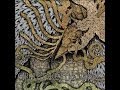
:::Hörselmat:::

Posted: Friday, 22 August 2008 by jazzlover in Etykiety:
2

Svenska Löd Ab! is a Jazz group in sweden, and to me, one of the best jazz albuns I ever heard.
It's full of energetic improvisations, with some Hammond solos in some songs.

In some songs, especiality En Mäktig Eldaregesäll, has beautiful passanges of the Hammond with an exotic bass making the base in G/C. Really Cool.
The Second song, Den Dan Vi Sket I Hugo, has a beautiful brass section,and improvising in C/F with some stops with exotic and extraodinary riffs as the song goes.
A very rare record only made in 200 copies.
Maybe swedens best known guitar player are playing on this album, Janne Schaffer.
This album it's Jazz, it's Rock-Fusion, it's great and kicks ass!

::By jazzlover

Svenska Löd AB! – Hörselmat (1971)

1. Introduktion - Ta Er I Brasan
2. Den Dan Vi Sket I Hugo
3. Teryleneblus 13 50 EPa
4. En Mäktig Eldaregesäll
5. Right On - Kliv På
6. Va Då Rå - Va E', Reö
7. Undrar Om Mona Och Kent Spelar
8. Riff á La Lindström

Credits
Arranged By - Bengt Lindqvist
Bass - Jan Bergman
Drums - Nils-Erik Slörner
Engineer - Gert Palmcrantz
Guitar - Bengan Karlsson , Janne Schaffer
Organ, Piano - Bengt Lindqvist
Producer - G. Palmcrantz , Janne Forsell , Svenska Löd
Saxophone [Tenor] - Kalle Lundborg , Olle Wirén
Trombone - Mats Eriksson (3)
Trumpet - Lennart Axelsson , Åke "Jocke" Johansson

:::Tale Spinnin':::

Posted: by jazzlover in Etykiety: , , ,
1

"Dedicated To The Living" Weather Report's ever-changing lineup shifts again, with the somewhat heavier funk-oriented Leon "Ndugu" Chancler dropping into the drummer's chair and Alyrio Lima taking over the percussion table. As a result, Tale Spinnin' has a weightier feel than Mysterious Traveller, while continuing the latter's explorations in Latin-spiced electric jazz/funk. Zawinul's pioneering interest in what we now call world music is more in evidence with the African percussion, wordless vocals, and sandy sound effects of "Badia," and his synthesizer sophistication is growing along with the available technology. Wayne Shorter's work on soprano sax is more animated than on the previous two albums and Alphonso Johnson puts his melodic bass more to the fore. While not quite as inventive as its two predecessors, this remains an absorbing extension of WR's mid-'70s direction.
:::By Richard S. Ginell:::
 
Weather Report - Tale Spinnin' (1975)

1. Man in the Green Shirt (6:28)
2. Lusitanos (7:24)
3. Between the Thighs (9:33)
4. Badia (5:20)
5. Freezing Fire (7:29)
6. Five Short Stories (6:56)

Credits
Bass - Alphonso Johnson
Drums - Leon Ndugu Chancler
Keyboards - Joe Zawinul
Percussion - Alyrio Lima
Saxophone - Wayne Shorter

Notes
P 1975 Sony Music Entertainement Inc.
No Jewel Box - This CD-Package looks like a miniature version of a Vinyl album.
JOE ZAWINUL : (Melodica, Rhodes Piano, TONTO, ARP 2600 Synthesizer, Organ, Oud, Mzuthra, Vocal, West African Xylophone &Acoustic Piano / Composer of Tracks 1, 3, 4 & 6) and WAYNE SHORTER (Tenor & Sopran Saxophones / Composer of Tracks 2 and 5) = WEATHER REPORT
with the Rhythm Section from SANTANA (Borboletta 1974) : 
'Ndugu' Leon Chancler (Drums, Tympani &Marching Cymbals) 
Alphonso Johnson (Electric Bass).
plus :
Alyrio Lima (Percussions)

Recorded January & February 1975 in L.A. at Wally Heider
Orchestration : Joe Zawinul
Recording Engineer : Bruno Botnick

:::Timeless:::

Posted: by jazzlover in Etykiety: , ,
4

Guitarist John Abercrombie's first in a long line of recordings for ECM was also his debut as a leader. Teamed up with Jan Hammer (who here plays organ, synthesizer, and piano) and drummer Jack DeJohnette, Abercrombie plays four of his originals, plus two by Hammer. These performances differ from many of the guitarist's later ECM dates in that Hammer injects a strong dose of fusion into the music, and there is plenty of spirited interplay between those two with fine support by DeJohnette. Thought-provoking and occasionally exciting music that generally defies categorization.

:::By Scott Yanow:::

John Abercrombie - Jan Hammer - Jack De Johnette – Timeless (1974)

1. Lungs (12:08)
2. Love Song (4:34)
3. Ralph's Piano Waltz (5:21)
4. Red In Orange (5:21)
5. Remembering (4:32)
6. Timeless (11:57)

Credits
Artwork By - Robert Masotti , Rolf Liese
Drums - Jack DeJohnette (tracks: 1, 3, 4, 6)
Engineer - Tony May
Engineer [Mixing Engineer] - Jan Erik Kongshaug
Guitar - John Abercrombie
Organ, Synthesizers, Piano - Jan Hammer
Producer - Manfred Eicher

Notes
Recorded June 21 and 22 1974 at Generation Sound Studios, New York

:::Brilliant Corners:::

Posted: Wednesday, 20 August 2008 by jazzlover in Etykiety: , ,
2

Although Brilliant Corners is Thelonious Monk's third disc for Riverside, it's the first on the label to weigh in with such heavy original material. Enthusiasts who become jaded to the idiosyncratic nature of Monk's playing or his practically arithmetical chord progressions should occasionally revisit Brilliant Corners. There is an inescapable freshness and vitality saturated into every measure of every song. The passage of time makes it all the more difficult to imagine any other musicians bearing the capacity to support Monk with such ironic precision. The assembled quartet for the lion's share of the sessions included Max Roach (percussion), Sonny Rollins (tenor sax), Oscar Pettiford (bass), and Ernie Henry (alto sax). Although a compromise, the selection of Miles Davis' bassist, Paul Chambers, and Clark Terry (trumpet) on "Bemsha Swing" reveals what might be considered an accident of ecstasy, as they provide a timeless balance between support and being able to further the cause musically. Likewise, Roach's timpani interjections supply an off-balanced sonic surrealism while progressing the rhythm in and out of the holes provided by Monk's jackrabbit leads. It's easy to write Monk's ferocity and Forrest Gump-esque ingenuity off as gimmick or quirkiness. What cannot be dismissed is Monk's ability to translate emotions into the language of music, as in the freedom and abandon he allows through Sonny Rollins' and Max Roach's mesmerizing solos in "Brilliant Corners." The childlike innocence evoked by Monk's incorporation of the celeste during the achingly beautiful ode "Pannonica" raises the emotional bar several degrees. Perhaps more pointed, however, is the impassioned "I Surrender, Dear" -- the only solo performance on the album. Brilliant Corners may well be considered the alpha and omega of post-World War II American jazz. No serious jazz collection should be without it.

:::By Lindsay Planer:::

Thelonious Monk - Brilliant Corners (1956)

1. Brilliant Corners (7:44)
2. Ba-Lue Bolivar Ba-Lues-Are (13:06)
3. Pannonica (8:50)
4. I Surrender, Dear (5:27)
5. Bemsha Swing (7:40)

Credits
Bass - Oscar Pettiford (tracks: 1 to 4) , Paul Chambers (3) (tracks: 5)
Drums - Max Roach
Piano - Thelonious Monk
Producer - Orrin Keepnews
Saxophone [Alto] - Ernie Henry
Saxophone [Tenor] - Sonny Rollins
Trumpet - Clark Terry (tracks: 5)

Notes
Recorded in New York, December 1956

:::Unit Structures:::

Posted: Tuesday, 12 August 2008 by jazzlover in Etykiety: , , , , ,
1

After several years off records, pianist Cecil Taylor finally had an opportunity to document his music of the mid-'60s on two Blue Note albums (the other one was Conquistador). Taylor's high-energy atonalism fit in well with the free jazz of the period but he was actually leading the way rather than being part of a movement. In fact, this septet outing with trumpeter Eddie Gale, altoist Jimmy Lyons, Ken McIntyre (alternating between alto, oboe and bass clarinet), both Henry Grimes and Alan Silva on basses, and drummer Andrew Cyrille is quite stunning and very intense. In fact, it could be safely argued that no jazz music of the era approached the ferocity and intensity of Cecil Taylor's.

:::By Scott Yanow:::

Cecil Taylor - Unit Structures (1966)

1. Steps
2. Enter, Evening (Soft Line Structure)
3. Enter, Evening [alternate take]
4. Structure / As Of A Now / Section
5. Tales (8 Whisps)

Credits
Bass - Alan Silva , Henry Grimes
Drums - Andrew Cyrille
Piano, Bells, Written-By - Cecil Taylor
Recorded By [Recording By] - Rudy Van Gelder
Saxophone [Alto] - Jimmy Lyons
Saxophone [Alto], Oboe, Clarinet [Bass] - Ken McIntyre
Trumpet - Eddie Gale Stevens Jr.

:::Juju:::

Posted: Friday, 8 August 2008 by jazzlover in Etykiety: , ,
1

Fulfilling the potential promised on his Blue Note debut, Night Dreamer, Wayne Shorter's Ju Ju was the first really great showcase for both his performance and compositional gifts. Early in his career as a leader Shorter was criticized as a mere acolyte of John Coltrane, and his use of Coltrane's rhythm section on his first two Blue Note albums only bolstered that criticism. The truth is, though, that Elvin Jones, Reggie Workman, and McCoy Tyner were the perfect musicians to back Shorter. Jones' playing at the time was almost otherworldly. He seemed
to channel the music through him when improvising and emit the perfect structure to hold it together. Workman too seemed to almost instinctively understand how to embellish Shorter's compositions. McCoy Tyner's role as one of the greatest jazz pianists of all time was played here as well, and his light touch and beautiful, joyful improvisations would make him a much better match for Shorter than Herbie Hancock would later prove to be.
JuJu rests in the uphill portion of Shorter's creative peak. While the sidemen may have been an even better match for him than the ensembles he would put together for later albums, he was just beginning to find his footing as a leader. His performances were already showing evidence of great originality -- yes, they were influenced by Coltrane, but only in the way that they broke apart the structures of the bop sound to create a sound that had all of the variety and flexibility of the human voice. On later albums like Speak No Evil and The Soothsayer, however, Shorter would rise to an even higher level as a performer with more powerful, confident playing that reached farther afield in its exploration of melodic textures.

What really shines on JuJu is the songwriting. From the African-influenced title track (with its short, hypnotic, repetitive phrases) to the mesmerizing interplay between Tyner and Shorter on "Mahjong," the album (which is all originals) blooms with ideas, pulling in a world of influences and releasing them again as a series of stunning, complete visions.

:::By Stacia Proefrock:::

Wayne Shorter – Juju (1964)

1. Juju Shorter 8:35
2. Deluge Shorter 6:53
3. House of Jade Shorter 6:53
4. Mahjong Shorter 7:44
5. Yes or No Shorter 6:39
6. Twelve More Bars to Go Shorter 5:31
7. Juju [alternate take/] Shorter 7:50
8. House of Jade [alternate take/] Shorter 6:39

Credits
Bass - Reginald Workman
Drums - Elvin Jones
Engineer - Rudy Van Gelder
Piano - McCoy Tyner
Producer - Alfred Lion
Tenor Saxophone - Wayne Shorter

:::Sweet Rain:::

Posted: Thursday, 7 August 2008 by jazzlover in Etykiety: , ,
2

One of Stan Getz's all-time greatest albums, Sweet Rain was his first major artistic coup after he closed the book on his bossa nova period, featuring an adventurous young group that pushed him to new heights in his solo statements. Pianist Chick Corea, bassist Ron Carter, and drummer Grady Tate were all schooled in '60s concepts of rhythm-section freedom, and their continually stimulating interplay helps open things up for Getz to embark on some long, soulful explorations (four of the five tracks are over seven minutes). The neat trick of Sweet Rain is that the advanced rhythm section work remains balanced with Getz's customary loveliness and lyricism. Indeed, Getz plays with a searching, aching passion throughout the date, which undoubtedly helped Mike Gibbs' title track become a standard after Getz's tender treatment here. Technical perfectionists will hear a few squeaks on the LP's second half (Getz's drug problems were reputedly affecting his articulation somewhat), but Getz was such a master of mood, tone, and pacing that his ideas and emotions are communicated far too clearly to nit-pick. Corea's spare, understated work leaves plenty of room for Getz's lines and the busily shifting rhythms of the bass and drums, heard to best effect in Corea's challenging opener "Litha." Aside from that and the title track, the repertoire features another Corea original ("Windows"), the typically lovely Jobim tune "O Grande Amor," and Dizzy Gillespie's Latin-flavored "Con Alma." The quartet's level of musicianship remains high on every selection, and the marvelously consistent atmosphere the album evokes places it among Getz's very best. A surefire classic.

:::By Steve Huey:::

Stan Getz - Sweet Rain (1967)

1. Litha (9:00)
2. O Grande Amor (4:43)
3. Sweet Rain (7:08)
4. Con Alma (8:00)
5. Windows (8:52)

Credits
Bass - Ron Carter
Drums - Grady Tate
Engineer - Rudy Van Gelder
Piano - Chick Corea
Producer - Creed Taylor
Saxophone [Tenor] - Stan Getz

Notes
Recorded March 30, 1967 at Rudy Van Gelder Studio, Engelwood Cliffs, New Jersey.

:::Picture of Heath:::

Posted: Wednesday, 6 August 2008 by jazzlover in Etykiety: , ,
1

The seven sides that make up the all-star outing Picture of Heath (1961) might be familiar to fans of co-leads Chet Baker (trumpet) or Art Pepper (alto saxophone), as Playboys (1956). Perhaps owing to trademark-related issues with the men's magazine of the same name, Picture of Heath became the moniker placed on the 1961 Pacific Jazz vinyl re-release, as well as the 1989 compact disc. Regardless of the designation on the label, the contents gather selections recorded on October 31, 1956 -- the third encounter between Baker and Pepper. Backing Baker and Pepper are the sizable quartet of Carl Perkins (piano) [note: not to be confused with the '50s and '60s rockabilly star], Larance Marable (drums), Curtis Counce (bass), and Phil Urso (tenor sax). Although Pepper supplied "Minor Yours" and "Tynan Time," the majority of the material can be traced to Heath Brothers trio member, Jimmy Heath (sax/flute), who was himself an acclaimed instrumentalist, composer, and arranger. The aggregate provide essential interpretations of his work, adding their own unique earmarks on to what is arguably the best and most playful interaction involving Baker and Pepper. Notable occurrences can be heard on "Picture of Heath" where Pepper sonically salutes Thelonious Monk, quoting recognizable passages from "Rhythm-A-Ning" on a number of occasions -- initially during a fierce exchange with Baker on the title track and then again prominently in the commencement of the aforementioned Pepper composition "Tynan Time." One of the more striking elements coalescing the partnership between the combo's soloists is the seemingly innate abilities that
Baker and Pepper share as they propel themselves through the limber lines of "For Minors Only." The level of musicianship is evident as Counce, Perkins, and Marable effortlessly banter with youthful verve. Both the studied bop enthusiast and average jazz lover will find much to enjoy and revisit on Picture of Heath.

:::By Lindsay Planer:::

Chet Baker - Picture of Heath (1961)

1. Picture of Heath Heath 6:43
2. For Miles and Miles Heath 6:23
3. C.T.A. Heath 5:09
4. For Minors Only Heath 3:59
5. Minor Yours Pepper 6:41
6. Resonant Emotions Heath 5:40
7. Tynan Time Pepper 5:31

Credits
Alto Sax - Art Pepper
Bass - Curtis Counce
Drums - Lawrence Marable
Piano - Carl Perkins
Producer - Richard Bock
Tenor Sax - Phil Urso
Trumpet - Chet Baker

Notes
Originally released in 1961 by World-Pacific Records.
A Richard Bock Production.
Notes by Lars Werner, Stockholm, Sweden, January 1957.
Cover design by Woody Woodward.
Photos by William Claxton.

:::Road Games:::

Posted: Thursday, 31 July 2008 by jazzlover in Etykiety:
1

This is a great starting place for anyone wanting to Experience Holdsworth. Eddie Van Halen secured a record deal with Warner Brothers for Allan. After spending nearly twenty years in the WB vaults, Road Games finally made it to CD. This disc features some awesome bass work from Jeff Berlin, "Water on the Brain" sizzles. Jack Bruce, Cream, guests on two tracks. Chad Wackerman, former Zappa drummer, turns in a stellar performance. The star of this show, however, is Allan's pyrotechic guitar work. "Tokyo Dream" and "Three Sheets to the Wind" are firestorms of blazing fretboard magic, twists, dips, chills and pure excitement. An amazing statement from one amazing guitarist.

:::By Dan Bobrowski:::

Allan Holdsworth - Road Games (1983)

1. Three sheets to the wind (4:12)
2. Road games (4:07)
3. Water on the brain - Pt. II (2:43)
4. Tokyo dream (4:01)
5. Was there? (4:04)
6. Material real (4:40)

Credits
- Jeff Berlin / bass
- Jack Bruce / vocals
- Allan Holdsworth / guitar
- Paul Korda / backing vocals
- Joe Turano / backing vocals
- Chad Wackerman / drums
- Paul Williams / lead vocals, backing vocals

:::Extrapolation:::

Posted: Wednesday, 30 July 2008 by jazzlover in Etykiety:
4

Extrapolation - Construction of new data points outside of a discrete set of known data points

Having played as a session/sideman in a number of R&B bands as well as with pop artists which included DAVID BOWIE and the ROLLING STONES in and around London, England for the better part of the 1960`s, McLaughlin played onJACK BRUCE`S 1968 album THINGS WE LIKE which served as a springboard for his first album as leader/composer. Sounding more like a group effort EXTRAPOLATION featured the already prominent saxman John Surman on soprano and baritone saxes, Bill Odges on bass who later attracted the attention of Miles Davis and the underrated Tony Oxley on drums. McLaughlin himself switched back and forth on an acoustic guitar with a pickup and an electric hollow body.
Overshadowed for many years by McLaughlin`s firebreathing MAHAVISHNU ORCHESTRA formed a scant few years later, this debut is one of McLaughlin`s finest recordings and demonstrates his prowess as a Jazzman. It was perhaps the closest Mclaughlin came to playing straight jazz with the resulting ten tracks, all of which were composed by Mclaughlin himself, having a very bright post-bop experimental free jazz sound to them crammed with solos and interplay from both McLaughlin and Surman. The fact that it was recorded straight with no overdubs gives it a " jam session" feel to it and every crisp track flows nicely into the next thanks partially to engineering by Eddie Offord who would produce future ELP and YES projects.
EXTRAPOLATION is a monumental jazz recording which is also a brilliant foreshadowing of the various musical paths McLaughlin would follow over the next decade. From his participation with MILES DAVIS` and TONY WILLIAMS`proto-fusion projects, through the ferocity of THE MAHAVISNU ORCHESTRA and on to East Indian explorations with Shakti. A timeless gem from the vaults.

John McLaughlin – Extrapolation (1969)

1. Extrapolation (2:57)
2. It's Funny (4:25)
3. Arjen's Bag (4:25)
4. Pete The Poet (5:00)
5. This Is For Us To Share (3:30)
6. Spectrum (2:45)
7. Binky's Beam (7:05)
8. Really You Know (4:25)
9. Two For Two (3:35)
10. Peace Piece (1:50)

Credits
Baritone And Soprano Saxophone - John Surman
Bass - Brian Odges
Drums - Tony Oxley
Electric And Acoustic Guitar - John McLaughlin
Producer - Giorgio Gomelsky

Notes
Originally released 1969.
All titles composed by John McLaughlin.

:::Moon Germs:::

Posted: Tuesday, 29 July 2008 by jazzlover in Etykiety: , ,
1

Recorded in 1972 and released in 1973 with Herbie Hancock, Stanley Clarke, and Jack DeJohnette, Joe Farrell's Moon Germs was a foray into the electric side of jazz. More progressive than groove-oriented, three of the four compositions were written by Chick Corea and certainly reflect that knotty, angular, almost mathematic penchant of his for soaring arpeggios in the solos and contrapuntal basslines that circle DeJohnette's drumming. Nowhere is this truer than on the opener, "Great George," where Farrell leads off with the hint of a melody before careening into legato streams of thought along striated intervallic paths. DeJohnette is like a machine gun, quadruple-timing the band as Clarke moves against the grain in a series of fours and eights, and Hancock's attempts to keep the entire thing anchored are almost insufficient. On the title track there is more of a funk backdrop, but still, there are the knotty runs and insane harmonic reaches Farrell attempts on his soprano that crack, falter, and ultimately turn into something else even more satisfying that what Mr. Math (Corea) wanted, though the sheer business of the track is dizzying. "Bass Folk Song" is by Clarke, and is the only thing on the record that actively engages melody rather than harmonic structures. Farrell uses his flute and Hancock strides into the same kind of territory his explored with Miles Davis, chopping up chordal phrases into single lines and feeding them wholesale to the running pair frontmen in Clarke and Farrell. DeJohnette uses a Latin backdrop to hang his drumming on and pursues a circular and hypnotic groove on the cymbals and toms. It's a gorgeous piece of music and utilizes an aspect of space within the melodic frame that the rest of the firebrand tunes do not, though it's no ballad. This is sci-fi Farrell at his most intense.
:::By Thom Jurek:::

Joe Farrell – Moon Germs (1973)

1. Great Gorge (11:40)
2. Moon Germs (7:23)
3. Times Lie (8:25)
4. Bass Folk Song (9:50)

Credits
Bass - Stanley Clarke
Drums - Jack DeJohnette
Flute - Joe Farrell
Piano - Chick Corea
Saxophone - Joe Farrell

:::Machine Gun:::

Posted: Thursday, 24 July 2008 by jazzlover in Etykiety:
3

This historic free jazz album is a heavy-impact sonic assault so aggressive it still knocks listeners back on their heels decades later. Recorded in May 1968, Machine Gun captures some top European improvisers at the beginning of their influential careers, and is regarded by some as the first European -- not just German or British -- jazz recording. Originally self-released by Peter Brötzmann, the album eventually came out on the FMP label, and set a new high-water mark for free jazz and "energy music" that few have approached since. Brötzmann is joined on sax by British stalwart Evan Parker and Dutch reedsman Willem Breuker (before Breuker moved away from free music, his lungs were as powerful as Brötzmann's). The rest of the group consists of drummers Han Bennink (Dutch) and Sven-Åke Johansson (Swedish), Belgian pianist Fred van Hove, and bassists Peter Kowald (German) and Buschi Niebergall (Swiss). Brötzmann leads this octet in a notoriously concentrated dose of the relentless hard blowing so often characteristic of his music. While Brötzmann has played this powerfully on albums since, never again is it with a group of this size playing just as hard with him. The players declare and exercise their right to bellow and wail all they want; they both send up the stereotype of free playing as simply screaming, and unapologetically revel in it. The sound of Machine Gun is just as aggressive and battering as its namesake, blowing apart all that's timid, immovable, or proper with an unrepentant and furious finality. The years have not managed to temper this fiery furnace blast from hell; it's just as relentless and shocking an assault now as it was then. Even stout-hearted listeners will nearly be sent into hiding -- much like standing outside during a violent storm, withstanding this kind of fierce energy is a primal thrill.
:::By Joslyn Layne:::
 
Peter Brötzmann - Machine Gun (1968)

1. Machine Gun (Second Take) 14:58
2. Machine Gun (Third Take) 17:16
3. Responsible (for Jan van de Ven) (First Take) 10:01
4. Responsible (for Jan van de Ven) (Second Take) 8:17
5. Music For Han Bennink (First Take) 11:22

Credits
Double Bass - Buschi Niebergall  , Peter Kowald
Drums - Han Bennink , Sven-Åke Johansson
Piano - Fred Van Hove
Saxophone [Baritone, Tenor], Producer, Photography, Artwork By [Booklet Layout] - Peter Brötzmann
Saxophone [Tenor] - Evan Parker
Saxophone [Tenor], Clarinet [Bass] - Willem Breuker

:::Erotic Cakes:::

Posted: by jazzlover in Etykiety:
3

"Erotic Cakes" is a listening and inspirational jewel. Guthrie's exquisite playing will undoubtedly become the benchmark for Guitar. Equally Seth Govan and Pete Riley have raised the bar with their Bass and drum virtuosity. The performances here are truly amazing. The one thing that will separate this recording from the mainstream is the musicality of the song writing and the production.
Here are some kind words about Guthrie from some amazing players we really respect and whos music we love.

Joe Satriani:
Totally freakin awesome!!! this CD put a grin on my face a mile wide.

Richie Kotzen:
Guthrie Govan can do anything he wants as a guitarist. He has total command over the instrument; I love to watch Guthrie live as he always plays something new that the rest of us would never have thought of. He is truly a gifted musician and I am honored to be a part of Guthrie's 1st album. (Guest solo from Richie on "Ner Ner")

Greg Howe:
Guthrie is a brilliant guitarist whose super high level of proficiency does not seem to be limited to any one particular genre or style

Dweezil Zappa:
Every time I hear Guthrie play I feel like I have to fasten my seatbelt. He is an alien. His technique and execution is staggering. Ultimately what is most impressive about him is his musicality. He has total freedom on guitar...

BASTARD!

Rob Balducci:
Guthrie is the most versatile guitarist/musician I have ever heard. His music reaches new heights and he can be one scary technical monster or be the sweetest thing you tasted.

Bumblefoot, a.k.a. Ron Thal:
I've known Guthrie since the days before email, when we'd write each other trading riffs. In the past years, we'd have long jams at NAMM conventions in California, and gigged together in the UK. And for all these years, I, and the rest of the world-wide guitar community have harassed him incessantly to please please release a full-length CD. Well, he's done it, and it's inspiring and mind-blowing and beautiful, as expected. Guthrie is the most-talented guitarist I've ever known,a great friend, and I'm honored to havecontributed to his album. Thank you Guthrie, for the wonderful music and all you are. (Guest solo from Ron on "Rhode Island Shred")

Doug Aldrich:
"I just recieved Guthie's new record Erotic Cakes and I am floored! Its been a long time since I heard playing and a record that cool. Amazing songs and sick playing from the whole band on every track. The song Waves is on my daily playlist now. Its one of those melodies that you wont forget and you will crave to hear again and again. I had the pleasure to meet Guthrie on tour in '05 and aside from being one of the most gifted players I have heard, he is just a top guy. Nice one Guthrie!....Thank you bro!"

Steve Stevens:
"Steve Stevens salutes you." For a whole new generation of geetar players...Guthrie's got the ball and he's off and running with that sucker!

Reb Beach:
“The 'Erotic Cakes' CD is excellent. It doesn't get much better than that, does it? I stopped trying to improve years ago because of people like him. I love his melodies, which is rare for me when I hear other guitarists: so effortless.
He is the most well rounded yet stunning guitarist I've ever heard.

Lyle Workman:
"Guthrie is an unbelievable guitarist, especially in light of his depth as a musician who is clearly inspired by various genres, harmony and rhythm extending far beyond technique-driven guitar music. The man is cooking with a lot of ingredients. He is supremely gifted and simply astounding. Once again, I have been reduced to guitar OWNER."

Brett Garsed:
"An amazing debut! I can't wait to see where Guthrie will go with future projects as I'm sure it'll be a great and unpredictable ride!"
:::By http://www.guthriegovan.co.uk/:::

Guthrie Govan - Erotic Cakes (2006)

1. Waves (5:08)
2. Erotic Cakes (3:50)
3. Wonderful Slippery Thing (3:20)
4. Ner Ner (8:04)
5. Fives (4:35)
6. Uncle Skunk (5:28)
7. Sevens (5:56)
8. Eric (5:05)
9. Slidey Boy (4:34)
10. Rhode Island Shred (2:17)
11. Hangover (6:31)

Credits
Arranged By, Performer - Erotic Cakes
Artwork By [Design] - Jonathan Parkin
Bass - Seth Govan
Drums - Pete Riley
Engineer - Alex Todorov
Guitar, Written-By - Guthrie Govan
Mastered By - Matthew Denny
Photography - Richard Ecclestone
Producer, Mixed By, Photography, Artwork By [Controversial Front Cover] - Jan Cyrka

Notes
Guitars recorded at Headroom studios, North Hollywood.
Drums recorded in Pete Riley's studio
Bass recorded in a small flat somewhere in Darkest Chelmsford.
Mastered at Masterblaster.

:::The Quintet:::

Posted: Wednesday, 23 July 2008 by jazzlover in Etykiety: , , , , , , , , ,
2

With the cheers and huzzahs from their 1976 one-off reunion still resounding, the reconstituted Miles Davis Quintet minus Miles went on the road in 1977, spreading their 1965-vintage gospel according to the Prince of Darkness to audiences in Berkeley and San Diego, CA. In doing so, Herbie Hancock, Wayne Shorter, Ron Carter, and Tony Williams, plus interloper Freddie Hubbard seem to pick up where they left off, with a repertoire mostly new to the five collectively and developed from there. It isn't exactly the same -- you miss Miles' brooding presence and sense of space in Hubbard's busy, fiery playing, and Hancock is a more harmonically daring, assertive player than he was with Miles -- but the interlocking telepathy and individual virtuosity of the musicians is pretty amazing. This also isn't the best tape from the tour; they were even tighter and more volatile in Japan five days later on Sony's Tempest in the Colosseum. The V.S.O.P. tours amount to a pit stop in the general shape of Hancock's evolution, but their influence upon the direction of jazz as a whole in the '80s and '90s would be staggering.
:::By Richard S. Ginell:::
 
V.S.O.P. - The Quintet (1977)

1. One Of A Kind
2. Third Plane
3, Jessica
4, Lawra
5. Introduction Of Players, Darts
6. Dolores
7. Little Waltz
8. Byrdlike

Credits
Ron Carter (Bass), Herbie Hancock (Synthesizer), Herbie Hancock (Piano), Herbie Hancock (Keyboards), Herbie Hancock (Vocals), Herbie Hancock (Main Performer), Bennie Maupin (Percussion), Bennie Maupin (Wind), Julian Priester (Trombone), Wayne Shorter (Saxophone), Wayne Shorter (Sax (Soprano)), Wayne Shorter (Sax (Tenor)), Tony Williams (Drums), Eddie Henderson (Percussion), Eddie Henderson (Trumpet), V.S.O.P. (Performer), Conrad Silvert (Liner Notes), Bryan Bell (Engineer), Bryan Bell (Audio Engineer), Fred Catero (Engineer), Jeffrey Cohen (Associate Producer), Freddie Hubbard (Trumpet), Freddie Hubbard (Flugelhorn), Paul Jackson (Bass), James Levi, Chris Minto (Assistant Engineer), Shawn Murphy (Remote Recording Crew), David Rubinson (Producer), Ray Thompson (Remote Recording Crew), Wah Wah Watson (Guitar), Buster Williams (Bass), Buster Williams (Percussion), Herbie Green (Design), Paul Sandweiss (Remote Recording Crew), Bruce Talamon (Photography), Dennis Mays (Remote Recording Crew), Russ Anderson (Design), Les D. Cooper (Remote Recording Crew)

Notes
Recorded live at: The Greek Theatre University of California, Berkeley, July 16, 1977 and The San Diego Civic Theatre, July 18, 1977.

:::A New Perspective:::

Posted: Tuesday, 22 July 2008 by jazzlover in Etykiety: , , ,
1

This unusual set (reissued on CD by Blue Note) was one of the most successful uses of a gospel choir in a jazz context. Trumpeter Donald Byrd and a septet that also includes tenor saxophonist Hank Mobley, guitarist Kenny Burrell, and pianist Herbie Hancock are joined by an eight-voice choir directed by Coleridge Perkinson. The arrangements by Duke Pearson are masterful and one song, "Cristo Redentor," became a bit of a hit. This is a memorable effort that is innovative in its own way, a milestone in Donald Byrd's career.
:::By Scott Yanow:::
 
Donald Byrd - A New Perspective (1963)

1. Elijah 9:21
2. Beast Of Burden 10:07
3. Cristo Redentor 5:43
4. The Black Disciple 8:12
5. Chant 7:31

Credits
Arranged By - Duke Pearson
Bass - Butch Warren
Drums - Lex Humphries
Guitar - Kenny Burrell
Other [Voices Directed By] - Coleridge Perkinson
Photography - Reid Miles
Piano - Herbie Hancock
Recorded By - Rudy Van Gelder
Saxophone [Tenor] - Hank Mobley
Trumpet - Donald Byrd
Vibraphone - Donald Best

Notes
Cat no. printed on the cover as BLP-4124/84124, on the spine as 81424, on the label as BST-84124 and in the run-out groove as BNST-84124-A-1/B-2. This is a United Artists pressing with no reissue date listed on the cover or label.

:::Modern Pentathlon:::

Posted: Thursday, 8 May 2008 by jazzlover in Etykiety:
3

Rare jazz from the Polish scene of the 70s, one of the unsung hotbeds of modern rock jazz in the 20th Century. One of the most influential jazz-rock albums ever made behind the Iron Curtain. In spirit of Weather Report...just better.

The Cracow Laboratorium (laboratory) has become one of Poland’s most popular jazz bands. It came to this position by winning prizes at major Polish competitions in this field (at Wroclaw, Lublin), and by dispelling our fascination with leading names which for years had been synonymous in our minds with Polish Jazz.
Laboratorium was formed in 1970. From the very beginning its pivot constituted three musicians: Janusz Grzywacz, Marek Stryszowski and Mieczyslaw Gorka. The sum of their individual qualities determined the distinct separateness of “Laboratorium” and contributed to the formation of its style.
Janusz Grzywacz, the bands leader and pianist, is the strongest individuality among colleagues. His approach is very intellectual, apparent in the concentrated, sparing playing, seemingly without virtuosity, and above all in his compositions which, while being quite extended, are also very well-balanced in full clarity.
Mieczyslaw Gorka, a new face” becoming more and more conspicuous among our leading percussionists, is a dedicated musician, highly stung, endowed with great imagination. The sound of his instruments in never monotonous, he does no reduce it to rhythmic beat. To him percussion is an equal partner, ever-present and inspiring
Marek Stryszowski takes a special place in the band. He plays the alto saxophone and bass clarinet, but, above all, he sings. And he does it in a way that is phenomenal not only in Polish Jazz. Moving with amazing freedom through several registers Stryszowski is the band’s most accomplished improviser. He produces with his voice the sounds of instruments and achieves effects that have been linked by some to those of electronic equipment.
:::By Jazzlover:::

Laboratorium - Modern Pentathlon (1976)

1. Pięciobój nowoczesny (20:00)
2. Funky dla Franki (4:46)
3. Szalony baca (6:00)
4. ABZ (4:58)
5. Grzymaszka (2:24)

Credits
- Janusz Grzywacz / piano, Fender Rhodes, Roland 2000 synthesiser
- Marek Stryszowski / vocal, alto sax, bass clarinet
- Paweł Ścierański / guitars
- Krzysztof Ścierański / bass guitar
- Mieczysław Górka / drums

:::Live in Warsaw:::

Posted: Tuesday, 29 April 2008 by jazzlover in Etykiety: , ,
0

I just want to say one thing, this is a concert that made me listen to jazz. Since I watched it in polish TV everything changed in my approach to music.
Sorry for the quality as this is a true gem.
:::By Jazzlover:::

Miles Davis- Live in Warsaw - Poljazz (1983)

1. Speak
2. Star People
3. What It Is
4. It Gets Better
5. Hopscotch
6. Code M.D.

Credits
Miles Davis: trumpet, synth, organ
Bill Evans: soprano and tenor sax, flute
John Scofield: guitar
Robert Irving III: synth
Darryl Jones: bass
Al Foster: drums
Mino Cinelu: percussion

:::The Elements:::

Posted: Thursday, 17 April 2008 by jazzlover in Etykiety: , ,
5

This is one of the odder Joe Henderson recordings. The four lengthy selections not only feature the great tenor-saxophonist but the piano and harp of Alice Coltrane (during one of her rare appearances as a sideman), violinist Michael White, bassist Charlie Haden, percussionist Kenneth Nash and Baba Duru Oshun on tablas. The somewhat spiritual nature of the music (Henderson's compositions are titled "Fire," "Air," "Water" and "Earth") and the presence of Alice Coltrane makes these Eastern-flavored performances rather unique if not all that essential: an early example of world music in jazz. This recording has been reissued as part of Henderson's eight-CD Milestone box set.
:::By Scott Yanow:::
 
Joe Henderson Featuring Alice Coltrane - The Elements (1974)

1 Fire (11:07)
2 Air (9:53)
3 Water (7:33)
4 Earth (13:15)

Credits
Bass - Charlie Haden
Congas, Bells, Gongs, Sakara Drum, Percussion - Kenneth Nash
Drums - Leon Ndugu Chancler (tracks:1, 3
Engineer - Rick Heenan
Flute [Wood] - Kenneth Nash (tracks: 3)
Narrator - Kenneth Nash (tracks: 4)
Piano, Harp, Tamboura, Harmonium - Alice Coltrane
Producer - Orrin Keepnews
Saxophone [Tenor], Flute, Flute [Alto] - Joe Henderson
Tabla, Percussion - Baba Duru Oshun
Violin - Michael White

Notes
All music composed by Joe Henderson
Recorded at Village Recorders, Los Angeles, Ca., on October 15, 16, 17, 1973
Remix Engineer: Skip Shimmin (at Fantasy Studios, Berkeley, Ca.)

:::The Magic City:::

Posted: Thursday, 10 April 2008 by jazzlover in Etykiety:
3

The boundaries of Sun Ra's self-proclaimed "space jazz" underwent a transformation in the mid-'60s. The Magic City is an aural snapshot of that metamorphic process. Many enthusiasts and scholars consider this to be among Ra's most definitive studio recordings. Although the "city" in the album's title was thought to have been New York -- where the disc was recorded -- it is actually Ra's earthly birthplace of Birmingham, AL. The Magic City consists of four free jazz compositions: the album side-length title track, "The Shadow World," "Abstract Eye," and "Abstract I" - two variants of a common work. These pieces are essentially ensemble improvisations recorded live. Any direction from Ra, indicating the order of soloists for instance, would be given either through his playing or with hand signals. Sun Ra & His Solar Myth Arkestra took up residency in Manhattan's East Village in the early to mid-'60s.
Their neighbors included Pharaoh Sanders as well as Babatunde Olatunji. In fact, "The Shadow World," "Abstract Eye," and "Abstract I" were actually recorded in Olatunji's loft. The title track begins with weaving distant and frenetic lines from Ronnie Boykins (bass) and Ra (piano, clavoline), connected by intermittent eruptions from Roger Blank (drums). All the while, Marshall Allen's dreamlike piccolo randomly maneuvers through the sonic haze. The piece also contains an ensemble onslaught that abruptly contrasts with everything experienced up through that point. In the wake of the innately earthbound "Magic City" are three comparatively shorter pieces with subtle undercurrents that return Ra to space motifs. For example, the importance of sonic contrast defines "The Shadow World" by juxtaposing he lightly churning bass and cymbal into some surreal keyboard interjections from Ra. The Magic City also comes with an insightful liner notes essay from Ra scholar John F. Szwed, aiding in understanding the circumstances surrounding this piece of free jazz genius.
:::By Lindsay Planer:::

Sun Ra - The Magic City (1966)

1. The Magic City (27:24)
2. The Shadow World (10:59)
3. Abstract Eye (2:45)
4. Abstract "I" (4:01)

Credits
Arranged By, Composed By - Sun Ra
Artwork By - Don Bied
Bass - Ronnie Boykins
Clarinet [Bass] - Robert Cummings
Keyboards [Clavioline, Electronic Celeste], Piano, Marimba [Bass], Harp [Sun Harp], Percussion [Dragon Drum], Timpani - Sun Ra
Percussion - Jimmi Johnson , Roger Blank
Photography - Francis Ing
Producer - Alton Abraham
Saxophone [Alto] - Harry Spencer
Saxophone [Alto], Flute - Danny Davis
Saxophone [Alto], Flute, Oboe, Piccolo Flute - Marshall Allen
Saxophone [Baritone] , Flute, Timpani - Pat Patrick
Saxophone [Tenor] - John Gilmore
Trombone - Ali Hassan , Bernard Pettaway , Teddy Nance
Trumpet - Chris Capers , Walter Miller

Notes
Previously released on El Saturn in 1966.

:::My Song:::

Posted: Saturday, 29 March 2008 by jazzlover in Etykiety: , , ,
1

In addition to his solo piano concerts and the American group he led that featured tenor saxophonist Dewey Redman, Keith Jarrett was also busy in the mid-'70s with his European band, a quartet comprised of Jan Garbarek on tenor and soprano, bassist Palle Danielsson, and drummer Jon Christensen. Due to the popularity of the haunting "My Song," this album is the best known of the Jarrett-Garbarek collaborations and it actually is their most rewarding meeting on record. Jarrett contributed all six compositions and the results are relaxed and introspective yet full of inner tension.
:::By Scott Yanow:::

Keith Jarrett – My Song (1977) 

1. Questar (9:11)
2. My Song (6:10)
3. Tabarka (9:12)
4. Country (5:00)
5. Mandala (8:18)
6. The Journey Home (10:31)

Credits
Bass - Palle Danielsson
Drums - Jon Christensen
Piano, Percussion - Keith Jarrett
Producer - Manfred Eicher
Saxophone [Tenor And Soprano] - Jan Garbarek

Notes
Recorded November 1977 at Talent Studios, Oslo.