:::The Jazz Composer's Orchestra:::

Posted: Friday, 20 February 2009 by jazzlover in Etykiety: , , , , , , , , , ,
5


German-born composer/trumpeter Michael Mantler and his then-wife Carla Bley were instrumental in developing within jazz the idea of self-sufficiency and independence from established record companies. Their creation of the Jazz Composer's Orchestra, with recordings released on their own label, was the culmination of this endeavor, and the first recording was one of the masterpieces of creative music in the '60s. Mantler had come from the European avant-classical tradition and sought to provide an orchestral framework supporting some of the most advanced musicians in avant-garde jazz -- and he succeeded magnificently. His style tends toward the brooding and darkly romantic with harsh, cynical edges, a perfect foil for the robust, shackle-breaking improvisations found herein. The cloudy, roiling swirls that open "Communications #8," echoed by Bley's stabbing piano chords, lay the groundwork for inspired soloing by Don Cherry and the pre-Last Tango and still extremely fiery Gato Barbieri. Subsequent pieces include an amazing feedback showcase for Larry Coryell and a gorgeous, somber work featuring bassist Steve Swallow and trombonist Roswell Rudd. All of this is a preview for, well, "Preview," an utterly incendiary flight by Pharoah Sanders over a pounding rhythm by the orchestra, a piece that will leave the listener bruised, battered, and exhilarated. Except that the best is yet to come: a 34-minute, two-part composition, a concerto for Cecil Taylor and orchestra, that finds the pianist at the height of his powers, just beginning to enter the third phase of his development where he fused ultra-high energy playing with rigorous logic and heartbreaking beauty. The breadth of this piece, its expansiveness, and its tension between order and chaos is one of the single high watermarks of avant-garde jazz. Communications is a masterwork in and of itself and laid the basis for stunning work by others in decades hence, notably Barry Guy and his London Jazz Composer's Orchestra. It's an essential document for anyone interested in avant jazz and late-20th century creative music.
:::Review by Brian Olewnick:::

The Jazz Composer's Orchestra – s/t (1968)

A1. Communications # 8 (13:52)
A2. Communications # 9 (8:08)
B1. Communications # 10 (13:26)
B2. Preview (3:23)
C. Communications # 11 Part 1 (15:10)
D. Communications # 11 Part 2 (17:47)

Credits
Bass - Alan Silva (tracks: C, D) , Bob Cunningham (tracks: C, D) , Charlie Haden , Eddie Gomez (tracks: A2, B1, B2) , Kent Carter (tracks: A1) , Reggie Johnson (tracks: C, D) , Reggie Workman , Richard Davis (tracks: A1) , Ron Carter (tracks: A1, A2, B1, B2) , Steve Swallow (tracks: A2, B1, B2)
Conductor, Producer - Michael Mantler
Cornet - Don Cherry (tracks: A1)
Drums - Andrew Cyrille (tracks: A1, C, D) , Beaver Harris (tracks: A2, B1, B2)
Flugelhorn - Lloyd Michels , Randy Brecker (tracks: A1) , Stephen Furtado (tracks: A2, B1, B2, C, D)
French Horn - Julius Watkins , Bob Northern
Guitar - Larry Coryell (tracks: A2, B1, B2)
Piano - Carla Bley (tracks: A1, A2, B1, B2) , Cecil Taylor (tracks: C, D)
Saxophone [Alto] - Bob Donovan , Frank Wess (tracks: A2, B1, B2) , Gene Hull (tracks: A1) , Jimmy Lyons (2) (tracks: C, D)
Saxophone [Baritone] - Charles Davis
Saxophone [Soprano] - Steve Lacy (tracks: A1) , Steve Marcus (tracks: A2, B1, B2, C, D)
Saxophone [Tenor] - Gato Barbieri (tracks: A1, C, D) , George Barrow (tracks: A1, A2, B1, B2) , Lew Tabackin , Pharoah Sanders (tracks: B2)
Trombone - Jimmy Knepper , Roswell Rudd (tracks: B1)
Trombone [Bass] - Jack Jeffers
Tuba - Howard Johnson

:::Heavy Machinery:::

Posted: Thursday, 19 February 2009 by jazzlover in Etykiety: , ,
3

This is one of those special projects that doesn’t happen often, when a few marvelous players get together to do a truly liberated collection of music. The Johansson Brothers (Sweden) have been making great heavy prog for years with many top people and this is one of the best documents of that run, putting Jens (keys), Anders (drums) and master axeman Allan Holdsworth in the same room to weave some spankin’ progressive jams. This mercurial combination makes Heavy Machinery one of the hottest and hippest instrumental CDs around.
:::Review by Atavachron:::

Anders Johansson, Jens Johansson & Allan Holdsworth - Heavy Machinery (1996)

1. Joint Ventures 5:48
2. Beef Cherokee 4:02
3. On the Frozen Lake 4:52
4. Mission: Possible 5:15
5. Good Morning, Mr. Coffee 7:25
6. Siouxp of the Day 4:02
7. On the Fritz 5:24
8. Tea for One and a Half 6:22
9. Never Mind Our Weather 5:54
10. Macrowaves 24:55

Credits
Allan Holdsworth – Guitar
Anders Johansson – Drums
Jens Johansson - Keyboards

:::If:::

Posted: Wednesday, 18 February 2009 by jazzlover in Etykiety:
1


If is England’s answer to Chicago or the much less proggy Blood Sweat & Tears, and with no small surprise the UK answer approaches Chicago’s quality and easily surpasses BS&T. But comparing If to Chicago is at best unsatisfactory and at worst is misleading: not more instrumental than Chicago (and no trumpet or trombone), If is also less of a straight brass rock outfit, and more of a real jazz rock group, often coming close to Colosseum or Brian Auger’s Oblivion Express, than the pure mushy garbage R’nB of BS&T or Electric Flag. The septet is based around wind players Dave Quincy and Dick Morrissey, the main songwriters. The original line-up on this album will remain unchanged much like their US alter-ego Chicago for quite a while. Starting out on the absolutely delightful Reaching Out On All Sides (also issued as a single), the group shows a real knack for writing inventive jazzy tunes that have a rock edge, while making it interesting for demanding music fans. All Sides comes with a good searing guitar solo, underlined by Mealing’s organ, then the saxes come in a very Heckstallian fashion. Hodgkinson’s voice is fairly close to Chicago’s singer. The lengthy instrumental About The Box is probably the A-side’s highlight, with Morrissey’s flute drawing a long solo before the two saxes cut away in a Heckstall manner, allowing for Smith’s guitar to wallow much like Clempson’s did. This second track is probably the most Colosseum-like of the album. Rounding off the first side is the 7-mins What Can A Friend Say, which boasts a very brassy rhythm’n blues, in this case reminiscent of Chicago or The Flock, but boasting yet another stellar electric guitar.
The flipside is made of four shorter tracks, with the rapid 100 mph soul number “Woman, Can You See?” track, where the repeating sax riffs and chorus and a sizzling solo of the same instrument. Conscious Mind did not steal its name, as it is easily the easiest track on the album, this being the attempt at mass exposure via the single. Best forgotten if you ask me. Dockland is a strange and slow (almost doomy) track, which seem to emphasize dark atmospheres, but Smith’s guitar is again the main solo instrument, again a bit reminiscent of Hiseman’s tribe. The closing Promised Land is an upbeat funky track that contains plenty of intricate arrangements, but cannot escape a pop feel, but positively said. The bonus tracks are no added value as they are the single version of two album tracks, therefore only adding a déjà-entendu feel.
Recently, Repertoire records just re-issued the first two in a mini-lp format, and I only wish they’d get the license to do the same with the next two, but whether this is likely is difficult to say since the first two were issued on Island records, while the next two were on United Artists. In either case, this first album is an absolute must for those wanting to find the perfect link between brass-rock (since If did not have brass instrument proper, but woodwind instruments) and jazz-rock.
:::Review by Sean Trane:::

If – s/t (1970)

1. I'm Reaching Out On All Sides – 5:44
2. What Did I Say About The Box, Jack? – 8:22
3. What Can a Friend Say? – 6:56
4. Woman Can You See (What This Big Thing Is All About) – 4:12
5. Raise The Level of Your Conscious Mind – 3:16
6. Dockland – 4:45
7. The Promised Land – 3:44

Credits
Dennis Elliott - Drums
J.W. Hodgkinson - Vocals
John Mealing - Keyboards, Vocals
Dick Morrissey - Saxophones, Flute
Dave Quincy - Saxophones
Jim Richardson - Bass
Terry Smith - Guitar

:::Guitar:::

Posted: Monday, 16 February 2009 by jazzlover in Etykiety: ,
8


This is pure, undiluted Sonny Sharrock. Taking advantage of the overdubbing process, Sharrock accompanies himself in a series of duets that demonstrate the range of his playing, from menacing to tender. The songs are fairly simple; a brief introduction and chord statement lays the foundation, then Sharrock flies about on top of it. The purity of his tone is both powerful and beautiful. "Broken Toys" is almost like a lullaby after the flying shrapnel of "Devils Doll Baby," where Sharrock shows off his dizzying, visceral slide guitar technique. "Black Bottom" is his take on the blues. "Princess Sonata" is a beautiful suite that encompasses all these aspects of his playing. Guitar makes a nice counterpoint to both Seize the Rainbow, a more rock-oriented release, and Ask the Ages, his reunion with Pharoah Sanders. Bill Laswell deserves some credit for revitalizing Sharrock's career in the '80s, and for sympathetic production on all three of these recordings. Guitar is a beautiful statement by one of jazz music's most unique voices.
:::Review by Sean Westergaard:::

Sonny Sharrock - Guitar (1986)

1. Blind Willie (4:50)
2. Devils Doll Baby (4:07)
3. Broken Toys (6:33)
4. Black Bottom (3:56)
5. Kula-Mae (5:05)
6. Princess Sonata (13:00)

Credits
Engineer [Assistant] - Jeff Lippay
Guitar, Written-By - Sonny Sharrock
Producer - Bill Laswell , Sonny Sharrock
Recorded By, Mixed By - Mike Krowiak

:::Iron Man:::

Posted: Saturday, 14 February 2009 by jazzlover in Etykiety: , , , , , , , ,
2


The companion piece to Conversations (recorded at the same mid-1963 sessions with producer Alan Douglas), Iron Man is every bit as essential and strikes a more consistent ambience than its widely varied twin. It also more clearly anticipates the detailed, abstract sound paintings of Dolphy's masterwork Out to Lunch, in large part because this time around the program is weighted toward Dolphy originals. "Iron Man," "Burning Spear," and the shorter "Mandrake" all have pretty outside themes, full of Dolphy's trademark wide interval leaps and playful sense of dissonance. Yet there's enough structure and swing to make their roots in hard bop perfectly clear, and once the front-line horns blast out the themes, the ensemble shifts into a more cerebral, exploratory mode. In the absence of a piano, Bobby Hutcherson's vibes are a crucial anchor, outlining dissonant harmonies that hang in the air almost spectrally behind the rest of the group. Most of the same musicians from Conversations appear here, including trumpeter Woody Shaw, flutist Prince Lasha, altoist Sonny Simmons, and soprano sax player Clifford Jordan. And once again, Dolphy duets with bassist Richard Davis, twice this time -- on bass clarinet for Ellington's "Come Sunday" and on flute for Jaki Byard's "Ode to C.P." Both are lovely, meditative pieces filled with conversational exchanges between the two players, illustrating what similar wavelengths they were on. Between Conversations and Iron Man, split up the way they are, one has to give a slight edge to the latter for its more cohesive presentation, yet these are classic sessions in any form and constitute some of the most brilliant work of the early-'60s avant-garde.
:::Review by Steve Huey:::

Eric Dolphy - Iron Man (1963)

1. Iron Man (9:09)
2. Mandrake (4:45)
3. Come Sunday (6:26)
4. Burning Spear (11:54)
5. Ode To C.P. (8:08)

Credits
Bass - Eddie Kahn , Richard Davis
Drums - J.C. Moses
Flute - Prince Lasha
Saxophone [Alto] - Huey Simons
Saxophone [Alto], Clarinet [Bass], Flute - Eric Dolphy
Saxophone [Soprano] - Clifford Jordan
Trumpet - Woody Shaw
Vibraphone - Bobby Hutcherson

:::Wake Up!:::

Posted: Friday, 13 February 2009 by jazzlover in Etykiety:
1


If you ever read Asbjornssen's Cosmic Dreams at Play, you will know how high esteem he holds this band. His article finishes this way: WHAT AN AWESOME GROUP THEY WERE! I cannot say it any better as the three albums they made in their prime were all drastically different from each other yet so unmistakably OOF (much like Floyd did all of their albums so different, yet all so FLOYD). Their music is absolutely theirs and sound like nothing else and although they are Germans, I hesitate to call it Krautrock or as some call it Krautjazz. They develop a strange mix of psyched-out rock with a good sense of jazz rock (although not quite as much in this debut album), add a good dose of flute/sax dominated prog rock and give themselves a maximum space for instrumental interplay even if Moran’s voice holds an important role (and is an acquired taste in the same way that Peter Hammill or Roger Chapman are an acquired taste) with some non-sensical lyrics laying out their hippy ideals. With an abstract artwork this debut album (released on the legendary Kuckuck label) is aptly named Wake Up, even if the goal is to send you into dreamy trip, the music is raw, just the way the Germans liked it, reminiscent of their crosstown colleagues of Amon Duul II.
Right from the first repetitive note of Drechsler’s guitar, soon underlined by Herring’s organ and Moran Neumuller’s flute, in the opening White Negro, you just know you’re flying in a wonderful universe where time seems to be a very random dimension and the dreamy soundscapes are an invitation to tripping around the universe. The tougher-sounding God Save The Queen is more of rougher guitar-lead early 70’s UK proto-prog ala EBB or BechKendel, but the middle section (recorded a bit too low) shared between the folky flute and the organ is a great counter-point using the full dynamics contrasting with the return of the opening section. Hey John is an almost 10-min wild flute-lead jam that can sound like Deep Purple’s Mandrake Root in the middle.
The flipside jumps at your throat with the short but powerful No Name track that could easily be called You’re Wasting Time, and even if there are obvious flaws in recording levels, this track is most likely to also claim the album’s title, Wake Up! World’s end is a fairly doomy track that still trails a bit of 60’s into it, sometimes reminding of Floyd (Herring’s organ and Spori’s drumming sound like early Floyd circa Saucerful Of Secrets), while Moran’s flute is more reminiscent of Traffic’s Chris Wood and the guitar reminding us a bit of Krieger in The Doors’ epic track The End. Ending the album is the lengthy Dark Darker track, which is a bit disjointed in its psyched-out moods especially Moran’s flute racing up and down the ladder of sanity. This is one track where the group shows an excellent aptitude at light improvisation that lead to wild jamming, a thing that we would see much more of in the next three albums. Again the raw sound gives the impression that this record could’ve easily been recorded live in the Anglo-Saxon world, with only the approximate accent of Moran giving a hint otherwise. The closing section is a hard-driving Atomic Rooster-like heavy prog.
As with most German band singing in English, the vocals are not perfect but this is very minor as the texts (lyrics) are easily understood and are of a very social/political nature that they could also be classified in German only category Polit-rock (never thought you'd read about such a category, Uh? ;-) This IMHO only adds to the quality of the music and does not make it dated just for that reason. Technically absolutely brilliant (D-E A + HCH). Just by the weird song titles, one can see that this band is heavy, I mean HHHEEEAAAVVVYYY , man !!
:::Review by Sean Trane:::

Out of Focus - Wake Up! (1970)

1. See how a white negro flies (5:48)
2. God saved the queen, cried Jesus (7:28)
3. Hey John (9:35)
4. No name (3:06)
5. World's end (9:55)
6. Dark, darker (11:37)

Credits
Remigius Drechsler / guitar
Hennes Hering / keyboards
Moran Neumüller / vocals, saxes
Klaus Spöri / drums
Stefan Wisheu / bass

:::Spaces:::

Posted: Thursday, 5 February 2009 by jazzlover in Etykiety: , , , ,
4


In 1969 it seemed that New York City was the center of the universe as far as the world of jazz was concerned. At this focal point was a manifestation of daring musicians who were on the threshhold of redefining jazz with Miles Davis as their chief architect. His " Bitches Brew " sessions spawned many revolutionary ideas towards jazz, most notably new philosophies towards improvised music and the use of volume. Around the same time a young sparkplug named Larry Coryell who had played guitar on innovative recordings by Herbie Mann, Gary Burton and others was creating his own adventurous music releasing three hybrid albums which seeked to fuse jazz and rock attitudes into one creature. His fourth endeavour, "Spaces" was about to transcend jazz as it was known at the time and plant a seed for what was to come.
Coryell had no problems attracting interest for this new project and recruited four exceptional musicians who all, at on time or another, had played with maestro Miles. Guitarist John McLaughlin was a perfect sparring partner. McLaughlin, who had just arrived from Europe, was playing with the newly formed jazz-rock outfit Tony Williams`Lifetime and had also played on the " Bitches Brew " sessions and, like Coryell, he had jammed with Hendrix and shared Coryell`s interest in certain aspects of rock music. Drummer Billy Cobham had already made his mark and in addition to playing briefly with Miles he had apprenticed in US Army bands and played on recordings by Horace Silver and George Benson. Bassist Miroslav Vitious had played with Miles while keyboardist Chick Corea had just joined Miles`band.
While "Spaces" has been frequently referred to as the purveyer of `70 fusion ( and this may be true to a point ) it is more of a jazz record than anything. It didn`t sound like any jazz record up to that point but has probably been referred to as the forerunner of fusion because the individual musicians went on to form or become part of the heavyweight fusion groups of the `70s, The Mahavishnu Orchestra, Weather Report, Return To Forever and Coryell`s own fusion group The Eleventh House. Nonetheless, unquestionably " Spaces " was certainly the embryo from which fusion blossomed.
The album, in it`s short 36 minutes and 42 seconds covers many points on the jazz spectrum. An ominous bowed bass passage from Vitous introduces the title track, " Spaces ( infinite ) " which develops into an atonal guitar exchange between Coryell and McLaughlin and certainly the high point of the work. Subtle psychedelic undertones can be heard but there`s no overkill and it is by far the " rockiest " piece on the album with some use of distortion. " Rene`s Theme" while exluding the rythmn section is more than adequately compensated for with the frenzied bop-like rythmn patterns on behalf of both guitarists on this acoustic track which blends elements of Coltrane and Django who were big influences on both guitarists. To those unfamiliar with the guitarists` playing at the time ( and both had found their distinctive voices by 1969 ) it might be hard to discern who is playing what but not to worry the liner notes solve this problem. In General, Coryell does most of the soloing ( hey he`s allowed, it`s his record OK ) while McLaughlin provides well timed rythmn inserts. An example of Coryell`s insane soloing can be found on " Wrong Is Right" where he let`s loose with a lightning speed silent barrage which would defy any guitar player`s immagination. Two of the more pensive pieces on the album also feature some interesting experimentations. " Gloria`s Step " is introduced by another bowed bass passage from vitous and at first on might think it`s a cello playing. " Chris ", which is obviously a Bill Evans inspired piece, features Chick Corea on electric piano. His playing here is both poetic and enticing and imerses the listener into an almost surealistic pleasurable dream which complement Coryell`s rising and falling guitar ideas. A mention also should be made of Cobham who pulses his way along with the group and fits in so perfectly sometimes you forget he`s there because of some of the grooves he gets into.
Nothing really peaks on " Spaces " and while lacking the razzle dazzle of the fusion bands it inspired, it relies on raw in-your-face sincere playing on behalf of all the musicians with only minimilistic use of volume & distortion. No studio tricks or wah wah pedals here folks. If you`re expecting an amps turned to eleven last man standing guitar battle royale then you`l have to look to other avenues. What you get here is two young virtuoso guitarists interacting beautifully who obviously have respect for each other`s respective talents. By a long shot one of the more challenging jazz albums ever recorded and even if it runs a mere 36 minutes+ it seems like an eternity. Perhaps not the best starting point for one wishing to explore the musical mind of Larry Coryell but if you`re looking for something adventurous you`ve come to the right place with " Spaces". Fusion before fusion. Precious. 5 stars what else.
:::Review by Ian Gledhill:::

Larry Coryell – Spaces (1969)

1. Spaces ( Infinite ) ( 9:16 )
2. Rene`s Theme ( 4:06 )
3. Gloria`s Step ( 4:29 )
4. Wrong Is Right ( 9:00 )
5. Chris ( 9:31 )
6. New Year`s Day In LA, 1968 ( 0:20 )

Credits
Larry Coryell / guitars
John McLaughlin / guitars
Chick Corea / electric piano
Miroslav Vitous / double bass
Billy Cobham / drums

:::Symphony For Improvisers:::

Posted: by jazzlover in Etykiety: , , , ,
2


For his second album, Symphony for Improvisers, Don Cherry expanded his Complete Communion quartet -- tenor saxophonist Gato Barbieri, bassist Henry Grimes, and drummer Ed Blackwell -- to a septet, adding vibraphonist Karl Berger, bassist Jean François Jenny-Clark, and tenor saxophonist Pharoah Sanders (who frequently plays piccolo here). The lineup has a real international flavor, since Barbieri was from Argentina, Berger from Germany, and Jenny-Clark from France; Cherry had gigged regularly with all three during his 1964-1965 sojourn in Europe, and brought them to New York to record. With all the added firepower, it's remarkable that Symphony for Improvisers has the same sense of shared space and controlled intelligence as its predecessor, even when things are at their most heated. Once again, Cherry sets up the album as two continuous medleys that fuse four compositions apiece, which allows the group's improvisational energy and momentum to carry straight through the entire program. The "Symphony for Improvisers" suite is the most raucous part of Cherry's Blue Note repertoire, and the "Manhattan Cry" suite pulls off the widest mood shifts Cherry had yet attempted in that format. Even though the album is full of passionate fireworks, there's also a great deal of subtlety -- the flavors added to the ensemble by Berger's vibes and Sanders' piccolo, for example, or the way other instrumental voices often support and complement a solo statement. Feverish but well-channeled, this larger-group session is probably Cherry's most gratifying for Blue Note.
:::Review by Steve Huey:::

Don Cherry - Symphony For Improvisers (1966)

Symphony For Improvisers (19:40)
1a Symphony For Improvisers
1b Nu Creative Love
1c What's Not Serious
1d Infant Happiness
Manhattan Cry (19:17)
2a Manhattan Cry
2b Lunatic
2c Sparkle Plenty
2d Om Nu

Credits
Artwork By [Art Direction And Design] - Michael Boland
Artwork By [Cover Design] - Reid Miles
Artwork By [Creative Direction] - Gordon H Jee
Bass - Henry Grimes , Jean-François Jenny-Clark
Composed By - Don Cherry
Cornet - Don Cherry
Drums - Edward Blackwell
Other [Original Liner Notes] - A. B. Spellman
Other [Reissue Liner Notes] - Bob Blumenthal
Photography [Cover Photograph, Liner Photographs] - Francis Wolff
Producer - Alfred Lion
Recorded By, Remastered By - Rudy Van Gelder
Reissue Producer - Michael Cuscuna
Saxophone [Tenor] - Gato Barbieri
Saxophone [Tenor], Piccolo Flute - Pharoah Sanders
Vibraphone, Piano - Karl Berger

:::Astigmatic:::

Posted: Saturday, 31 January 2009 by jazzlover in Etykiety: , ,
7


Innovator with a complex of tradition, romanticist expressing himself in the contemporary idiom, poet of piano - this is Krzysztof Komeda, one of those musicians who have widened the essence of jazz.
He has proved that the world of emotions hitherto remaining within the scope of symphony music could manifest itself in jazz as well. He did it by introducing into it dramatic lyricism and pathos which in their ecstatic, even mystic intensity are in the late-romantic, Promethean, Skriabin-like modes of expression.
This new aesthetics in jazz required its new form. Instead of the static conventional sets of variations, preceding without direction, he has initiated a dramatic form which develops from the exposition towards culmination and final solution. This form, let us call it roughly "the bow form", has been used in two major pieces by Komeda recorded on this disc: Astigmatic and Svantetic (after Svante Forster, Swedish poet and writer, friend of the composer). The solo parts have ceased in it to be blowing choruses and have taken on instead a definite function, while the simple construction of the piece, concentration on a single idea (one movement, one theme), as well as much scope for improvisation and the psychic contact between the players contribute to the fullest realization of the composition.
The dramatic and constructional elements are not the only characteristics of Komeda's style. The particular "Slavonic" feeling of his pieces results from the fusion of all sorts of stuff: beside contemporary technique of composition (sound spots, clusters, aleatoric and poliagogic structures) there are structures getting out of fashion (modalism or the extinct harmonics of the last century) or the "fossilized", long forgotten forms of the musical prematter (as for instance the simple drum beating - the obsessive rhythm, how very fresh and revealing nowadays!, or the uncontrolled instrumental "cry").
The force that unifies these elements is the jazz rhythm and sound. It must be said, however, that the sonority and articulation have been here considerably widened.
Komeda's pieces are outlines to be performed by a group of chosen instrumentalists. No wonder that Komeda selects his partners carefully.
Among the musicians connected with him there is Rune Carlson, a distinguished Swedish percussionist, extraordinarily musical, with a rapid reflex and an unusual sensitivity to the quality of sound. Though in his style similar to Anthony Williams, in details completely different from him.
Then there is in Komeda's group Tomasz Stańko, a leading Polish trumpeter, a striking individuality. Since recently he has been playing on the flugelhorn, extracting from it a fine, voluminous sound.
As guest performers appear with Komeda: Günter Lenz, playing double-bass with the West-German Albert Mangelsdorff ensemble, a musician of rich technique and imagination; and Zbigniew Namysłowski from Warsaw, one of the leading alto axophonists of the younger generation (born in 1939), known in numerous countries in Europe and in USA.

Krzysztof Komeda (1931-1969), a pianist, a musician whose career has been very rich. He has been playing as jazz musician since 1959, appearing in many European countries and having a particularly great success in Scandinavia. He has written music to over thirty films both Polish and foreign. Among others to Two Men with a Wardrobe, Mammalia, Knife in Water, Cul-de-sac, all by Roman Polański, to Innocent Sorcerers by Andrzej Wajda, Hvad Medos and Kattorna (Cats) by Henig Carlssen. Just from the latter comes the second of the pieces recorded on this disc of the four individualists appeals strongly to our imagination. And that is what they are aiming at.
:::Review by Adam Stawinski
Original liner notes from the album's back cover:::

Krzysztof Komeda – Astigmatic (1965)

1. Astigmatic 22:50
2. Kattorna 7:20
3. Svantetic 15:50

Komeda Quintet
Tomasz Stańko - trumpet
Zbigniew Namysłowski- alto sax
Krzysztof Komeda - piano
Gunter Lenz - bass
Rune Carlson - drums

:::Thrust:::

Posted: Friday, 30 January 2009 by jazzlover in Etykiety: , , , ,
5


The follow-up to the breakthrough Headhunters album was virtually as good as its wildly successful predecessor: an earthy, funky, yet often harmonically and rhythmically sophisticated tour de force. There is only one change in the Headhunters lineup — swapping drummer Harvey Mason for Mike Clark — and the switch results in grooves that are even more complex. Hancock continues to reach into the rapidly changing high-tech world for new sounds, most notably the metallic sheen of the then-new ARP string synthesizer which was already becoming a staple item on pop and jazz-rock records. Again, there are only four long tracks, three of which ("Palm Grease," "Actual Proof," "Spank-A-Lee") concentrate on the funk, with plenty of Hancock's wah-wah clavinet, synthesizer textures and effects, and electric piano ruminations that still venture beyond the outer limits of post-bop. The change-of-pace is one of Hancock's loveliest electric pieces, "Butterfly," a match for any tune he's written before or since, with shimmering synth textures and Bennie Maupin soaring on soprano (Hancock would re-record it 20 years later on Dis Is Da Drum, but this is the one to hear). This supertight jazz-funk quintet album still sounds invigorating a quarter of a century later.
:::Review by Richard S. Ginell:::

Herbie Hancock – Thrust (1974)

1. Palm Grease (10:34)
2. Actual Proof (9:41)
3. Butterfly (11:18)
4. Spank-A-Lee (7:11)

Credits
Artwork By [Cover] - Rob Springett
Bass [Electric Bass] - Paul Jackson
Drums - Mike Clark
Electric Piano [Fender Rhodes], Clavinet [Hohner D-6], Synthesizer [Arp Odyssey, Arp Soloist, Arp 2600, Arp String] - Herbie Hancock
Engineer [Recording Engineer] - Fred Catero
Percussion - Bill Summers
Producer - David Rubinson , Herbie Hancock
Saxophone [Soprano & Tenor Saxophone], Clarinet [Bass Clarinet], Flute [Alto Flute] - Bennie Maupin
Written By - Bennie Maupin (tracks: 3) , Herbie Hancock , Mike Clark (tracks: 4) , Paul Jackson (tracks: 4)

:::Beit:::

Posted: Thursday, 29 January 2009 by jazzlover in Etykiety: , , , ,
2


John Zorn's absorption of klezmer motifs into avant-garde jazz is remarkable in itself, but even more extraordinary is Masada's utter command of the two genres' fiercely visceral energies. Fueled by Joey Baron's ferocious drumming and Zorn's savage, apocalyptic squeal, Beit is an archetype of focused intensity. (Anyone dying for truth in jazz needs only to hear "Peliyot" to be instantly transfixed and astounded.) Baron and Greg Cohen are among the most powerful and perceptive rhythm sections in any genre, and Dave Douglas, one of the most brilliant trumpeters of his generation, continues to lend immaculate support. Simply stated, this is one of jazz's greatest groups.
:::Review by Jim Smith:::

Masada- Vol. 2: Beit (1995)

1. Piram (7:08)
2. Hadasha (10:05)
3. Lachish (2:25)
4. Rachab (4:47)
5. Peliyot (4:32)
6. Achshaph (2:44)
7. Sansanah (7:09)
8. Ravayah (3:19)
9. Sahar (6:12)
10. Tirzah (8:47)
11. Shilhim (2:18)

Credits
Bass - Greg Cohen
Drums - Joey Baron
Mastered By - Allan Tucker
Producer - John Zorn , Kazunori Sugiyama
Recorded By, Mixed By - Jim Anderson
Saxophone [Alto], Composed By - John Zorn
Trumpet - Dave Douglas

:::Ascension:::

Posted: Wednesday, 28 January 2009 by jazzlover in Etykiety: , , , , , , , , ,
4


Ascension is the single recording that placed John Coltrane firmly into the avant-garde. Whereas, prior to 1965, Coltrane could be heard playing in an avant vein with stretched out solos, atonality, and a seemingly free design to the beat, Ascension throws most rules right out the window with complete freedom from the groove and strikingly abrasive sheets of horn interplay. Recorded with three tenors (Trane, Pharoah Sanders, Archie Shepp), two altos (Marion Brown, John Tchicai), two trumpet players (Freddie Hubbard, Dewey Johnson), two bassists (Art Davis, Jimmy Garrison), the lone McCoy Tyner on piano, and Elvin Jones on the drums, this large group is both relentless and soulful simultaneously. While there are segments where the ensemble plays discordant and abrasive skronks, these are usually segues into intriguing blues-based solos from each member. The comparison that is immediately realized is Ornette Coleman's Free Jazz of five years previous. However, it should be known that Ascension certainly carries it own weight, and in a strange sense makes Coleman's foray a passive adventure -- mostly due to an updated sonic quality (à la Bob Thiele) and also Trane's greater sense of passionate spiritualism. Timed at around forty minutes, this can be a difficult listen at first, but with a patient ear and an appreciation for the finer things in life, the reward is a greater understanding of the personal path that the artist was on at that particular time in his development. Coltrane was always on an unceasing mission for personal expansion through the mouthpiece of his horn, but by the time of this recording he had begun to reach the level of "elder statesman" and began to find other voices (Shepp, Sanders, and Marion Brown) to propel and expand his sounds and emotions. Therefore, Ascension reflects more of an event rather than just a jazz record and should be sought out by either experienced jazz appreciators or other open minded listeners, but not by unsuspecting bystanders.
:::Review by Jack LV Isles:::

John Coltrane – Ascension (1965)

1. Ascension - Edition II (40:23)
2. Ascension - Edition I (38:31)

Credits
Bass - Art Davis , Jimmy Garrison
Drums - Elvin Jones
Mastered By - Kevin "Mirabile Dictu" Reeves*
Other [Original Liner Notes] - A. B. Spellman
Other [Reissue Liner Notes] - Lewis Porter
Photography [Original-lp Photographs] - Chuck Stewart
Piano - McCoy Tyner
Producer [Original Recordings] - Bob Thiele
Recorded By - Rudy Van Gelder
Saxophone [Alto] - John Tchicai , Marion Brown
Saxophone [Tenor] - Archie Shepp , John Coltrane , Pharoah Sanders
Trumpet - Dewey Johnson , Freddie Hubbard

Notes
Recorded June 28, 1965 at Van Gelder Recording Studio, Englewood Cliffs, New Jersey.

:::Last Exit:::

Posted: Tuesday, 27 January 2009 by jazzlover in Etykiety: , , , ,
2


In the mid-'80s, Bill Laswell had a great idea. Why not combine rock's raging rhythms and volume with free improvisation's unfettered creativity and ferocity? To this end, he made three inspired choices to fill out his band. Drummer Ronald Shannon Jackson was a veteran of Ornette Coleman's Prime Time ensemble as well as a past member of Cecil Taylor's volcanic mid-'70s bands. Sonny Sharrock had burst onto the scene in the late '60s with Pharoah Sanders, Don Cherry, and others, establishing a unique approach to free electric guitar playing, only to retreat from the scene before being lured out of retirement by Laswell. The wild card was German saxophone behemoth Peter Brötzmann, known for his classic, shatteringly intense album Machine Gun from 1968 as well as multitudes of subsequent recordings where a premium was placed on visceral, gut-wrenching interplay among musicians. Mix these elements together and Laswell (with his own funky, dub-heavy electric bass anchoring the proceedings) had an incendiary formula, one that perhaps couldn't hold together long but, while it did, it produced some amazingly powerful music. Never was this more in evidence than on this first, self-titled release, one of the very finest albums of the '80s. Entirely improvised, Last Exit nonetheless based most of its pieces on blues forms, even if highly abstracted. This bedrock allowed the musicians, particularly Brötzmann and Sharrock (whose early death in 1994 would cancel any possibility, however tenuous at that point, of the group's continuation) to freely explore the outer boundaries of their instruments, sublimely soaring over the down to earth and dirty rhythm team of Laswell and Jackson. This tension, strongly shown on the first four tracks here, reached almost unbearable degrees; its release when they would slide back into a groove leaves the listener utterly drained. Subsequent albums (notably Koln) would come close to attaining this level of intensity and creativity, but Last Exit ranks as a pinnacle both in Laswell's career and in the rock/free improv genre it spawned. A classic release, one that should be in the collection of anyone interested in either contemporary free improvisation or the more creative branches of rock.
:::Review by Brian Olewnick:::

Last Exit - Last Exit (1986)

1. Discharge (3:23)
2. Backwater (5:27)
3. Catch As Catch Can (2:10)
4. Red Light (7:54)
5. Enemy Within (3:47)
6. Crackin (7:46)
7. Pig Freedom (3:59)
8. Voice Of A Skin Hanger (1:43)
9. Zulu Butter (2:21)

Members: Bill Laswell, Peter Brötzmann, Ronald Shannon Jackson, Sonny Sharrock

:::The Shape of Jazz to Come:::

Posted: Friday, 23 January 2009 by jazzlover in Etykiety: , ,
2


Ornette Coleman's Atlantic debut, The Shape of Jazz to Come, was a watershed event in the genesis of avant-garde jazz, profoundly steering its future course and throwing down a gauntlet that some still haven't come to grips with. The record shattered traditional concepts of harmony in jazz, getting rid of not only the piano player but the whole idea of concretely outlined chord changes. The pieces here follow almost no predetermined harmonic structure, which allows Coleman and partner Don Cherry an unprecedented freedom to take the melodies of their solo lines wherever they felt like going in the moment, regardless of what the piece's tonal center had seemed to be. Plus, this was the first time Coleman recorded with a rhythm section -- bassist Charlie Haden and drummer Billy Higgins -- that was loose and open-eared enough to follow his already controversial conception. Coleman's ideals of freedom in jazz made him a feared radical in some quarters; there was much carping about his music flying off in all directions, with little direct relation to the original theme statements. If only those critics could have known how far out things would get in just a few short years; in hindsight, it's hard to see just what the fuss was about, since this is an accessible, frequently swinging record. It's true that Coleman's piercing, wailing alto squeals and vocalized effects weren't much beholden to conventional technique, and that his themes often followed unpredictable courses, and that the group's improvisations were very free-associative. But at this point, Coleman's desire for freedom was directly related to his sense of melody -- which was free-flowing, yes, but still very melodic. Of the individual pieces, the haunting "Lonely Woman" is a stone-cold classic, and "Congeniality" and "Peace" aren't far behind. Any understanding of jazz's avant-garde should begin here.
:::Review by Steve Huey:::

Ornette Coleman - The Shape of Jazz to Come (1959)

1. Lonely Woman (4:59)
2. Eventually (4:20)
3. Peace (9:04)
4. Focus On Sanity (6:50)
5. Congeniality (6:41)
6. Chronology (6:05)

Credits:
Bass - Charlie Haden
Cornet - Don Cherry
Drums - Billy Higgins
Engineer [Recording] - Bones Howe
Producer - Nesuhi Ertegun
Saxophone [Alto] - Ornette Coleman

:::Dance Of Magic:::

Posted: Tuesday, 20 January 2009 by jazzlover in Etykiety: , , ,
3


Recorded with a who's who of fusion titans including trumpeter Eddie Henderson, bassist Stanley Clarke, and keyboardist Herbie Hancock, Dance of Magic channels the lessons drummer Norman Connors learned in the employ of Pharoah Sanders, Sam Rivers, and Sun Ra, marshaling Latin rhythms, electronic textures, and cosmic mysticism to create nondenominational yet deeply spiritual funk-jazz. The sprawling 21-minute title cut spans the entirety of the record's first half, capturing a monumental jam session that explores the outer edges of free improvisation but never steps past the point of no return. Connors' furious drumming is like a trail of bread crumbs that leads his collaborators back home. The remaining three tracks are smaller in scale but no less epic in scope, culminating with the blistering "Give the Drummer Some."
:::Review by Jason Ankeny:::

Norman Connors - Dance Of Magic (1972)

A. Dance Of Magic (21:00)
B1. Morning Change (6:29)
B2. Blue (10:20)
B3. Give The Drummer Some (2:22)

Credits:
African Percussion, Baliphone - Anthony Wiles
African Percussion, Congas - Nat Bettis
African Percussion, Shakers - Babafemi (tracks: A)
Alto And Soprano Saxophones - Gary Bartz
Bass - Cecil McBee (tracks: A, B1) , Stanley Clarke
Drums - Norman Connors
Flute - Art Webb
Percussion - Airto Moreira (tracks: B1, B2, B3) , Alphonse Mouzon (tracks: A, B2) , Billy Hart (tracks: B1, B2, B3)
Piano, Fender Rhodes Electric Piano - Herbie Hancock
Producer - Dennis Wilen , Skip Drinkwater
Tenor And Soprano Saxophones - Carlos Garnett
Trumpet - Eddie Henderson
Vocals - U.B.F. Singers, The (tracks: A)

:::Live At The East:::

Posted: Monday, 19 January 2009 by jazzlover in Etykiety: , ,
4


By 1971 Pharoah Sanders's playing essentially alternated between two moods: ferocious and peaceful. This live LP (whose contents have not yet been reissued on CD - as far as I know it has, in Japan obviously - by jazzlover) gives one a good example of how the passionate tenor sounded in clubs during the early '70s. Sanders is joined by an impressive group of players: trumpeter Marvin "Hannibal" Peterson, flutist Carlos Garnett, Harold Vick on tenor, pianist Joe Bonner, the basses of Stanley Clarke and Cecil McBee, drummers Norman Connors and Billy Hart and percussionist Lawrence Killian. On the 20-minute "Healing Song," the lengthy "Memories of J.W. Coltrane" and the two-part "Lumkili," Pharoah Sanders is heard in top form.
:::Review by Scott Yanow:::

Pharoah Sanders - Live At The East (1971)

1. Healing Song (21:43)
2. Memories Of J. W. Coltrane (12:51)
3. Lumkili (08:33)

Credits:
Bass - Cecil McBee , Stanley Clarke
Congas, Percussion [Bailophone] - Lawrence Killian
Drums - Norman Connors , William Hart
Flute, Voice - Carlos Garnett
Piano, Harmonium - Joseph Bonner
Saxophone - Pharoah Sanders
Tenor Vocals - Harold Vic
Trumpet - Marvin Peterson

:::Azimuth:::

Posted: Monday, 29 December 2008 by jazzlover in Etykiety: ,
4


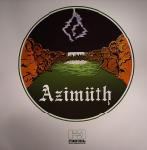
This is a lounge-jazz easy listening album, loaded with funky accent and lush riffs. Approach this release with care, as you might become addicted to listen to this after each complex and demanding album that you go through. This is a perfect sonic afterglow music; the album of the "afterwards".
:::By docperkins:::

Azymuth - Azimuth (1975)

1. Linha Do Horizonte (4:29)
2. Melô Dos Dois Bicudos (3:08)
3. Brazil (3:58)
4. Seems Like This (4:31)
5. Caça A Raposa (5:12)
6. Estrada Dos Deuses (3:14)
7. Wait For My Turn (3:01)
8. Montreal City (3:19)
.9 Morning (3:48)
10. Periscópio (7:36)

Credits
Artwork By [Design By] - Swifty
Drums, Percussion - Ivan Conti [Mamao]
Engineer [Assistant] - Barrachinka , Jaire Gualberto , Zé Guilherme
Engineer [Sound] - Ari Carvalhaes , Eugenio , Luigi , Luis Cláudio
Guitar - Joao América [Parana] (tracks: A1)
Guitar, Violin, Vocals, Percussion, Bass - José Alexandre Malheiros
Mastered By [Remastered By] - John Dent
Other [Coordination By] - Duncan Ballantyne , Hugh De Winton , Joe Davis , Lewis Robinson
Percussion, Vocals - Arinvaldo Contesini
Piano, Clavinet, Electric Piano, Organ [Hammond], Synthesizer [Moog, Arp], Vocals - José Roberto Bertrami
Vocals - Márcio Lott (tracks: A1, A7, A9)
Vocals, Percussion - Joao América [Parana]
Written-By - A. Malheiros (tracks: A2, A3, A5 to A7, A10) , I. Conti (tracks: A2, A3, A5, A6, A10) , J. R Bertrami (tracks: A2 to A6, A8 to A10)

Notes
Original album recorded at Estudios Hawai Phonogram, Rio De Janeiro between October '74 and February '75.

:::Tangerine:::

Posted: Friday, 19 December 2008 by jazzlover in Etykiety: , , ,
4

Still considered an expatriate as he resided in Europe, Dexter Gordon (tenor sax) returned stateside in mid-1972 long enough to lay down two sessions' worth of material that would primarily be split between Tangerine (1972), Generation (1973), and Ca'Purange (1973). The opening update of the Johnny Mercer staple "Tangerine" gets things underway with a mid-tempo treatment allowing Gordon, Thad Jones (trumpet), Hank Jones (piano), and Stanley Clarke (bass) plenty of room to groove on their own as well as in the quintet with Louis Hayes' (drums) rock-solid downbeat. Oddly, the performance is not presented in its entirety, fading out nearly nine minutes in. Hank Jones shines on the easygoing "August Blues" -- the first of three Gordon originals featured on the platter. Gordon is more methodical as his interesting ideas develop organically and inspire the same from Thad Jones, who kicks things up with his dizzying double-time before handing things back to pianist Hank Jones. Clarke steps up and gives the tune a final shot of soul as the rest of the ensemble join back in. The funky "What It Was" is the most modern-sounding side on the album, with Clarke's undulating and propulsive bass giving the number a contemporary kick. Although pianist Jones decides to class up the joint with refined and bluesy contributions that rhythmically jump and jive all over the beat. From a slightly earlier date, Gordon is accompanied by Cedar Walton (piano), Buster Williams (bass), and Billy Higgins (drums) on the LP's final two entries. The interpretation of the Mancini/Mercer classic "Days of Wine and Roses" is suitably stately with Gordon's rich tone perfectly capturing the tuneful romanticism without seeming maudlin or trite. The same can be said of Walton's warm and inviting runs that glide into a short but sublime bass solo from Williams. It certainly ranks up there as one of Gordon's greats. Freddie Hubbard (trumpet) is on hand for the closer -- Gordon's "The Group" -- as listeners are given a taste of the former's strong melodic sense. His blows are resounding, particularly so when doubling up beside Gordon for maximum impact.

:::By Lindsay Planer:::

Dexter Gordon – Tangerine (1972)

1. Tangerine 9:04
2. August Blues 9:56
3. What It Was 8:16
4. Days of Wine and Roses 8:46

Credits
Dexter Gordon- tenor saxophone
Thad Jones- trumpet
Hank Jones- piano
Stanley Clarke- bass
Louis Hayes- drums; 
Freddie Hubbard- trumpet
Cedar Walton- piano
Buster Williams- bass
Billy Higgins- drums

Notes
Recorded: June 22 & 28, 1972, Englewood Cliffs, NJ.

:::Gentleman:::

Posted: Wednesday, 10 December 2008 by jazzlover in Etykiety:
5

Gentleman is both an Africa 70 and Afro-beat masterpiece. High marks go to the scathing commentary that Fela Anikulapo Kuti lets loose but also to the instrumentation and the overall arrangements, as they prove to be some of the most interesting and innovative of Fela's '70s material. When the great tenor saxophone player Igo Chico left the Africa 70 organization in 1973, Fela Kuti declared he would be the replacement. So in addition to bandleader, soothsayer, and organ player, Fela picked up the horn and learned to play it quite quickly -- even developing a certain personal voice with it. To show off that fact, "Gentleman" gets rolling with a loose improvisatory solo saxophone performance that Tony Allen eventually pats along with before the entire band drops in with classic Afro-beat magnificence. "Gentleman" is also a great example of Fela's directed wit at the post-colonial West African sociopolitical state of affairs. His focus is on the Africans that still had a colonial mentality after the Brits were gone and then parallels that life with his own. He wonders why his fellow Africans would wear so much clothing in the African heat: "I know what to wear but my friend don't know" and also points out that "I am not a gentleman like that!/I be Africa man original." To support "Gentleman," the B-side features equally hot jazzy numbers, "Fefe Naa Efe" and "Igbe," making this an absolute must-have release. [In 2000, MCA released Confusion and Gentleman as a two-fer.]

:::By Jack LV Isles:::

Fela Kuti - Gentleman (1973)

1. Confusion, Pts. 1&2
2. Gentleman
3. Fefe Naa Efe
4. Igbe

Credits
Producer, Arranged By, Composed By - Fela Ransome Kuti
Saxophone [Alto, Tenor], Electric Piano, Vocals - Fela Ransome KutiSaxophone [Tenor] - Igo Chico
Trumpet [Solo] - Tunde Williams

:::Contours:::

Posted: Wednesday, 3 December 2008 by jazzlover in Etykiety: , , , ,
5


On Contours, his second Blue Note album, tenor saxophonist Sam Rivers fully embraced the avant-garde, but presented his music in a way that wouldn't be upsetting or confusing to hard bop loyalists. Rivers leads a quintet featuring trumpeter Freddie Hubbard, pianist Herbie Hancock, bassist Ron Carter, and drummer Joe Chambers through a set of originals that walk a fine line between probing, contemplative post-bop and densely dissonant avant-jazz. Each musician is able to play the extremes equally well while remaining sensitive to the compositional subtleties. Rarely is Contours anything less than enthralling, and it remains one of the high watermarks of the mid-'60s avant-garde movement.
:::By Stephen Thomas Erlewine:::

Sam Rivers – Contours (1965)

1. Point Of Many Returns (9:20)
2. Dance Of The Tripedal (10:07)
3. Euterpe (11:43)
4. Mellifluous Cacophony (8:58)

Credits
Bass - Ron Carter
Drums - Joe Chambers
Piano - Herbie Hancock
Saxophone [Tenor, Soprano], Flute, Written-by - Sam Rivers
Trumpet - Freddie Hubbard

Notes
Originally released as Blue Note BST 84206, recorded on May 21, 1965