:::New Expensive Head:::

Posted: Tuesday, 17 May 2011 by jazzlover in Etykiety:
2

Jacek Kochan is a monster drummer. Born in Poland, he has been active in the musical scenes of Poland, USA, and Canada since the late 1970s. He is also an arranger, imaginative composer and music producer, but most of all - a superior drummer. His very distinctive modern drumming style is jam-packed and full of rhythmical gradations with stylistic references from the whole history of jazz. He is fully aware of versatile jazz and contemporary music traditions, but at the same time is completely immersed in contemporary fusion, funk, electronic and club beats. He is also very fluent in the language of free jazz, but in contrary to many others modern European drummers, he has no complex of avant-guard. He is a master of sound sampling, and has an exceptional gift of time and style. His smart and intelligent music is filled with nuances, full of space, with layers of acoustic and electronic sounds, and complex textures. As a drummer he does not over-emphasize the role of his instrument, but in contrary he focuses on collective sound, melodies, adventurous arrangements, original harmonies and rhythms.
Kochan's astonishing improvisational creativity makes him one of the most highly regarded and in-demand drummers on the Polish and European jazz scenes. His music engages the listeners, keeps them interested, sometimes puzzled, but always longing for more. Furthermore, Kochan excels in a recording studio environment, where he is able to masterfully utilize many wonders of the modern recording technologies, and at the same time able to restrain himself from the traps of artificial apparatus.
During the last decades, Kochan has played with many of the most important figures of American and European jazz : in early 80-ties he moved to New York. There he have played and recorded with jazz, funk and r&b bands and studied among the others.with Jaco Pastorius, Mike Clark, Robbie Gonzales.
By the mid 80's, Jacek moved to Montreal, where he further expanded his musical lexicon to include writing for choirs and orchestra (Tudor Singers, Repercussion) as well as playing and recording ethnic music (latin, african, balkan). There he worked with Michel Donato, Karen Young, Andrew Leroux, Yannick Rieu, Oliver Jones, Jean-Pierrre Zanella, Michel Cusson, Katleen Dyson, Helmut Lipsky, Lazaro Saucedo, Geoff Lapp, Johnny Scott and many others, perfoming at the clubs and jazz festivals.
In 1990, after moving to Toronto, he started to work as a leader and sideman in countless live and recording projects with artists like John Abercrombie, Jerry Bergonzi, Pat Labarbera, Kenny Wheeler, Don Thompson, Mike Murley, Neil Swainson, Reggie Schwager, Lorne Lofsky, Bernie Senensky, John MacLeod, Dave Restivo and Brian Dickinson.
In 1995 he returned to Europe where he continues to compose, play, tour and record music with artists like Dave Liebman, Greg Osby, Marc Copland, Gary Thomas, Joey Calderazzo, Palle Mikkelborg, Eddie Henderson, Dave Tronzo, Briggan Krauss, Cuong Vu, Eric Vloeimans, Lars Danielsson, Dave Fiuczynski, Bo Stief, Christian Spering, Michel Benita, Furio DiCastri, Franz Hautzinger, Klaus Dickbauer , Eddie Schuller, Uchihashi Kazuhisa, Axel Dorner, Ernesto Molinari, Francois Corneloup, Krzysztof Knittel, Skerik, Tomas Stanko, Zbigniew Namyslowski, Adam Pieronczyk, Piotr Wojtasik, Assif Tsahar, Tomasz Szukalski, Maciej Sikala and Piotr Baron.
:::notes from www.polishjazz.com:::

Jacek Kochan - New Expensive Head (2003)

1. More (Kochan)
2. Part Time Vip (Kochan)
3. New Expensive Head (Kochan)
4. Less (Kochan)
5. Nott: Chain of Being (Kochan)
6. Lai-sien-kee (Kochan)
7. Mo Bu (Kochan)
8. Three Dollars Wiser (Kochan)
9. Faast (Kochan)
10. Scout's Inamorata (Kochan)

Credits
Jacek Kochan - drums, bass, keys, samplers, loops
Cuong Vu - trumpet, trumpet fxs
Skerik - tenor sax, sax fxs
Eivind Aarset - guitar, guitar fxs

:::Shleep:::

Posted: Thursday, 12 May 2011 by jazzlover in Etykiety: , , , ,
1

By the end of the 90's, Wyatt had left rough Trade to join 60's legend Joe Boyd's label Hannibal records and this was good news for Wyatt, as he would produce some much more inventive records than OR or Dondestan. Recorded in Manzanera's studios with a batch of usual suspects, a few unknown newcomers, plus some surprising appearances such as Belgian JR/F guitarist Philip Catherine and The Jam's Paul Weller. With an Alfie booklet illustration throughout, the Sleep happens to be a delightful walk through the event of Wyatt's life at that moment.
And to say that Shleep had not started well, beginning with the album's weakest song, a Gabriel-esque tune, where Eno adds pop touches not really fitting Robert's personae. Much Wyatt-er is Duchess, filled with gurgling/bubbling/seesawing noises (courtesy of Eno), with Parker's (not Bird, you wisearse) difficult sax and Robert's unsettling piano. The album really starts with the mesmerizing Maryan, a superb Catherine-Wyatt composition, where Wyatt gives a Spanish twist with his trumpet, while Sato's violin is jerking tears from you. Emotions ala Rock Bottom; and it's not about to change with the poignant Was A Friend (Hopper co-writes with Robert). Past the strange intro, Wyatt's voice directly takes you to lands abandoned over two decades ago, with Robert playing all instruments. Last Straw is just around the bend, here!!! Awesome. The power of evocation is overwhelming, as you cannot help but thinking of RB in the lengthy sustained finale...The following Free Will & Testament didn't stand a chance matching the predecessor's dramatic greatness, but Paul Weller pulls a good Gilmour-ian guitar, while Wyatt contributes piano, organ and emotions.
Sept 9th is a mostly instrumental song with the returning Whitehead (remember RISTR?) and Parker adding dramatic horns to an already emotion-filled track. Again we are nearing the sublime of RB, with Whitehead's trombone wracking your guts out. Alien is again striking n the same area of your brains, Manzanera pulling a superb guitar solo over impeccable percussions and Merchan's fabulous bass. Wyatt's emotional voice again reminds of the poignant album resulting of that accident that put him a quarter a century ago in a wheelchair. The short Out Of Season has rob doing the whole instruments, except for Whitehead's trombone drones and is again aiming directly into your soul. Based on an Alfie visit to her parents in Spain, Sunday In Madrid has some stunning moments, with Eno's quiet synth underlines giving some excellent background tension (a bit reminiscent of Van Morroson's St Dominic's Preview), while Wyatt's constant wordy vocals is amazing. But nothing compared with his rap (that's right Robert raps superbly!!!!!) in the awesome Blues In Bob Minor. With Weller pulling some splendid guitar lines, if progheads ever had a problem with rap, BIBM might just be the key to open that door. A phenomenal bet successfully achieved, the album can only lets itself die out with the short Weller-penned instrumental Whole Point Of No Return, a dreamy drone where a trumpet evades to heaven.
Yes, Robert was on a creative high at this point, further help by the movie Little Red Robin Hood, produced by Italian enthusiasts DiLoretto and Bevilacqua, doing a documentary on Robert's activities. Shleep is definitely one of Wyatt's high point, the highest since Rock Bottom for sure and it'll take a complete miracle for him to top Shleep in terms of pure inventiveness. Sleep is just missing on the fifth star, because of a weak bonus track and a shaky start, but outside that, it's really a wonderful trip into Robert's brains.
:::Review by Sean Trane:::

Robert Wyatt - Shleep (1997)

1. Heaps of Sheeps (4:56)
2. The Duchess (4:18)
3. Maryan (6:11)
4. Was a Friend (6:09)
5. Free Will and Testament (4:13)
6. September the Ninth (6:41)
7. Alien (6:47)
8. Out of Season (2:32)
9. A Sunday in Madrid (4:41)
10. Blues in Bob Minor (5:46)
11. The Whole Point of No Return (1:25)

Credits
- Robert Wyatt / vocals, keyboards, trumpet, bass, percussion, violin

Guests
- Philip Catherine / guitar
- Brian Eno / syntheziser, back vocals
- Phil Manzanera / guitar
- Evan Parker / Soprano and Tenor saxophone
- Paul Weller / guitar, backing vocals
- Jamie Johnson / guitar
- Annie Whitehead / tabla
- Chikako Sato / violin
- Alfreda Benge / vocals
- Chucho Merchan / percussion
- Gary Adzukx / percussion

:::Debutantes And Centipedes:::

Posted: Wednesday, 11 May 2011 by jazzlover in Etykiety: , ,
1

As if Mr. Bungle and at least a half-dozen more other projects were not enough, avant-bassist Trevor Dunn now leads his own Trio Convulsant.
This group mixes moody jazz with convulsive rock. Also in the trio is guitarist Adam Levy (Dan Hicks, Tracy Chapman, the Hot Club of San Francisco, etc.) and drummer Kenny Wollesen. This is a good album for people who like King Crimson and free jazz, for this album lies at the meeting point of hard, progressive rock and tough, jazz experimentalism.
:::Review by Tom Schulte:::

Trevor Dunn - Debutantes And Centipedes (1998)

1. Perfumed With Crime Dunn 4:08
2. An Attempt at Jealousy Dunn 6:31
3. Ann-Margret Dunn 7:25
4. Equation of the Found Object Dunn 6:22
5. I Remember Freakies Cereal Dunn 8:09
6. Premonitions Dunn 4:02
7. Echidna Dunn 4:50
8. Veiled Dunn 9:45
9. Aroma Therapy Dunn, F 4:17

Credits
Bass - Trevor Dunn
Drumms - Kenny Wollesen
Guitar - Adam Levy

:::Outback:::

Posted: Tuesday, 10 May 2011 by jazzlover in Etykiety: , , , ,
2

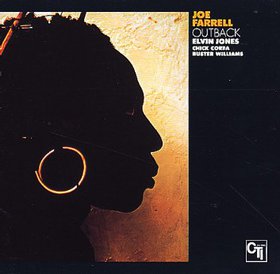
Outback is the second of his dates for the CTI label, all of which are compelling, and some, like this one, are brilliant. Recording in a quartet setting with Elvin Jones, Chick Corea, and Brazilian percussionist Airto Moreira, Farrell, with his reeds and woodwinds, pushes the envelope not only of his own previous conceptualism in jazz, but the CTI label's envelope as well. For starters, this is not a funk, soul, or fusion date, but an adventurous, spacy tightrope-walking exercise between open-ended composition and improvisation. That said, there is plenty of soul in the playing, not only by Farrell, but by all the players -- and Corea never sounded less academic or pointillistic than he does here.
There are four compositions on Outback, all of which were arranged by Farrell. The opener is the humid and mysterious title track by John Scott.
Staged in a series of minor-key signatures, Farrell primarily uses his winds here, flutes and piccolos, to weave a spellbinding series of ascending melodies over the extended voicings provided by Corea -- not exactly in counterpoint, but in spacious contrast. Jones is his typically uncanny self, skipping over cymbals and using a set of sticks more softly than any man can and still drive a band. Airto is positively hypnotic with his hand-drum fills, rubs and shimmers, going through the beat, climbing on top of it, and playing accents in tandem with Farrell in the solo sections. "Sound Down" is a bit more up-tempo and features Farrell fully engaged on the soprano. Buster Williams lays down a short staccato bassline that keeps Jones' bass drum pumping. As Farrell moves from theme/variation/melody to improvisation, he brings Corea, who, uncharacteristically, vamps off the melody before offering a series of ostinato replies before Farrell clearly surprises everybody with the knottiness of his legato phrasing. Corea's "Bleeding Orchid" is a ballad played with augmented modes and continually shifting intervals that can be heard and mapped best by Williams' adherence to the changes, though his pizzicato fills provide a sharp contrast to Farrell's trills and columnar arpeggiattic meditations that come off as a cross between pastoral jazz classicism and Middle Eastern folk music. Finally, on the leader's own "November 6th," the stops are pulled out in a Latin jazz workout that invokes Coltrane's version of "My Favorite Things," and Farrell digs deep into the tenor's middle register for a singing sound that brings to bear the Latin jazz howling of Gato Barbieri and the deep fire music of 'Trane, while being played through a gorgeously bluesy sophistication as the other players rally around and push through the tenor player's flights of near manic intensity. This is a stunner, an album that is at least as inspired as anything Farrell ever recorded, and perhaps more so.
:::Review by Thom Jurek:::

Joe Farrell - Outback (1971)

1. Outback (From The Motion Picture "Outback"), Composed By – J. Scott, 8:40
2. Sound Down, Composed By – G. Farrell, J. Farrell, 8:30
3. Bleeding Orchid, Composed By – C. Corea, 6:45
4. November 68th, Composed By – J. Farrell, 9:25

Credits
Bass – Buster Williams
Drums – Elvin Jones
Electric Piano – Chick Corea
Percussion – Airto Moreira
Saxophone [Soprano, Tenor], Flute, Flute [Alto, Piccolo] – Joe Farrell

:::Viva Boma:::

Posted: Monday, 9 May 2011 by jazzlover in Etykiety:
3

With this second album, Cos still has half of Belgium laughing because of the artwork depicting Flemish grandmas. Although Loos was gone by this time, he is replaced by Marc Hollander (future Aksak Maboul) and Lonneux (ex-Recreation) takes the drum stool, but Dartsch still participates to the album. Then feeling is even more Canterbury-esque and the progression from the debut album is awesome. Marc Moulin (from the then-defunct Placebo) is the producer of the album and also contributes some killer Fender Rhodes on two tracks.
Opening electronic pulses will startle you if you were familiar with other Cos works, but this is a very brief moment, but another surprise awaits you on the following title track with its African percussions. Further Still (Nog Verder ) is a splendid slow Fender Rhodes-based track soon picking pace to end-up like a Weather Report-like funk. Boehme just funks along with sometimes-weird KB sounds startling you. The first side closes with the lenghty Flamboya, with Pascale Son making sweet love to Moulin's moog and Hollander's Rhodes, and soon the fuzzy keys send you flying across the channel to the Kent County. Clearly the first side's highlight, this track holds some of the best Wyatt-like scatting I have heard outside himself.
Son's opening Arabic influenced-vocals are a startling wake-up-and-pay-attention call especially when Schell pulls in one of those mystical Santana-like guitar solo just after it. The lenghty Idiot Leon is the cornerstone of the album with its fuzzy organ (David Sinclair-like) and weird quacking noises and a blistering Schell solo and wind instruments interventions. Closer Ixelles is a slow ode to the city where I was born some 13 years sooner and is probably my fave from the vinyl, but I can only be partial.
The four bonus tracks are excellent and great interest, especially a very different (and better) Nog Verder than the album version with its obvious Stella Vander-like vocals and Zeuhl-esque keyboards. A real touch of class!! But the other three were tracks that did not make the cut when the album was released. I can imagine how some choices can be painful.
The only regret I have is that Son's lyrics (actually Schell's) are not printed on the Musea first issue. As this album got a re-released from Musea in early 2006, one can hope that this will be amended. Nevermind the details, we are again looking at a splendid album that typifies the 70's Belgian scene much better than the mediocre Machiavel. Owning this album is one of the requisite to being a happy proghead and only the ones who do not know this cannot understand.
:::Review by Sean Trane:::

CoS - Viva Boma (1976)

1. Perhaps next record (1:25)
2. Viva Boma (2:35)
3. Nog verder (4:32)
4. Boehme (3:17)
5. Flamboya (7:33)
6. In Lulu (4:08)
7. L'idiot Léon (10:48)
8. Ixelles (5:02)

Bonus tracks on CD release

9. Mon rebis (previously unreleased) (6:03)
10. Reine de la vallée (previously unreleased) (4:17)
11. Nog verder (demo version) (7:22)

Credits
- Pascale Son / vocals, oboe
- Alain Goutier / bass
- Daniel Schell / acoustic and electric guitars, alto and bass flutes, devices
- Guy Lonneux / drums
- Marc Hollander / keyboards, bass clarinet, alto saxophone, devices

Guests
- Bob Dartsch / drums, percussion
- Denis Van Hecke / cello
- Pipou, Jean-Louis Haesevoets / percussion
- Marc Mouli / Mini-Moog
- Roger Wollaert / drums
- Willy Masy or Jackey Mauer / drums, vocal improvisation

:::Chopin Impresje:::

Posted: Sunday, 8 May 2011 by jazzlover in Etykiety: , ,
2

When in February 1993 Stanisław Sobóla of Polonia Records called me and offered cutting a record of Chopin music, I agreed to do so most readilly. But just as soon as I had hang up, panick took me over - Chopin a la jazz? Help me somebody!
Almost a year I hestitated before I got into the studio, since so much had taken to prepare myself mentally for the project. Mentally, which means not so much by way of practicing at the keyboard, as by thinking rather and careful listening to Chopin's music, as well as to some jazz pianists solo recordings. I felt that every concert I was playing during the period furthered me to the moment when I would sit at the piano and cut the record myself.
In the meantime Andrzej Jagodziński had recorded Chopin with his trio and I'd heard news about Benek Maseli fixing to do the same. It started getting crowded in the Chopin department anyway.
Finally the date was called for three days at the Warsaw's radio and TV studio at Woronicza Street. I invited the two greats - Stańko and Namysłowski - to join the session. It has all been a terrific experience and a fantastic lesson to me. I have discarded quite a few recorded pieces leaving only the most valuable in my opinion.
Generally speaking I wanted to stear clear of „remakes” of all sorts. Being an admirer of our great composer's genius myself, I knew that restyling Chopin „in a jazzy groove” would have been dealing trash and sacrilege. I tried to get out of his music things that I could use as a pretext for my own, personal playing. The Chopin's themes therefore often appear camouflaged, often marked rather than quoted. Whenever I was to quote Chopin - then I did it literally, after the original score.
The material includes two jazz standards: „My Secret Love”, where the left hand figure from Prelude in A flat major, adapted to the theme's harmony, has been employed in the accompaniment (the ending, however, is the original Chopin's prelude) and „Segments” by Charlie Parker, which - as far as harmony is concerned - strictly covers the opening of Etude in A minor Op. 25 Nr 4. You'll also discover quite a lot of easy playing, which is what I personally like the most, without holding on tight to an a priori settled harmony or from.Let me hope that you'll enjoy this record, those of you who know Chopin and love him as well as the jazzfans among you. I also hope that perhaps a few of the latter will find themselves motivated by it to get more familiar with his music.
Leszek Możdżer

P.S. My wholehearted thanks for Zbyszek Namysłowski and Tomasz Stańko. Also for my friends, especially Małgosia Rocławska for her invaluable help in making the record, Piotr Wojtasik for his good advices and my parents, to whom it is dedicated.
L.M.
:::Review From original liner-notes 1994:::


Leszek Możdżer - Chopin Impresje (2005)


1. Mazurek C op. 24 nr 2
2. Nokturn F op. 15 nr 1
3. Etiuda Ges op. 25 nr 9
4. Nokturn G op. 15 Nr 3
5. Mazurek A op. 17 Nr 4
6. Preludium As Nr 26 (My Secret Love)
7. Preludium A nr 7
8. Etiuda A op. 25 Nr 4 (Segments)
9. Mazurek F. op. 68 Nr 3
10. Nokturn F op. 15 Nr 1 (2nd ver)
11. Nokturn Fis op. 48
12. Mazurek G op. 24

Credits
Leszek Możdżer - piano
Zbigniew Namysłowski - alto saxophone (12)
Tomasz Stańko - trumpet (10)

:::The Man Who Does Not Nod:::

Posted: Thursday, 5 May 2011 by jazzlover in Etykiety:
7

I've seen a real avant-jazz band in Japan playing flexibly.
What a tensive and unequivocal but enjoyable and relaxed play they could give to us! Now the more and more I listen to the live work, the stronger and stronger my impression and amazement can be. At first listen to it! The sharp saxophone sounds can tell us all about the album.
Their music style is basically jazzy, funky, freaky, and free-formed one, with complex and improvisatory rhythm and play. Really...really we should be fallen into their battles with a saxophone, guitars, and percussion - especially the rhythm section can make all sounds twisted and sharp-edged but strict and steady...have the key role I consider! Indeed there are lots of 'big waves' with alternative beats (so difficult for the outfit to play, harmonize strictly and steadily), but on the stage they could build the songs up freely, naturally. Wanna say, you can't believe this work be of some of their live performances, can you? I'm sure this recording condition should be quite good with heavy and clear instrumental sounds and, on the other hand their skill of playing should be beyond expression. Their intention and purpose - they should kick the core or medulla of avant-jazz rock deeply into our brain - can move and blow us away without any stop.
Although we may not have notice this be a live album without applause between some songs, let me say that the audience should be an invisible (inaudible?) instrument and also the audience could make the songs with the band together. Otherwise, I guess this tension must not be born here.
Yes, this brilliant masterpiece could be born from the ground of the earth, without any artifacts or artifices.
:::Review by DamoXt7942:::

Tipographica - The Man Who Does Not Nod (1995)

1. Naked lunch (GOGO Version)
2. Tipographica's worst date
3. King's Golden Toilet
4. MC500 MC-500 in a ZEN room
5. The turf have disordered gravity
6. The man who does not nod
7. A smell of gunpowder, and a flavor of she

Credits
- Tsuneo Imahori / guitar
- Naruyoshi Kikuchi / saxophone
- Osamu Matsumoto / trombone
- Akira Minakami / keyboards
- Hiroaki Mizutani / bass
- Akira Sotoyama / drums

:::Rocksession:::

Posted: Wednesday, 4 May 2011 by jazzlover in Etykiety:
1

Excellent jazzy Krautrock
Rock session is another album consisting of material they recorded during sessions between 1971 and 1972. Actually the band was planning to release this stuff already in 1972. But their record company UA was not pleased by it, so they recorded first Father, Son & Holy Ghosts and the songs from these sessions have been used for this album here and Steig aus. The line-up is almost identical on these two albums, with the difference that Sigi Schwab was replacing Roman Bunka on guitar. But it's anything else than a bad album and rather a very interesting one who is deeply into typical jazz-rock in the Krautrock vein.
The opener A place to go is a very orientally influenced piece with marimbas, keys, electric guitar, percussion and very "kraut-ish" sounding vocals. Really great stuff and anyone loving this sub-genre will be fascinated by it. Entrances, the longest track is dominated by Schwab's excellent jazzy guitar before Hammond is taking over. The work of the rhythm section is as well just awesome. It's a highly jazzy piece on an album that is probably the most jazzy one of their three session records, no wonder since jazz pianist Mal Waldron was involved in three of the four tracks as a composer. In the last third of the track there is an excellent sax solo by Hofmann. This one is for sure the highlight of the album.
Second side of the record is the more relaxing and soaring one starting with Warm canto, a very soft and mellow track played on vibes, keys, violin and percussion plus electric guitar and piano by Waldron in its second half. Although being a rather quiet song in the beginning it's revealing a fascinating development in its course. Last one Dirge is starting as well with a highly soaring atmosphere with vibes, guitar and then violin and e-piano. As on the whole album the bass and drum work is again excellent. Also this song is developing after a while to a fascinating one.
As a SUMMARY this album might be in a way different from their excellent other ones like Father,Son... or Embryo's Rache, but nevertheless I would say it's an essential one by them and recommended to any lover of jazzy Krautrock.
:::Review by hdfisch:::

Embryo - Rocksession (1973)

1. A Place To Go (4:25)
2. Entrances (15:35)
3. Warm Canto (10:07)
4. Dirge (9:35)

Credits
- Christian Burchard / drums
- Jorg Evers / bass
- Edgar Hofmann / saxophone and violin
- Jimmy Jackson / organ
- Dave King / bass
- Siegfried Schwab / guitar
- Mal Waldron / electric piano

:::Almost Splendid:::

Posted: Tuesday, 3 May 2011 by jazzlover in Etykiety:
1

Four musicians, five instruments and countless inspirations from all over the world have brought about this quartet and their sound that is so hard to pin down to a genre. Is it avantgarde-jazz? Post-rock? Nu-jazz? Avant- pop? What you can be sure of is that with Jazzpospolita’s courage and conviction to push boundaries, whilst always respecting the traditions, they are always sure to head towards the unknown. Debuting in 2009, JAZZPOSPOLITA achieved great success in alternative music circles in Poland and toured extensively. They experienced a very positive reception to the release of their critically acclaimed EP, Almost Splendid, bringing about enviable comparisons to greats such as Cinematic Orchestra, Jaga Jazzist and Tortoise. Indeed, the opening track of the EP has been used on the brand new ‘Jazz Lounge Cinema 4’ compilation.

“Probably the finest polish nu-jazz stuff since Skalpel” – Michał Zagroba, PORCYS

“Surprisingly mature and of stunning composition - a figment of imagination" – Borys Dejnarowicz, PULP

“Difficult to categorize and compare to something, impossible to say: someone’s already played like that” – POLISZ MNIE
:::Review by www.myspace.com/jazzpospolita:::

Jazzpospolita - Almost Splendid (2010)

01. Laszló And Cousins
02. Fashion For Orient In The 70's
03. Oh!
04. Tribute To Aerobit
05. Polished Jazz
06. Insects
07. Looking Thru Ambient Breathing Thru Dub
08. Splendid
09. Sea,Panther,Shallow
10. Laszló And Sisters - Remix By Excessive Music Productions

Credits
Stefan Nowakowski - acoustic bass, bass guitar
Wojtek Oleksiak - drums
Michał Przerwa-Tetmajer - guitar
Michał Załęski - keyboards, synthetizers

:::Dark Magus Live:::

Posted: Monday, 2 May 2011 by jazzlover in Etykiety: , , , , , , ,
3

For those of you still looking for that ever elusive progressive rock album by Miles Davis, you have found it here. This is not jazz or jazz fusion, funk-rock or funky jazz, this is 100% psychedelic avant-garde hard rock totally devoid of any filler or useless by-products. On this album Miles writes out his old jazz credentials with a razor blade onto a jagged piece of metal, crumples it up and stuffs it down the throat of every critic who tried to tell him who he is and what kind of music he should play. If the jazz establishment thought Bitches Brew was tough, nothing could prepare them for this sonic onslaught. The best way to describe this album is equal parts Iggy Pop, Sun Ra, John Zorn, Stockhausen, MC5, Hendrix, Velvet Underground with John Cale and live King Crimson improvs.
I have always thought that Miles was heavily influenced by the early 70s Detroit rock scene during this phase of his career. The Detroit scene was particularly rough, as well as creative and featured bands like Iggy Pop and the Stooges, The MC5 and Funkadelic, long before Funkadelic gave up their psychedelic hard-rock roots to become a funk/dance band. These bands mixed hard proto-punk beats with bluesy funk and avant-garde noise and were light years ahead of many other American rock bands as far as the future of rock was oncerned.
Creative noisy hard rock is hardly the only influence on here. Dark Magus is similar to other 70s recordings by Miles in that he often breaks the beat down into free sections that are sometimes loud and busy, and other times quiet and ominous. These sections always show the usual Stockhausen and Sun Ra influences, but the difference on this record is that Miles has a bigger band and the sound collages are more dense and interesting. Some of my favorite moments happen when Mtume holds a cheap 70s drum machine up to the microphone and creates humanly impossible dense layers of rhythms while the other band members add electronic sounds and incidental percussion. There are some saxophone led hard funk-rock jams occaisonally, but these sections sound more like Crimson's Earthbound album or Band of Gypsys than 70s party music.
The star of this show is the incendiary avant-psychedelic guitar shaman Pete Cosey. Robert Fripp has referred to Cosey's guitar playing as 'wall paper shredding' and probably Fripp, and/or McLaughlin are the only guitarists I can think of that could possibly match this man's sonic outbursts. This isn't my personal favorite Miles album, but this is probably his best when it comes to creative avant-prog rock.
:::Review by Easy Money:::

Miles Davis - Dark Magus Live (1974)


CD1
01. Moja (Part 1) 12:28
02. Moja (Part 2) 12:40
03. Wili (Part 1) 14:20
04. Wili (Part 2) 10:44

CD2
01. Tatu (Part 1) 18:47
02. Tatu (Part 2) (''Calypso Frelimo'') 06:29
03. Nne (Part 1) (''Ife'') 15:19
04. Nne (Part 2) 10:11

Credits
Miles Davis - trumpet, organ
Dave Liebman - flute (2), soprano sax (1), tenor sax
Azar Lawrence - tenor sax
Reggie Lucas - guitar
Pete Cosey - guitar
Dominique Gaumont - guitar
Michael Henderson - electric bass
Al Foster - drums
Mtume - percussion

:::Seize The Rainbow:::

Posted: Sunday, 1 May 2011 by jazzlover in Etykiety: , , , ,
1

The follow-up to Sonny Sharrock's entirely solo comeback album, Guitar, Seize the Rainbow puts the guitarist at the helm of a rock-styled power trio featuring bassist Melvin Gibbs and Abe Speller and Pheeroan akLaff on drums (producer Bill Laswell also plays bass on one cut). The overall sound of the album is surprisingly straightforward, heavy metal-tinged jazz-rock, though the caliber and taste of the musicians makes it something far more than what rock guitar virtuosos of the period were recording. Still, there isn't too much way-out craziness, aside from some of Sharrock's trademark slide-guitar explorations on the spiritual title track and the riff-driven rockers "Dick Dogs" and "Sheraserhead's Hightop Sneakers." For the most part, Sharrock's playing on Seize the Rainbow is more concerned with melodic themes and traditional single-note solo lines than textural experiments. Fortunately, his tone is still gloriously skronky, and his playing is no less passionate. Bill Laswell's production is bright and immediate, and the rhythm section's agility breathes a spark into the straight-up rock rhythms they're often asked to play. Even if it isn't quite as evocative as the solo sound paintings of Guitar, Seize the Rainbow does place Sharrock's playing in one of its most accessible settings, and it's perhaps the best starting point for rock fans wondering what the fuss is about.
:::Review by Steve Huey:::

Sonny Sharrock - Seize The Rainbow (1987)

1. Dick Dogs 5:10
2. My Song 6:25
3. Fourteen 9:55
4. J.D. Shaa 5:37
5. Seize the Rainbow 4:32
6. The Past Adventures of Zydeco Honeycup 5:22
7. Sheraserhead's High-Top Sneakers 4:07

Credits
Bass – Melvin Gibbs
Co-producer – Bill Laswell
Drums – Abe Speller, Pheeroan Aklaff
Guitar – Sonny Sharrock
Mixed By – Robert Musso

:::Eternal Rhythm:::

Posted: Saturday, 30 April 2011 by jazzlover in Etykiety: , , , , , , ,
4

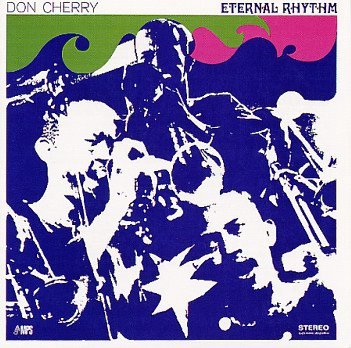
Eternal Rhythm is a masterpiece on several levels. It was one of the earliest major examples of the idea that it was possible for any and all musical cultures to exist simultaneously, a philosophy that rejected any innate musical hierarchy and had no trouble placing the earthiest blues alongside the most delicate gamelan. It was also a summit meeting between representatives of the American and European jazz avant-garde, black and white, dismissing as meaningless both the cautious attitude of American jazz musicians toward Europeans edging onto their turf and the tentative stance of Europeans playing a music that was not "theirs." More importantly, Eternal Rhythm exists as an utterly spectacular, movingly beautiful musical performance, one of the rare occasions where the listener has a visceral sense of borders falling and vast expanses of territory being revealed for the first time. Cherry balanced compositional clarity, wild free improvisation, and a totally inclusive musical consciousness in a manner seldom achieved, resulting in a cohesive, spellbinding session. His own playing throughout on both trumpet and flute is at his highest levels, but the contributions of his fellow musicians are just as amazing. Special mention should be made of guitarist Sonny Sharrock, whose "glass shards" approach is in full bloom here, and vibraphonist/pianist Karl Berger, who throws himself with sublime abandon into both the gamelan and blues aspects of the piece. If only the pallid "world music" of the succeeding decades had followed this model! Eternal Rhythm is Don Cherry's masterwork and one of the single finest recordings from the jazz avant-garde of the '60s. It is required listening.
:::Review by Brian Olewnick:::

Don Cherry - Eternal Rhythm (1968)

1. Eternal Rhythm Part 1 17:45
2. Eternal Rhythm Part 2 23:37

Credits
Bass – Arild Andersen
Cornet, Gamelan [Gender, Saron], Flute [Bengali, Bamboo, Metal, Plastic], Performer [Haitian Guard], Composed By – Don Cherry
Drums, Gamelan [Saron], Gong, Bells, Voice – Jacques Thollot
Guitar – Sonny Sharrock
Piano, Piano [Prepared] – Joachim Kühn
Saxophone [Tenor], Oboe, Clarinet, Flute – Bernt Rosengren
Trombone – Albert Mangelsdorff, Eje Thelin
Vibraphone, Piano, Gamelan [Gender] – Karl Berger

:::Cozy Endings:::

Posted: by jazzlover in Etykiety:
2

With their alluring cover art and a bunch of song titles ("Open Up", "Geyser", "The Happy Minotaur") that might also double as the names of exotic sex positions, it might appear that Artanker Convoy are actively courting the swank bachelor pad market. It can also occasionally sound that way on Cozy Endings, the Brooklyn instrumental sextet's second album for Social Registry, but typically with a lot else going on besides.
Incorporating elements of jazz and dub, the eclectic group can recall some of the Beastie Boys' better homegrown funk instrumentals, as well as the dusky post-rock of Chicago's Tortoise / Isotope 217 contingent. Whatever it is they're up to, Artanker Convoy deliver it all with a laidback, cultured flair that seems specifically designed to complement your personal activities rather than compete with them.
Drummer/ band leader Artanker and bassist Joe Fiorentino played with LCD Soundsystem's James Murphy in the short-lived Jimi Clambake Explosion, and their easy chemistry anchors Cozy Endings with a graceful, self-assured authority. The rest of the players-- most notably saxophonist Jake Oas and multi-instrumentalist Chris Seeds-- all display considerable chops as well, but the emphasis here is less on soloing or individual voices than it is on joint exploration. Though the Convoy's sound can point in the direction of the electric 70s grooves of Miles Davis or Herbie Hancock, there is a hazy sense of restraint here that keeps noisier commotion at bay, as the musicians concentrate their energies on servicing the album's hypnotic, understated melodies.
This strategy works to near perfection on the first track "Open Up", which builds with exquisite patience from an extended intro of glassy drones and fluttering percussion into a loose-limbed Krautrock stride, with narcotic guitar figures joining Oas' sax in midair for some tranquil dialogue. Less ambitious, but no less pleasant, are the more funk-oriented likes of "Geyser" or "Black Dauphin", whose smoky organ flourishes and organic rhythms ride with a relaxed, cocktail-hour motion. Sturdy though these performances are, however, there's little here that'll likely leave the listener with more than a few residual traces of perfume or second-hand smoke, and one can soon begin to wish that Artanker Convoy had taken a few more wild chances with their production or arrangements.
The only vocals to speak of are Artanker's indecipherable space-whispers on "Ejector", one of the few tracks here that threatens to come loose from its moorings. The addition of his voice does bring a welcome element of disorientation, with the song's trajectory aided by Jon Warren's extra percussion and an electronic shimmer that recalls the humid jazz-funk fusion of Herbie Hancock's Sextant. Even more surprising is the presence of pedal steel on "The Happy Minotaur"; a brief exercise that illustrates how much more intriguing Artanker Convoy can be when they alter just one or two ingredients in their formula. Cozy Endings comes packaged with an extra DVD of visuals supplied by the art and dance collective MUX, whose members have also frequently performed with Artanker Convoy in concert. And though the addition of these videos does greatly enhance the appeal of the album, they also serve to accentuate the impression that this music might be best appreciated when there's other sensual stimulation available at the same time.
:::Review by Matthew Murphy:::

Artanker Convoy - Cozy Endings (2007)

1. Open Up 12:03
2. Black Dauphin 6:35
3. Ejector 7:09
4. Rabbit 6:16
5. Geyser 5:14
6. The Happy Minotaur 2:04

Credits
Artanker (drums),
Joe Fiorentino (bass),
Chris Seeds (keyboard),
Art Lavis (guitar),
Jon Warren (percussion),
Jake Oas (sax)

:::Sun Ship:::

Posted: by jazzlover in Etykiety: , , ,
1

Other than First Meditations, which was not released at the time, Sun Ship (reissued on CD by Impulse) was the final studio album by John Coltrane's classic quartet (with pianist McCoy Tyner, bassist Jimmy Garrison, and drummer Elvin Jones) before Pharoah Sanders joined the band on second tenor. At this point in time, Coltrane was using very short repetitive themes as jumping-off points for explosive improvisations, often centered around one chord and a very specific spiritual mood. Tyner sounds a bit conservative in comparison, but Jones keeps up with Trane's fire (especially on "Amen"). Even in the most intense sections (and much of this music is atonal), there is a logic and thoughtfulness about Coltrane's playing.
:::Review by Scott Yanow:::

John Coltrane - Sun Ship (1965)

1. Sun Ship 6:12
2. Dearly Beloved 6:27
3. Amen 8:16
4. Attaining 11:26
5. Ascent 10:10

Credits
Bass – Jimmy Garrison
Drums – Elvin Jones
Piano – McCoy Tyner
Tenor Saxophone – John Coltrane

:::Ghostwriter's Joke:::

Posted: Thursday, 21 April 2011 by jazzlover in Etykiety:
2

This is a vibrating, colorful, sometimes film like, but in the next moment explosively intense jazz album from Poland. The Kapsa brothers, who earlier formed the legendary emo-hardcore band called Something Like Elvis, established originally the Contemporary Noise Quintet transformed afterwards into Sextet. Their debut album called “Pig Inside The Gentleman” was released in the autumn of 2006. The variety of sounds does not allow pigeonholing their music style unambiguously. Smooth and hard elements crossing over in a dense texture of colorful elements, it’s like kind of film music without movie and jazz music without being quit jazz, but still, very classy tunes and elements are perfectly built in into the improvising and sometimes quit jazz-rock fusion taste like music. There’s actually no “noise” in their music, but definitively this is absolutely contemporary, breathing and alive music with exciting turns, moods and charming pulse.
“Ghostwriter’s Joke” actually it’s like a dream or a journey into a moving, shifting, changing universe, like riding on a train and looking out through the window. It’s quit an exciting trip where Jewish and Eastern European musical roots joins together with pieces of jazz-rock, modern jazz and kind of ambiental contemporary music. Tomek Glazik (Kult, ex-4Syfon, Sing, Sing Penelope) proved to be quit an incredible saxophonist just like Wojtek Jahna (Sing, Sing Penelope, Mordy) is a great trumpet player, Kamil Pater knows to rock his guitar, but also plays nice and discrete parts and finally, but not at least, Patryk Weclawek pump his bass extraordinarily.
Their elegance, class and maturity still keeps something from the punk energy, the compositions are incredibly spacious but filled with ingenious solos and all kind of twists, turns and “happenings”, there’s a perfect balance between the superb rhythm combo and the brass section, colored with exciting guitar tunes. This is the kind of album that you can take it off from your CD player.
:::Review by brushvox:::

Contemporary Noise Sextet - Ghostwriter's Joke (2011)

1. Walk with Marylin (06:06)
2. Morning Ballet (06:43)
3. Is That Revolution Sad? (04:53)
4. Old Typewriter (06:43)
5. Chasing Rita (06:43)
6. Norman's Mother (09:13)
7. Kill the Seagull, Now! (04:29)

Credits
Kuba Kapsa - piano, Rhodes, synthesizer
Wojtek Jachna - trumpet
Tomek Glazik - tenor, baritone saxophones, syntezator
Kamil Pater - guitar, baritone guitar
Patryk Weclawek - bass, bass guitar
Bartek Kapsa - drums

:::Kofi:::

Posted: Tuesday, 19 April 2011 by jazzlover in Etykiety: , , , , , , , , ,
3

Kofi was extracted from some of last Blue Note sessions of the 1960s before Byrd's ventures into soul fusion territory. The playing here is no less than stellar, with seasoned veterans such as Ron Carter and Airto Moreira giving Byrd more than ample support to stretch out and soulfully foreshadow elements of future recordings. Lew Tabackin easily shares the spotlight with his beautiful flute passages on the title track, while Frank Foster and the rest of the supporting group complement Byrd's playing with a grace that emulates the early chemistry between the early Miles Davis groups of the early '60s. The subtle relaxed tones of this album make it truly one of the essential releases in Byrd's catalog, not only from a historical standpoint (his future collaborations with the Mizell brothers would take him to an entirely different plane of thought), but from a casual listening standpoint as well.
:::Review by Rob Theakston:::

Donald Byrd - Kofi (1969)

1. Kofi 9:30
2. Fufu 9:45
3. Perpetual Love 8:00
4. Elmina 8:30
5. The Loud Minority 10:00

Credits
Bass – Ron Carter
Drums – Mickey Roker
Drums, Percussion – Airto
Electric Bass – Bob Cranshaw
Electric Piano – Duke Pearson
Flute, Saxophone [Tenor] – Lew Tabackin
Guitar – Wally Richardson
Percussion – Dom Um Romao
Saxophone [Tenor] – Frank Foster
Trombone – Bill Campbell
Trumpet – Donald Byrd

:::High Energy:::

Posted: by jazzlover in Etykiety: ,
3

High Energy (1974): Freddie Hubbard left CTI Records in 1973, having become a much bigger star than most jazz players could ever hope to be, to sign a million-dollar contract with Columbia Records, long the home of Hubbard's hero and fellow trumpeter Miles Davis. In addition to the money, Hubbard sought more control of his music than CTI allowed him, and the opportunity to record with his own band rather than the all-star studio assemblages CTI forced upon him. For his first Columbia album, High Energy (1974), Hubbard did use his own band, a quintet that featured George Cables on piano and Junior Cook on tenor sax (both were also heard on Hubbard's final CTI album, Keep Your Soul Together), plus a collective sweetening of L.A. studio musicians, arranged with surprisingly minimal impact by Dale Oehler. There are two strong Hubbard originals here ("Baraka Sasa" and the album's single, "Crisis"), two excellent Cables originals (the Hubbard-like "Camel Rise," also arranged by Oehler for Bobby Hutcherson's 1975 album Montara, and the slightly well-known "Ebony Moonbeams," which Hubbard also covered on his Japanese-only live LP, Gleam, and Cables also performed on his 1975 solo debut as well as with Hutcherson on the vibist's 1979 album Un Poco Loco) and two Stevie Wonder tunes ("Too High" and the little-known "Black Maybe"). While the arrangements are more minimal than even those that Don Sebesky provided Hubbard at CTI, the electronics quotient is a little higher than usual here with Ian Underwood adding Headhunters-like synth effects (ala Patrick Gleeson), Hubbard employing echo effects and Cables on electric piano throughout. While Hubbard sounds especially strong here, very much in his element, the album never really rises above a genuinely engaging listening experience. But, in praise of the thing, it is a genuinely engaging listening experience.
:::Review by Douglas Payne:::

Freddie Hubbard - High Energy (1974)

A1. Camel Rise
Flute [Bass Flute] – Ernie Watts
Written-By – G. Cables 6:23
A2. Black Maybe
Drums – Harvey Mason
Written-By – S. Wonder 4:58
A3. Baraka Sasa
Written-By – F. Hubbard 10:29
B1. Crisis
Trombone – Dick Hyde
Drums – Harvey Mason
Written-By – F. Hubbard 5:44
B2. Ebony Moonbeams
Bass Clarinet – Pete Christleib
Soprano Saxophone – Ernie Watts
Written-By – G. Cables 6:55
B3. Too High
Tenor Saxophone – Junior Cook, Pete Christleib
Flute – Ernie Watts
Written-By – S. Wonder 6:37

Credits
Bass – Kent Brinkley
Clavinet, Organ – Joe Sample
Conductor, Arranged By – Dale Oehler
Congas – King Errisson
Drums – Ralph Penland
Electric Piano – George Cables
Flute, Tenor Saxophone – Junior Cook
Guitar – Dean Parks
Percussion – Victor Feldman
Synthesizer [Arp] – Ian Underwood
Timbales – Carmello Garcia
Trombone – Dick Hyde, George Bohanon
Trumpet, Flugelhorn – Freddie Hubbard

:::The Original Sin:::

Posted: by jazzlover in Etykiety:
3

Lump-in-throat jazz rock loveliness from this very under-recognized Finnish saxophonist, with an atmosphere as inviting as a warm bath. The rich and relaxed Canterbury-derived moves heard here exist in a direct lineage from Soft Machine's Third and early Nucleus and merits comparison with some of the other Euro units of the era that were carrying a flame forward for this sound, like France's Magma-associated Rhesus O and the related Belgian outfits Placebo and Solis Lacus.
:::Review by mutant-sounds.blogspot.com:::

Eero Koivistoinen - The Original Sin (1971)

A1. The Original Sin 10:05
A2. Rock & Roll 4:52
A3. Bye Bye / Hello 9:09
B1. Both & And 10:02
B2. Summersea 6:30
B3. Sinner 5:48

Credits
Bass – Pekka Sarmanto
Clarinet [Bass] – Unto Haapa-Aho
Drums – Esko Rosnell, Reino Laine
Guitar – Lance Gunderson
Piano – Eero Ojanen
Saxophone [Alto] – Eero Koivistoinen, Pekka Pöyry
Saxophone [Baritone] – Pentti Lahti
Saxophone [Soprano] – Eero Koivistoinen
Saxophone [Tenor] – Eero Koivistoinen, Pekka Pöyry
Trombone – Erkki Lipponen, Juhani Aalto
Trumpet – Tapani Luuppola

:::Stargazer:::

Posted: Saturday, 16 April 2011 by jazzlover in Etykiety: , , , , , ,
1

Trumpeter Dave Douglas, continuing the innovative approach to tribute records he began in 1994 with the Booker Little homage In Our Lifetime, dedicates Stargazer to the great Wayne Shorter. Only three tracks, however, are Shorter compositions: "Pug Nose," "On the Milky Way Express," and "Diana." The rest are Douglas originals that are inspired by Shorter, although Douglas is far too clever to make the inspiration obvious.
Listeners will have to rely on their imaginations to make the Shorter/Douglas connection, which is as it should be with creativity on so high a level. "Goldfish," with its awe-inspiring, chant-like main riff, is the album's highlight. The fast, complex unison lines and free jazz episodes of "Stargazer," with solo spots by drummer Joey Baron and pianist Uri Caine, are also wonderful. Hard-swinging numbers like "Spring Ahead" and "Intuitive Science" contrast strikingly with the tension-filled dissonance of "Four Sleepers" and "Dark Sky." Douglas's writing and playing are highly unpredictable and emotionally rich. His remarkable sextet delivers every note with conviction and finesse. Along with Baron and Caine, bassist James Genus, tenor sax/clarinetist Chris Speed, and trombonist Josh Roseman join forces with Douglas to create music full of character and beauty.
:::Review by David R. Adler:::

Dave Douglas - Stargazer (1996)

1. Spring Ahead 4:25
2. Goldfish 10:33
3. Stargazer 6:42
4. Four Sleepers 10:26
5. On The Milky Way Express 4:14
6. Pug Nose 4:46
7. Dark Sky 5:55
8. Intuitive Science 8:55
9. Diana 4:33

Credits
Bass – James Genus
Drums – Joey Baron
Piano – Uri Caine
Saxophone [Tenor], Clarinet – Chris Speed
Trombone – Joshua Roseman
Trumpet, Producer, Arranged By – Dave Douglas
Written-By – Dave Douglas (tracks: 1 to 4, 7, 8), Wayne Shorter (tracks: 5, 6, 9)

2

For whatever reason, what Miles Davis accomplished with Bitches Brew - arguably the album that put fusion on the map - has never been matched and has rarely been emulated. Fusion and various forms of jazz-rock abound thanks to Miles and other pioneering artists, but the sounds and textures of Bitches Brew remain nearly unique - fusion artists took different directions and, for whatever reason, ended up sounding more directly derived from groups like Mahavishnu Orchestra than the free-form, spacious Bitches Brew-era Miles.
John Zorn's Electric Masada, here recorded at a gig in New York, is one of the few fusion groups that actually sounds a lot like Miles circa Bitches Brew. The group takes seven Masada compositions and turns them into raging, energetic beasts. "Idalah-abal", from Alef, here becomes a ferocious number with Marc Ribot's guitar jamming on an anchoring riff while Zorn flails away at his saxophone. "Hadasha" is the most Bitches Brew-like number, what with Ribot's wah-wah guitar, Zorn's more controlled blowing, and an open, spacious texture. The performances are inspired and inspiring; fitting for the occasion, part of Zorn's massive 50th birthday bash in New York.
Throughout it all, the percussion holds the group together and provides a consistently interesting and controlled backdrop to the sometimes chaotic improvisation (particularly by Zorn and electronics whiz Ikue Mori). With two drummers and a percussionist, the rhythms here are fascinating yet always groovy; for instance lending the last track, "Kisofim", a Latin shuffle kind of feel. With such a reliably interesting rhythm section, Zorn and his cohorts are free to jam into outer space. And jam they do.
If you enjoy fusion a la Bitches Brew - wide-open improvs anchored by a great groove and the occasionally rocking riff (and spiced up, once in a while, by an intensity that compares best to Naked City) - Electric Masada is one of the best things that's come along in the past decade. No exaggeration.
:::Review by Brandon Wu:::

Electric Masada - 50th Birthday Celebration Volume 4 (2004)

1. Tekufah (14:33)
2. Idalah-Abal (6:18)
3. Hadasha (13:48)
4. Hath-Arob (4:07)
5. Yatzar (9:20)
6. Lilin (15:41)
7. Kisofim (8:41)

Credits
- Cyro Baptista / percussion
- Joey Baron / drums
- Trevor Dunn / bass
- Ikue Mori / laptop electronics
- Marc Ribot / guitar
- Jamie Saft / keyboards
- Kenny Wollesen / drums
- John Zorn / alto saxophone